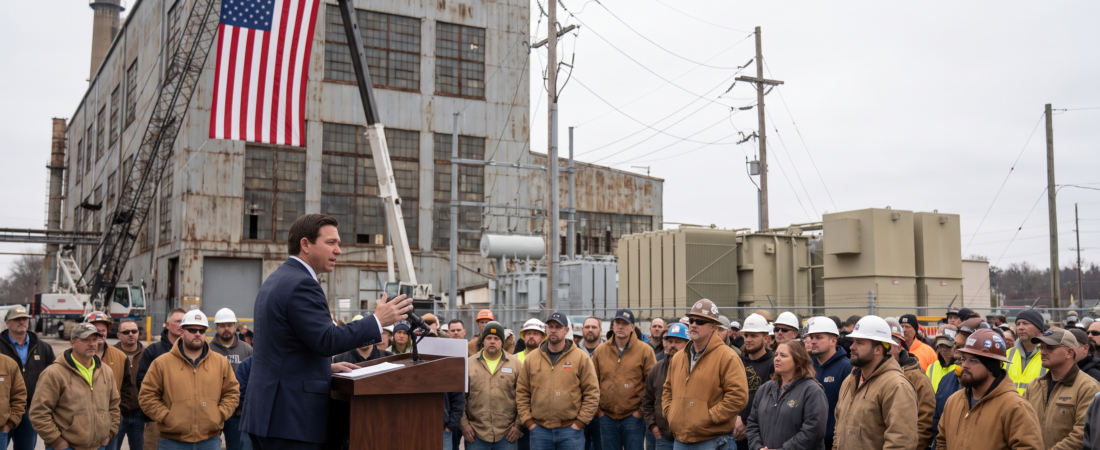
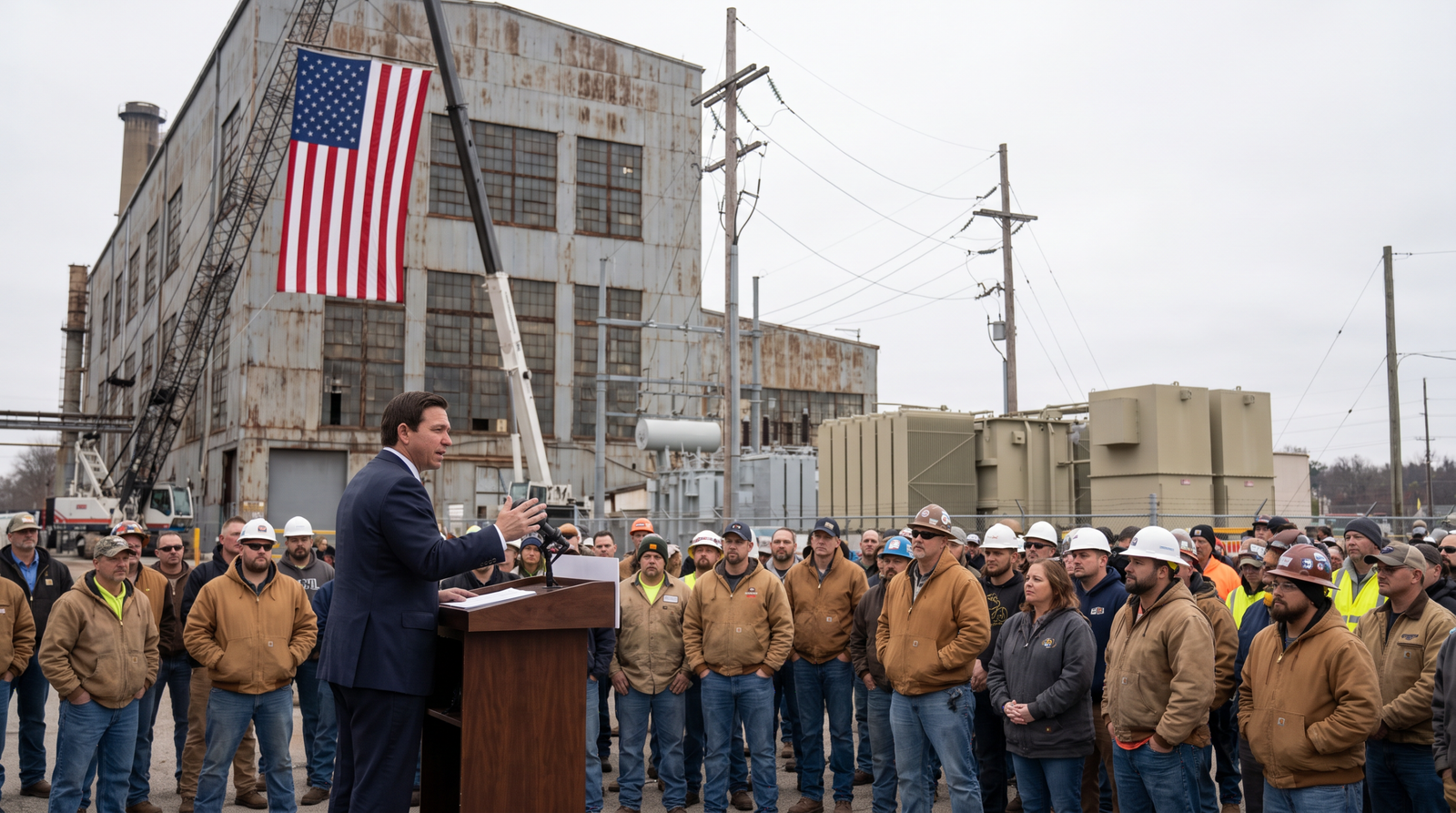
Facts — October 31, 2026: President Donald Trump and his allies are using new factories, energy projects and possible payments as evidence that the administration’s economic agenda is delivering before voters cast ballots in the November 3 midterm elections. But several of the projects highlighted in the campaign’s closing argument are not operating yet, and some still depend on financing, permits, negotiations or political approval.
That tension is the central economic story of the final weekend before the election. Trump is arguing that tariffs and federal investment will produce jobs and lower costs. Independent reporting shows that the promised benefits vary in timing and certainty.
What the administration is promising
The White House has presented a series of industrial commitments as proof of a broader governing agenda. In an October 8 release, it said Mesabi Metallics plans a $15 billion steel complex in Iowa, with 1,750 permanent jobs and as many as 6,000 construction jobs. The same release described a South Korean energy package of up to $200 billion, including as much as $54 billion connected to an Alaska liquefied natural gas pipeline and $22.3 billion for a Texas natural-gas power facility. White House release
Those announcements fit the administration’s stated approach: use tariffs, federal backing and executive pressure to move production into the United States. Trump has taken the message to competitive states and Senate races, presenting industrial development as a direct test of whether his policies are improving employment, energy security and household finances.
The election connection is explicit. Reuters reported on October 29 that Trump has promoted projects in Alaska, Iowa, Texas, Kentucky and North Carolina while campaigning for Republicans. He has also discussed a $5,000 “dividend” for U.S. adults if Republicans retain control of Congress. That proposal would require congressional approval and has not gained significant support among lawmakers. Reuters report
Trump has made other promises conditional on election results. Reuters reported that he offered year-round sales of corn-derived E15 fuel if Kansas voters re-elect Republican Senator Roger Marshall. Such pledges turn policy implementation into part of the campaign’s closing message, but they do not by themselves establish that the policy will pass or that the economic effect will be immediate.
What is confirmed, and what is not
Facts: The projects are not all at the same stage. The White House has announced them as commitments, while the companies and governments involved have supplied more qualified descriptions.
For the Alaska LNG project, Reuters found that South Korea had not made a final decision on whether to invest or how much to commit, despite Trump’s description of a $54 billion investment within the larger package. The proposed pipeline would run about 807 miles and has been discussed for decades. Its future depends in part on financing and whether overseas buyers will pay enough to support construction.
The Iowa steel project also faces unresolved questions. Mesabi Metallics said production would not begin until 2030. The company told Reuters that it had not finalized a deal with the state, that the site was still under review and that it was working to secure full funding. Iowa lawmakers have approved more than $1.3 billion in tax incentives, but those benefits are tied to operating, hiring and production targets.
In North Carolina, the difference between the political announcement and the company’s description was particularly clear. Trump and Commerce Secretary Howard Lutnick announced an investment worth “hundreds of millions of dollars” for quartz producer Sibelco. The company later said the federal investment would be $56 million and that due diligence, further negotiations and federal and state approvals were still required.
The Kentucky proposal is also conditional. Trump pledged $100 million in Pentagon funding to help Anthea revive a shuttered pharmaceutical plant, tying the money to Republicans winning the midterms. Reuters reported that details remained limited and that Democratic Governor Andy Beshear’s office said it knew nothing about the project.
These qualifications do not prove that the projects will fail. They show that an announcement, a pledge, a signed agreement and an operating facility are different stages of an economic program.
Why affordability remains a political test
Analysis: The administration’s project-based message is competing with a more immediate voter concern: the cost of living. Reuters reported on October 30 that affordability and President Trump’s standing were major issues in governor’s races across the country. It said inflation had begun to outpace wages as voters approached Election Day, while higher energy prices were putting pressure on household budgets. Reuters governor-races report
That creates a measurement problem for the Trump midterm economic agenda. A steel plant scheduled to begin production in 2030 may support a long-term industrial strategy, but it cannot immediately lower a family’s grocery bill or gasoline expense. A proposed federal payment could offer short-term relief, but the $5,000 dividend would need Congress to authorize it. A natural-gas or LNG project may affect energy supply years from now, but it does not guarantee lower prices this week.
The administration says investment announcements signal momentum and that benefits will accumulate. Critics counter that the campaign is presenting uncertain commitments as completed gains. Reuters quoted Todd Tucker of the Roosevelt Institute, who called the late-election announcements “pretty theatrical.” The White House said Trump was pursuing an “aggressive, pro-growth economic and energy dominance agenda.”
The fairest reading is narrower than either campaign slogan. The administration has used its authority and political platform to promote tariffs, federal financing and industrial projects. Some companies have announced plans, and the White House has supplied specific job and investment estimates. But the available evidence does not show that every headline figure is funded, approved or close to producing jobs. The economic payoff remains partly prospective.
What to watch after November 3
The election will not settle whether the projects succeed. If Republicans retain control of Congress, the administration could seek legislative support for proposals such as the dividend and continue using federal agencies to advance industrial deals. If Democrats gain power, oversight, appropriations and the pace of implementation could change.
The practical tests will come later: whether financing closes, permits are issued, state incentives are finalized, construction begins and companies meet hiring and production targets. Voters can evaluate those milestones separately from the campaign announcements.
For now, the verified story is that Trump has made economic development a central midterm argument, but much of the evidence consists of plans at different stages of completion. The administration’s claims are documented; the final economic results are not yet established.
Sources
- White House, “President Trump Is Putting American Industry, Jobs, and Paychecks Back on the Map,” October 8, 2026
- Reuters, “Trump touts projects and payouts on the campaign trail. Many are uncertain,” October 29, 2026
- Reuters, “Seven governor races to watch as voters weigh Trump, economy,” October 30, 2026