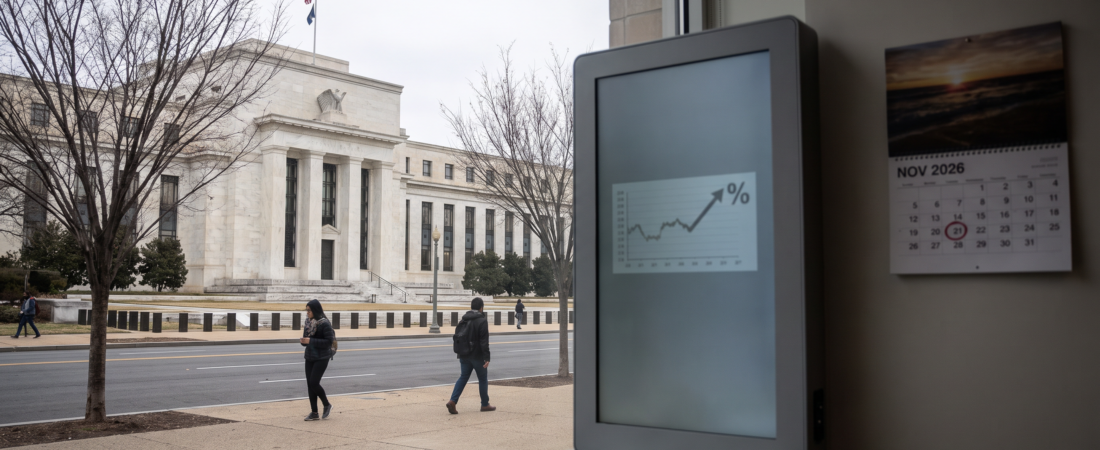
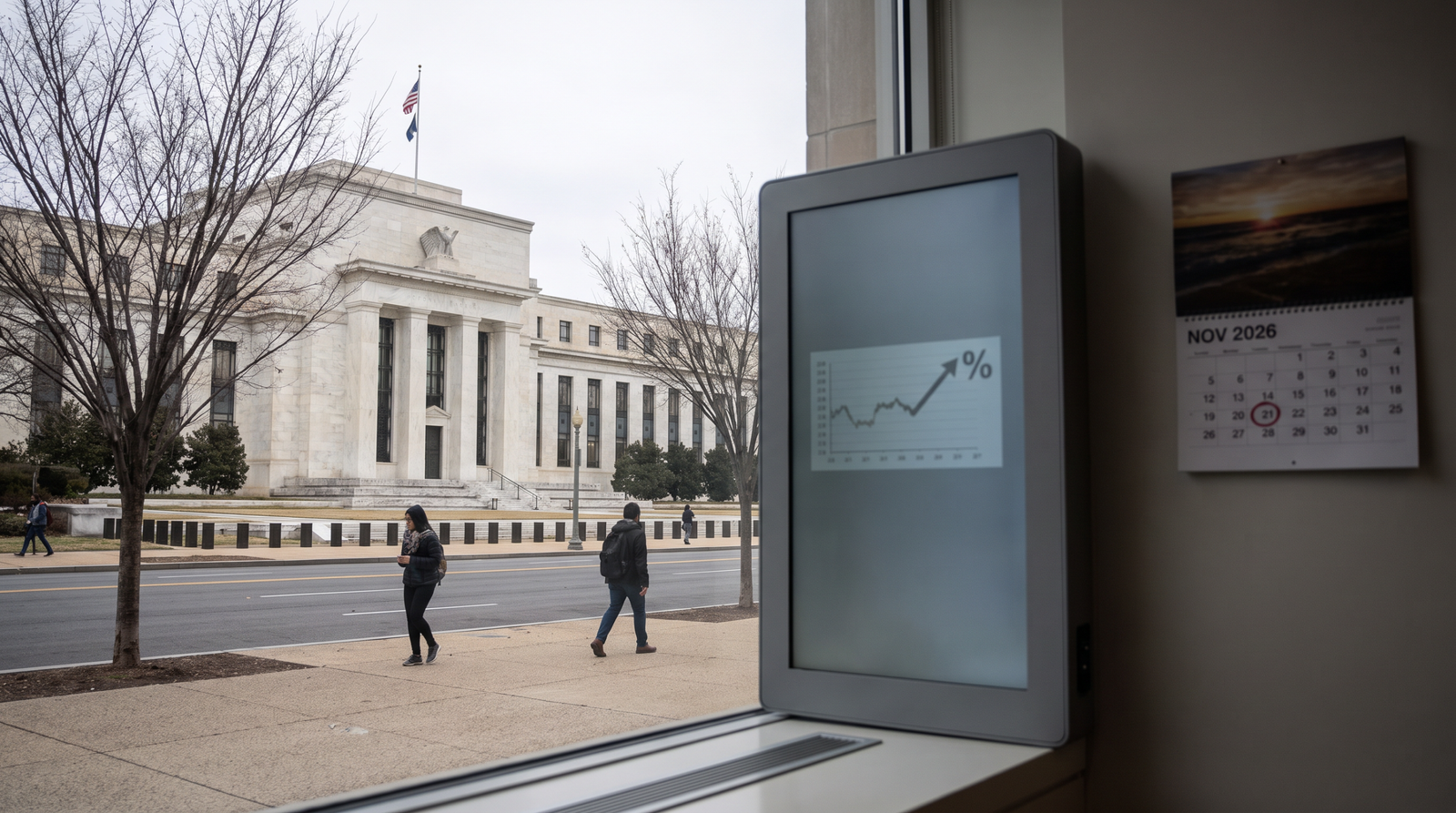
The Federal Reserve held its benchmark interest-rate target at 3.75% to 4% on Oct. 28, choosing to wait for more economic information even as inflation remained above its 2% goal. The decision came less than a week before the Nov. 3 midterm elections, making the central bank’s independence a central political question as well as an economic one.
The Federal Open Market Committee approved the decision by a 10–2 vote. Governors Lisa D. Cook and Beth M. Hammack dissented because they preferred a quarter-point increase. The Fed’s official statement said economic activity was expanding at a strong pace, domestic spending remained resilient and job gains had kept pace with the workforce. It also said inflation was still elevated and that more information would help officials determine the appropriate policy stance. Federal Reserve statement
Facts: What the Fed decided
The decision leaves the federal funds target range at 3.75%–4%. The rate influences other short-term borrowing costs and, over time, financial conditions for households and businesses. In a related implementation note, the Fed kept the interest rate paid on reserve balances at 3.90%, set the primary credit rate at 4% and directed the New York Fed to maintain the federal funds rate within the target range. Implementation note
The committee’s vote was not a declaration that inflation has been defeated. The statement repeated the Fed’s commitment to return inflation to 2%, while describing uncertainty as elevated in part because of geopolitical developments. It also pointed to strong productivity growth and robust capital investment. Those details matter because they show why officials could see both reasons to keep rates restrictive and reasons to avoid an automatic increase at this meeting.
The two dissents were on the hawkish side: Cook and Hammack wanted a 25-basis-point hike. A basis point is one-hundredth of a percentage point, so their preferred move would have taken the target range to 4%–4.25%. The majority instead opted to hold and assess incoming data.
Facts: Warsh says the election did not shape the vote
At his post-meeting press conference, Chair Kevin Warsh was asked directly whether the approaching midterms influenced the decision. He said, “politics played no role in the decision,” and added that he had not heard references to politics or the elections during the two-day meeting. Official press-conference transcript
Warsh also resisted giving markets a firm prediction for the next meeting. He said he did not favor forward guidance in ordinary conditions and did not want to prejudge a meeting six weeks away. His position leaves a December hike possible, but not promised. The transcript records him saying that officials may be better positioned after learning more about the economy.
That distinction is important. A statement that politics did not influence the vote is an account of the committee’s deliberations, not independent proof that political pressure had no effect. The Fed’s formal documents establish the vote, the target range and the stated economic rationale. Warsh’s denial establishes what the chair said about the role of politics. Whether investors and voters find that assurance convincing remains a matter of interpretation.
Analysis: Why the decision became a political story
President Donald Trump has repeatedly criticized the Fed for not cutting rates more aggressively. Reuters reported that Trump had called the central bank’s board partisan and had blamed other governors for September’s rate increase. The report also said Treasury Secretary Scott Bessent expressed confidence that Warsh would steer between growth and inflation. Reuters report on the decision and political pressure
The timing sharpened the scrutiny. Voters were approaching elections in which affordability, inflation and borrowing costs were prominent concerns. A higher policy rate can make credit more expensive, while a lower rate can support demand but risk prolonging price pressures. The Fed’s legal mandate is economic, not electoral, so any perception that the institution changed course to help a political party could damage its credibility.
The vote itself offered no simple partisan pattern. The committee held rates by a broad majority, while the two dissenters preferred higher rates. The official record does not identify the decision as an election-related compromise. It does show disagreement over how quickly to respond to inflation and how much additional information officials wanted before acting.
Facts: Officials reopen the debate over more hikes
The hold did not end the rate debate. On Oct. 30, after the Fed’s communications blackout ended, three regional bank presidents made the case for further increases. Dallas Fed President Lorie Logan said inflation and the length of time it had remained above target were “unacceptable” and said she believed the committee needed at least two more quarter-point hikes before pausing to assess conditions. Logan had voted for the hold.
St. Louis Fed President Alberto Musalem, who did not have a vote this year, said additional tightening would be necessary soon. Richmond Fed President Thomas Barkin also said inflation was high, demand was solid and unemployment was relatively low, while emphasizing that the pace of future increases would matter. Reuters report on post-meeting Fed comments
Those remarks are opinions from individual policymakers, not a new committee decision. They show that the internal debate remains active, but they do not establish that the FOMC will raise rates in December. Reuters reported that markets had been reducing their expectations for a December increase, even though a hike was still viewed by market participants as more likely than a continued hold.
Analysis: What to watch next
The next decision will depend on the data available to policymakers, including inflation, employment, spending and financial conditions. Warsh described the coming period as information-rich but declined to provide a calendar-based promise. That leaves two uncertainties: whether price pressures will ease enough to justify a pause and whether economic strength will persist strongly enough to support another increase.
For now, the verified takeaway is narrower than either side’s political messaging. The Fed held rates at 3.75%–4% in October, two members wanted a hike, and the chair said the election did not influence the decision. Several officials then argued that inflation may require more tightening. The December path remains open, and the available evidence does not justify presenting any outcome as settled.
Sources
- Federal Reserve, “Federal Reserve issues FOMC statement,” Oct. 28, 2026
- Federal Reserve, “Implementation Note issued October 28, 2026”
- Federal Reserve, “Transcript of Chairman Warsh’s Press Conference,” Oct. 28, 2026
- Reuters, “Warsh says politics played no role in Fed’s rate decision,” Oct. 28, 2026
- Reuters, “Fed’s Musalem says rate hike is needed soon,” Oct. 30, 2026