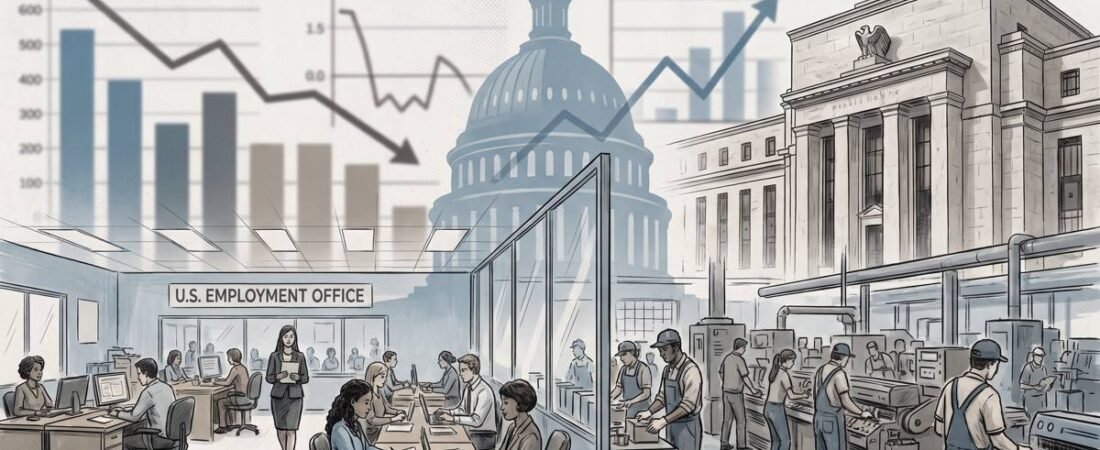
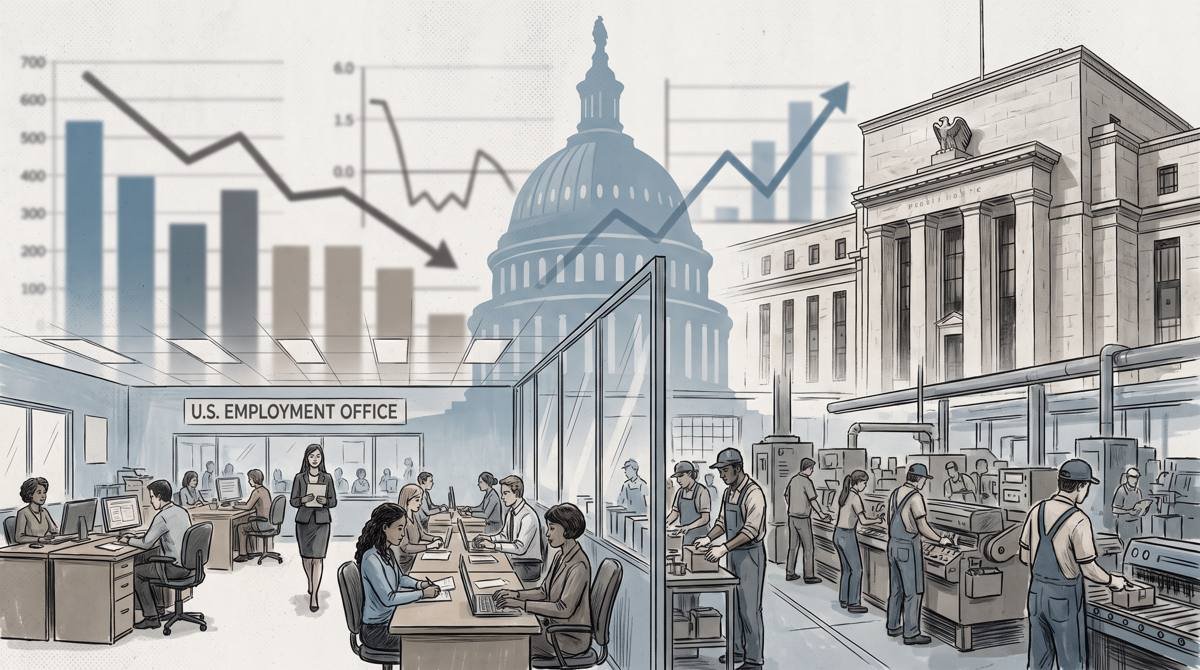
As of November 10, 2026, the October jobs report is the clearest new evidence that the U.S. labor market remains resilient after the midterm elections. Employers added 165,000 nonfarm jobs, the unemployment rate was 4.1%, and earlier monthly gains were revised higher. But the same report showed a sharp increase in people working part time for economic reasons and only moderate annual wage growth. That combination gives policymakers a stronger headline than households may feel in daily life—and leaves the Federal Reserve with little reason to assume that interest-rate decisions are becoming easier.
Facts: Hiring accelerated in October
The Bureau of Labor Statistics report, released November 6, said total nonfarm payroll employment rose by 165,000 in October. The unemployment rate changed little at 4.1%, with 7.1 million people unemployed. The rate has remained between 4.1% and 4.3% since March.
The October gain was well above the 48,000 average monthly increase over the prior 12 months. BLS also revised August employment growth from 133,000 to 186,000 and September growth from 29,000 to 60,000. Together, those revisions added 84,000 jobs to the two earlier estimates. Revisions are routine as more employer reports arrive and seasonal factors are recalculated; they do not mean every job estimate is final.
Job growth was concentrated in several sectors. Professional and business services added 70,000 positions, health care added 42,000, and transportation and warehousing added 25,000. Manufacturing employment rose by 19,000. BLS reported little change in retail, financial activities, leisure and hospitality, government, construction, and several other major industries.
The labor-force participation rate held at 61.9%, while the employment-population ratio was 59.3%. Those measures have shown little net change since January. The number of people employed part time for economic reasons, however, increased by 339,000 to 4.8 million. These workers wanted full-time jobs but had their hours reduced or could not find full-time work.
Facts: Pay growth remains positive but moderate
Average hourly earnings for private-sector employees rose 14 cents, or 0.4%, in October to $38.00, according to BLS. Earnings increased 3.1% over the 12 months through October. Average hourly earnings for production and nonsupervisory employees rose 0.4% for the month to $32.75. The average private-sector workweek was unchanged at 34.4 hours.
The report does not itself calculate whether workers gained or lost purchasing power after inflation. That comparison requires the separate Consumer Price Index and real-earnings releases. BLS scheduled the October CPI release for November 10 at 8:30 a.m. Eastern, but the release was not yet available at the time of this article’s preparation. Forecasts are not treated here as reported facts.
Reuters reported that economists had expected a 65,000 payroll increase and that financial markets increased the probability of a December Federal Reserve rate hike after the stronger-than-expected report. Reuters also reported that the broader underemployment measure, which includes people working part time for economic reasons and some people outside the labor force, rose to 7.9% from 7.6% in September. The Reuters account is independent reporting and includes economists’ interpretations, not additional BLS data.
Analysis: A stronger labor market can keep rates higher
The jobs report matters for policy because the Federal Reserve is balancing maximum employment against price stability. On October 28, the Federal Open Market Committee maintained the federal-funds target range at 3.75% to 4% in a 10–2 vote. The committee said economic activity was expanding at a strong pace, domestic spending was resilient, and inflation remained elevated. Two members preferred a quarter-point increase.
A payroll gain substantially above recent averages can make an immediate rate cut less likely if officials believe demand is still strong. It can also increase the chance that policymakers keep rates high or consider another increase if inflation does not move toward the Fed’s 2% goal. That is a policy inference, not a commitment by the committee. The October CPI data and later labor-market readings will also matter.
The report does not support a simple claim that every worker is benefiting equally. Professional services and health care produced large gains, while construction employment declined by 3,000 in the Reuters account of the report and residential specialty contractors were a weak spot. The rise in involuntary part-time work means that the unemployment rate alone does not capture all labor-market slack. Reuters also reported that the median duration of unemployment rose to 11.9 weeks, its longest level since November 2021.
Those mixed signals create a political challenge for both parties. A strong payroll headline can support an administration’s claim that the economy is growing. Moderate wage growth, limited labor-force participation changes, and difficulty finding full-time work can support voters’ concerns that growth is not translating into secure household income. The data therefore inform the post-midterm economic debate without settling it.
Analysis: What Congress and the administration can—and cannot—change quickly
The employment report does not announce a new tax, spending, trade, or labor regulation. It instead changes the evidence available to officials negotiating the next economic agenda. A labor market that is still adding jobs gives Congress and the White House less justification for broad emergency support aimed at preventing an immediate employment collapse. At the same time, uneven hiring and involuntary part-time work could strengthen arguments for targeted workforce, health-care, housing, or training measures.
Congress cannot set the federal-funds rate directly; that decision remains with the independent Federal Reserve. Lawmakers can affect demand through taxes and spending, and the administration can influence business costs through trade and regulatory decisions. Those policies can affect hiring with a delay and can also affect inflation, so the jobs report is evidence for the debate rather than a verdict on which program is correct.
The next checkpoints are the October CPI and real-earnings releases, the November employment report scheduled for December 4, and the Fed’s communications before its next meeting. Analysts should also watch whether the October sector gains persist or reverse. A few months of data will be needed to distinguish a durable labor-market improvement from a rebound after weaker summer readings.
The verified bottom line is mixed: October hiring was stronger than expected, unemployment remained low, and prior job estimates improved. Yet wage growth was moderate and measures of underemployment worsened. As of November 10, 2026, the report strengthens the case for patience on rapid rate relief while leaving unresolved whether the labor market is delivering broad improvements in economic security.