
As of Nov. 9, 2026.
The Florida CD-27 recount is scheduled for Nov. 9 after the first unofficial returns fell within the state’s automatic-recount threshold. At the same time, Democratic challenger Eliott Rodriguez is asking a federal judge to bar Miami-Dade Supervisor of Elections Alina Garcia from participating in canvassing-board decisions. Garcia disputes the recusal request. No court ruling or certified result was available in the reporting reviewed by the cutoff. The recount is a procedure required by Florida law; the separate lawsuit concerns who may oversee it, not proof that the vote count was wrong.
Facts: Florida CD-27 recount follows state law
Florida’s Secretary of State announced that the first unofficial returns triggered machine recounts in two contests, including the race for Florida’s 27th Congressional District. Under Florida Statutes section 102.141(7), a recount is required when unofficial returns show a candidate was defeated or eliminated by one-half of one percent or less of the votes cast. The Secretary of State orders recounts in federal and multicounty races. The state’s official election notice says the result will not be official until the Elections Canvassing Commission certifies the returns.
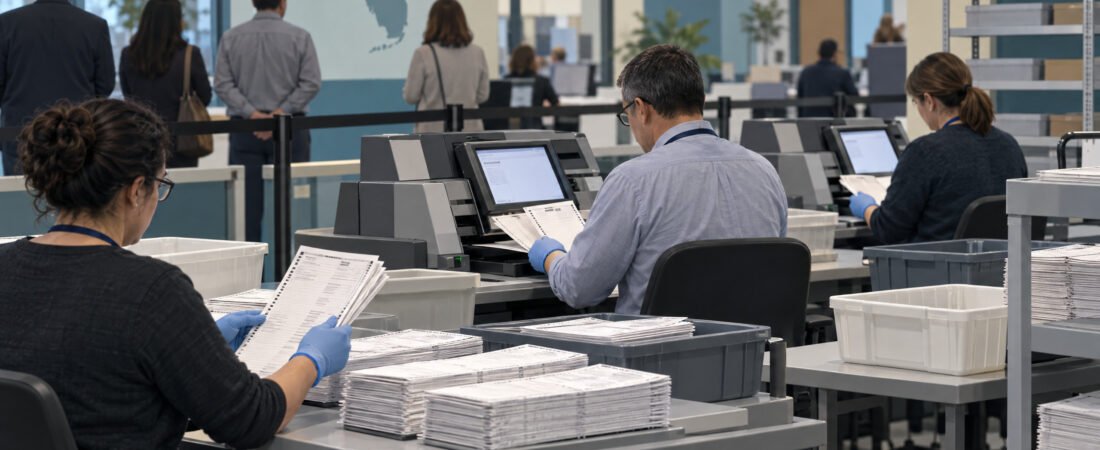
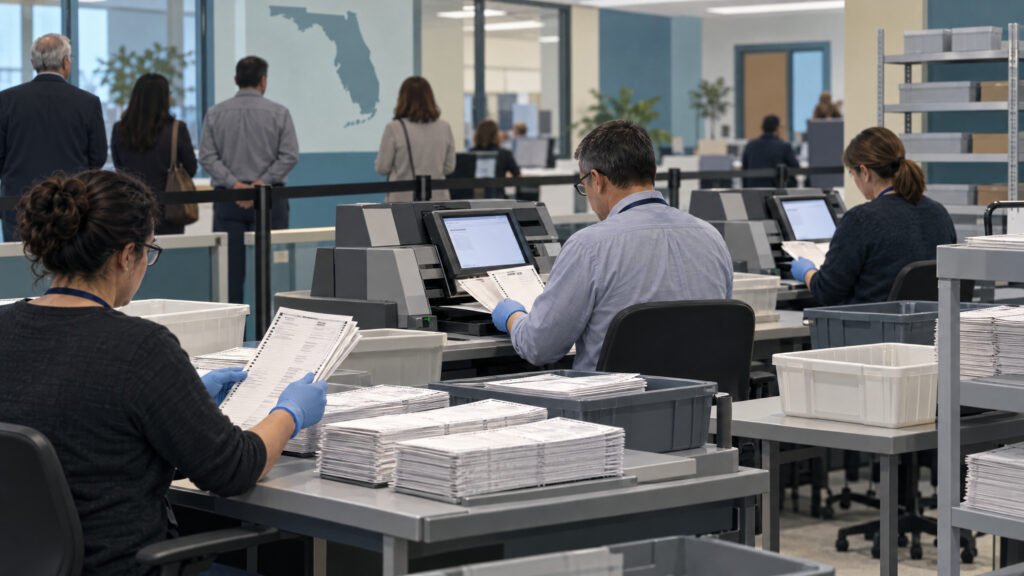
The recount notice from the Miami-Dade Supervisor of Elections says the county canvassing board will oversee a machine recount beginning no earlier than 10 a.m. Monday, Nov. 9, at the elections office in Doral. The notice says the start time may change. It names Garcia as a board member or alternate, alongside county judges. The recount re-runs ballots through tabulating equipment; it is not a new election or a hand count of every ballot.
The statute provides for a separate manual recount when the second unofficial returns show a margin of one-quarter of one percent or less, subject to statutory exceptions. Florida’s official election timeline sets the second unofficial returns deadline at 3 p.m. Nov. 12, county official returns by noon Nov. 16, and statewide certification at 8 a.m. Nov. 17. Those dates are scheduled milestones, not confirmation that the recount or certification has occurred.
The county’s first-set unofficial results and the statewide congressional results page displayed different totals during this review. Because the discrepancy could not be resolved from those public pages, this article does not publish a specific vote margin. Both sources label their figures unofficial; neither should be treated as a certified result.
Facts: Rodriguez’s recusal request is still pending
Rodriguez’s campaign filed a federal lawsuit seeking to keep Garcia from participating in ballot and recount decisions in the race, according to CBS Miami and NBC Miami. The campaign argues that Garcia’s public comments about the race and a possible personal connection involving the incumbent’s recount counsel undermine confidence in her role. Those claims are allegations, not findings by a court.
Garcia told CBS Miami, “I will not recuse myself. There is no conflict.” Attorney Robert Fernandez, whom the campaign identifies as counsel for Republican incumbent María Elvira Salazar, also denied that his role creates a conflict. The accessible reports did not show a judicial ruling on the request. The Miami Herald reported that a hearing on the motion was scheduled for 9 a.m. Nov. 9, before the recount’s scheduled start. A scheduled hearing is not a ruling.
The distinction matters: the recount asks election workers to retabulate ballots under state procedure. The lawsuit asks whether Garcia should participate in decisions by the county canvassing board. The pending court dispute does not, by itself, establish that any ballot was mishandled or that the unofficial result is inaccurate.
Analysis: the recount and lawsuit ask different questions
A machine recount is a routine safeguard written into Florida law for close contests. It checks whether the recorded returns match ballots processed through the tabulation system. A recount can confirm the existing margin or change it; until the recount and certification steps are completed, the outcome remains unofficial. Florida’s law also says an equipment test is conducted before the recount and prescribes how boards respond if the test detects an error.
The recusal suit raises a different question about who participates in the oversight process. Florida law sets rules for canvassing-board membership and replacement when a member is unable to serve or is disqualified. Whether the allegations in this case meet that standard is for the court and the applicable election authorities to determine. Neither the campaign’s allegation nor the supervisor’s denial should be presented as a final legal finding.
The case is therefore about process as well as arithmetic. Public access to recount procedures and clear explanations of board membership can help voters understand how close results are reviewed. At the same time, accurate coverage must not turn an unresolved conflict claim into proof of misconduct. Readers can compare the procedural issues with our reports on the South Carolina recount and Minnesota’s post-election review; each state follows its own rules.
What happens next
As of the reporting cutoff, the recount was scheduled to begin no earlier than 10 a.m. Nov. 9, and the recusal motion remained unresolved in the reports reviewed. Florida’s timeline calls for machine-recount results in the second unofficial returns by Nov. 12. County official returns are due Nov. 16, with statewide certification scheduled for Nov. 17. Those deadlines may change if officials or the court issue new orders.
The next verified update should distinguish any court ruling from the recount’s numerical result. Until the state certifies the race, Salazar and Rodriguez should be described as candidates in an unresolved contest, not as a certified winner and loser.
Sources
- Florida Statutes § 102.141 — recount thresholds and county canvassing-board duties.
- Florida Department of State recount announcement — contests ordered for machine recount and certification status.
- Miami-Dade recount notice — start time, place and board oversight.
- Florida Election Watch timeline — recount and certification deadlines.
- Miami-Dade first-set unofficial returns and Florida statewide unofficial congressional results — both checked; totals differed and remain unofficial.
- CBS Miami and NBC Miami — lawsuit allegations, responses and local reporting.
- Miami Herald — reported hearing schedule and records request.
