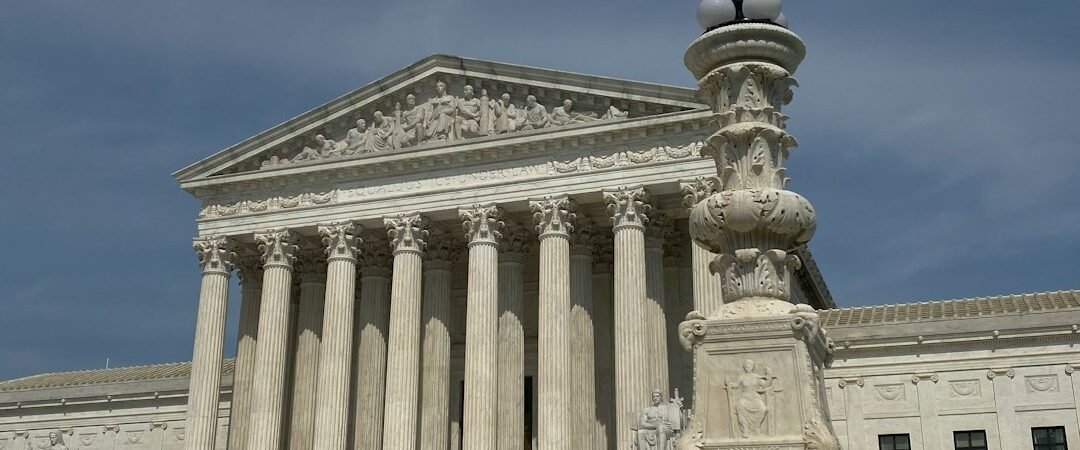
Updated October 28, 2026. The U.S. Supreme Court on October 27 declined to restore a Biden-era immigration rule that let immigration judges temporarily pause some deportation proceedings. The unsigned order leaves a lower-court judgment blocking the 2024 rule in effect for now, but it is not a reasoned Supreme Court decision resolving every question about immigration judges’ authority.
What the Supreme Court did
In City of Baltimore, Maryland, et al. v. Texas, docket No. 26A500, the Court denied an emergency application asking it to pause a lower-court judgment while challengers pursued an appeal. The Court gave no explanation in its order, and the docket records no dissent. The immediate result is procedural: the challenged rule remains blocked while the broader dispute continues.
Read the official Supreme Court docket and the October 27 order.
What “administrative closure” means
Administrative closure is a case-management tool that temporarily takes a case off an immigration court’s active calendar without deciding whether the person may remain in the United States. It can give a person time to pursue another immigration process or relief that could affect the case. It is not the same as dismissing a deportation case, granting asylum, or awarding lawful status.
The rule at issue was adopted in 2024 by the Justice Department’s Executive Office for Immigration Review (EOIR). Texas challenged EOIR’s authority to adopt it, arguing that immigration judges must decide removability rather than suspend proceedings under that rule.
How the dispute reached the justices
Texas filed suit in federal court in June 2026. The Justice Department and Texas then jointly asked the district court to enter judgment for Texas and invalidate the rule. The district judge granted that request. Baltimore, New Haven, Columbus and Centro Legal de la Raza later sought to intervene so they could defend the rule, but the district court rejected their request. The challengers then sought emergency relief from the U.S. Court of Appeals for the Fifth Circuit and, after that court declined to block the judgment, asked the Supreme Court to intervene.
The challengers argued that the government’s agreement with Texas should not prevent other affected parties from defending the rule. The federal government and Texas opposed emergency relief, arguing that the lower-court judgment should remain in place. The filings and procedural history are summarized in SCOTUSblog’s report; the application filed with the Supreme Court is also public.
What it means for immigration cases
For now, immigration judges cannot rely on the blocked 2024 regulation as the basis for administrative closure. That may affect people whose cases would otherwise have been paused while they pursue a separate process, as well as local governments and organizations that say they bear costs when cases move forward without that option.
The ruling does not itself deport anyone, decide an individual’s immigration status, or resolve the merits of every argument about administrative closure. Individual cases remain subject to the statutes, regulations and procedures that still apply.
What remains unresolved
- The Supreme Court gave no reasoning. Its brief order does not explain why the emergency request was denied.
- The merits dispute is not over. The denial of emergency relief leaves the lower-court judgment in place for now; it is not a full opinion deciding the legal arguments after ordinary appellate review.
- The practical effects will vary. A person’s options depend on the facts of the case and other available legal procedures. This article is a news explainer, not individual legal advice.
Sources and documents
- U.S. Supreme Court: City of Baltimore, Maryland v. Texas, docket 26A500
- U.S. Supreme Court: October 27, 2026 order
- SCOTUSblog: procedural history and arguments
- Federal district court order, reproduced by Justia
Related coverage from The Brief Lens
For other examples of federal legal disputes, see our coverage of Justice Department actions in the 2026 midterm run-up and an appeals-court ruling on the Los Angeles National Guard deployment. Those cases involve different facts and legal questions.
Featured image: Brad Weaver / Unsplash.