Dek: Inflation, the Iran war, tariffs and President Donald Trump’s standing have widened the Democratic Senate map, turning traditionally Republican states from Iowa and Kansas to Ohio and Texas into potential routes to a majority.
October 30, 2026
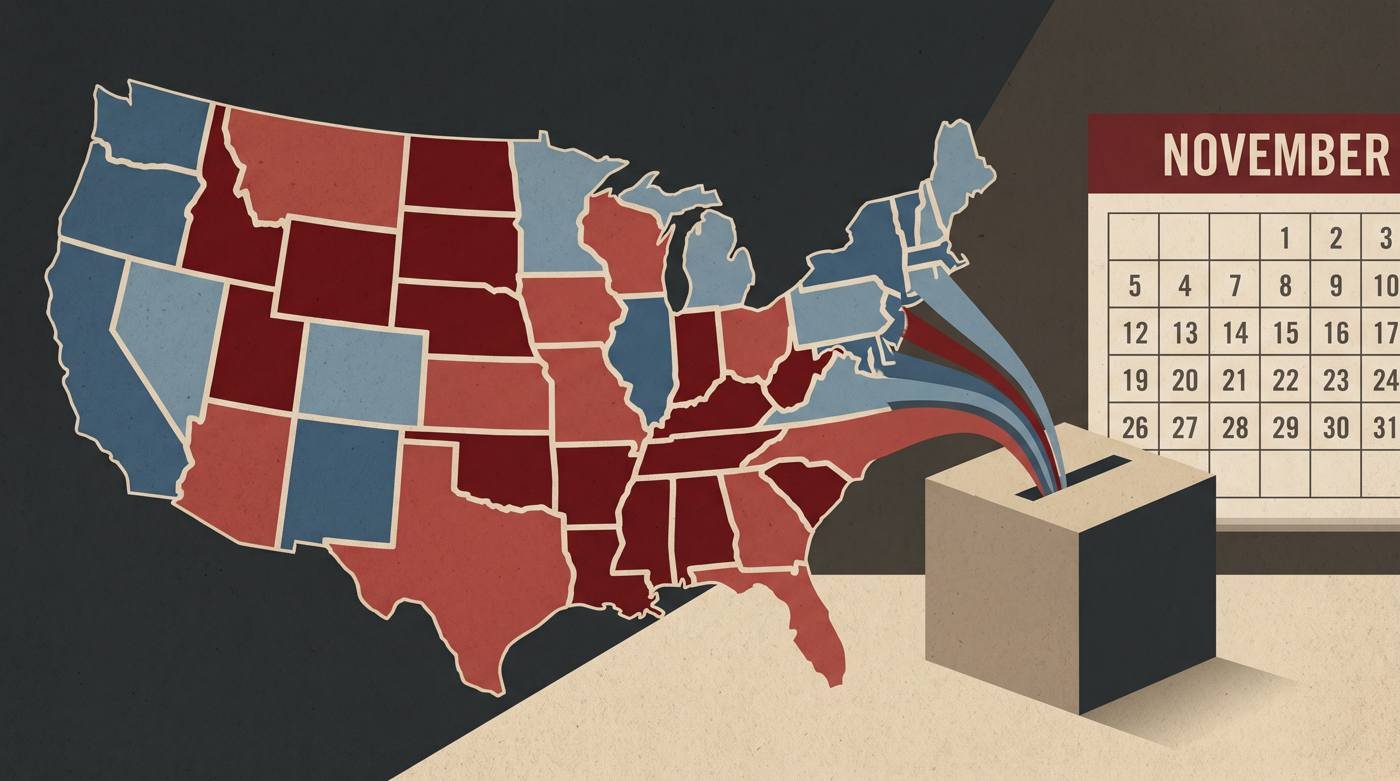
The 2026 Senate race is no longer confined to familiar battlegrounds. Democrats are competing in states President Donald Trump carried decisively in 2024, including Iowa, Kansas, Ohio and Texas. That does not make a Democratic takeover likely by itself. It does change the arithmetic: Republicans hold 53 seats, Democrats and two independents hold 47, and Democrats need a net gain of four seats for a majority. A three-seat gain would produce a 50-50 Senate, which Republicans would control through Vice President JD Vance’s tie-breaking vote. Reuters’ race-by-race review and NBC News’ scenario analysis show how narrow the path remains.
Fact: Inflation is making the election local
The latest official data give voters a concrete reason to judge the party in power. The Bureau of Labor Statistics’ September Consumer Price Index showed prices rising 0.6% in the month and 3.7% over 12 months. Gasoline rose 9.1% in September and 34.2% from a year earlier; the broader energy index rose 20.4% year over year.
The Associated Press reported that Iowa voters were focused on childcare, the economy and farm costs. Senate Majority Leader John Thune said Republican losses would ultimately be “about gas prices,” according to the report. That is a problem for candidates who must defend the administration while presenting themselves as independent voices for their states.
Analysis: War and tariffs connect Washington to costs
The Iran war has made the economic argument more immediate. Reuters reported that military strikes in February sent gasoline prices higher. Its latest national poll found 73% of voters saying their cost of living was moving in the wrong direction. The same Reuters/Ipsos survey found registered voters preferring Democratic congressional candidates 47% to 36%; likely voters favored Democrats 53% to 44%.
Tariffs add a second channel of concern. In farm and manufacturing states, candidates are being asked whether trade policy protects domestic production or raises costs for businesses and consumers. The AP described rising fuel prices and Trump’s trade war as particularly hard on Iowa farmers. Democrats can therefore argue that Republican nominees are accountable for conditions voters experience locally, even when the causes are global.
The Republican response has been to separate support for Trump from disagreement with particular policies. In Iowa, Republican nominee Ashley Hinson has called for an “immediate end” to the Iran war while voting with most Republicans against resolutions seeking to stop it, Reuters reported. ## Iowa and Kansas show how the map expanded
Iowa is an open-seat contest after Republican Sen. Joni Ernst’s retirement. Republican Rep. Ashley Hinson faces Democratic state Rep. Josh Turek in a state Trump won by 13 points in 2024. Reuters described recent polls as showing Hinson with a narrow lead. Turek had outraised Hinson through September, although Hinson reported more cash on hand and Republicans had spent more overall.
Kansas is an even sharper test. Trump won the state by 16 points in 2024, and no Democrat has won a Kansas Senate race since 1932. Yet Republican Sen. Roger Marshall is defending the seat against Adam Hamilton, a Methodist megachurch pastor. Reuters reported that Hamilton had outraised Marshall $14 million to $6 million through September and that recent polls showed Hamilton narrowly ahead.
The Reuters account said Republican groups were diverting money to shore up Marshall, while Democratic groups had outspent Republican groups in the state. That is evidence of a changed map, not proof of a likely flip.
Ohio and Texas make the route plausible—but demanding
Ohio offers Democrats a candidate with statewide history. Former Democratic Sen. Sherrod Brown is seeking a return after losing in 2024 against Republican Sen. Jon Husted, who was appointed after JD Vance became vice president. Reuters reported Brown leading recent polls by 3 to 5 points and described the race as one of the country’s most expensive. It is a special election, so its winner would face voters again in 2028 for a full term.
Texas is the more consequential symbol. Trump won the state by nearly 14 points in 2024, and no Democrat has won statewide there since 1994. Democratic state Rep. James Talarico is challenging Republican Attorney General Ken Paxton, whose primary victory over incumbent Sen. John Cornyn left Republicans with a nominee whose personal and political liabilities are central to the race. Reuters reported Talarico narrowly leading or tied in recent polls and said Democratic groups were exploiting divisions between Paxton and Trump.
But Democrats must first protect their own vulnerable seats, including Georgia, Michigan and New Hampshire. NBC’s Senate scenarios illustrate the uncertainty: Democrats can win red states and still fall short if they lose a Democratic-held battleground.
Trump’s standing is a factor, not a forecast
Trump’s national position has weakened the normal midterm advantage for the president’s party. Reuters/Ipsos put his approval at 32%, one point above the previous week’s record low. Democrats also held an enthusiasm edge: 46% of Democrats said they were very enthusiastic about voting, compared with 30% of Republicans.
Generic-ballot results cannot capture state-by-state differences, and polls can miss turnout, ticket splitting and late movement. Republican candidates in Iowa, Kansas, Ohio and Texas still operate in conservative states with established organizations and substantial outside spending.
The closing question is whether Democrats can convert momentum across four separate electorates. That is how a narrow Democratic route to a majority became a live possibility—without becoming a forecast.
Closing: The Senate map has widened because national policy is being felt as a local cost. Iowa and Kansas test whether that pressure can overcome deep Republican identification; Ohio and Texas test whether strong Democratic candidates can turn dissatisfaction into statewide victories. On Nov. 3, the majority will depend on both forces—and on whether Democrats can hold their own seats while exploiting new openings in red territory.