As of November 11, 2026. North Carolina’s 3rd Congressional District has become the clearest example of why election night totals are not final. After provisional and cured absentee ballots were added, Democrat Raymond Smith moved from behind Republican Rep. Greg Murphy to a 293-vote unofficial lead. County boards will certify their results Friday, and the second-place candidate may still request a recount if the margin remains within the state’s legal threshold.
The race matters beyond one seat. Murphy’s apparent defeat would give Democrats a sixth Republican-held congressional seat in North Carolina, according to NC Newsline’s reporting. But the result is not yet certified, and the outstanding procedures are designed to determine whether all eligible ballots were counted and whether the reported totals match the ballots.
Facts: Provisional ballots changed the unofficial margin
On election night, Murphy led Smith by 233 votes. After county officials added provisional ballots, Smith gained a net 526 votes and moved ahead by 293, with all counties reporting in the unofficial tally described by NC Newsline. Libertarian candidate Daniel Cavender received 3,007 votes, a total larger than the difference between the two leading candidates.
The shift does not mean the race is certified. North Carolina’s State Board of Elections says election-night results are always unofficial. County boards must review provisional ballots, absentee ballots that were cured after Election Day, ballots that could not initially be read, and other election records before certification. The state board’s official provisional-ballot guidance says an eligible provisional ballot is added during the 10-day canvass period, while a ballot may be approved only in part when a voter was eligible for some contests but not others.
The next fixed step is the county canvass at 11 a.m. Friday, November 13. North Carolina’s State Board has scheduled the statewide canvass for 11 a.m. Tuesday, November 24. Military and overseas ballots mailed by Election Day can still arrive by 5 p.m. Thursday, November 12, if they meet the statutory requirements, according to the state’s post-election timeline.
Facts: A separate review has raised questions, not findings
The Southern Coalition for Social Justice, a voting-rights organization, asked officials to review what it described as 2,504 potential matches between provisional-ballot records and voter-registration files. Its analysis identified 1,562 voters whose records showed no registration or a prior removal but who, the group said, matched active or inactive records in the same county. It identified another 942 voters who had been removed through list maintenance but later attempted to vote in the county where they had previously been registered.
NC Newsline reported that the group sent county-specific lists to officials in 46 counties. The State Board did not respond to the outlet’s request for comment by publication. The group’s figures are an allegation requiring review; they are not a finding that the ballots are valid, invalid, wrongly rejected, or sufficient to change the NC-3 result.
North Carolina’s official process already requires county boards to research provisional voters. The state says those reviews can use registration records and other databases to determine whether a voter was eligible in the county and for particular contests. The board’s post-election procedures page also describes a voter-eligibility audit that identifies potentially ineligible early, absentee, and provisional voters for county review. County boards, rather than advocacy groups or campaigns, make the formal decisions to count or reject ballots.
Analysis: Friday’s canvass is the key checkpoint
The immediate question is not whether the election-night count was “wrong.” It is whether the complete, legally reviewable count changes the apparent outcome. Provisional ballots exist for situations such as a voter’s name not appearing in the pollbook, voting in the wrong precinct, registration questions, or an inability to show an acceptable photo ID at the polls. They are held while election officials determine eligibility; that process is part of normal election administration.
The NC-3 margin is close enough to keep the recount question open. Under North Carolina’s rules, a losing candidate in a nonstatewide contest can demand a recount when the difference is 1% or less of the total votes cast. The State Board’s official election-finalization guidance says recount demands for contests under State Board jurisdiction must be received by noon Tuesday, November 17. A recount would not automatically mean misconduct or a reversal; it is a statutory check on a close result.
The state also conducts a sample hand-count audit. Bipartisan teams compare a hand count in randomly selected precincts or voting groups with machine totals. For the 2026 general election, the state says counties are auditing the U.S. Senate contest. Officials explain that small variances can result from human counting errors or how voters marked ballots, rather than from evidence of tampering.
That distinction is important as the result attracts political attention. A 293-vote unofficial lead is meaningful, but it is not a certified margin. Conversely, the existence of provisional-ballot reviews or a possible recount is not evidence that the count is fraudulent. The public record currently shows a close contest moving through required checks, plus an outside group’s request for additional review whose conclusions have not been adjudicated.
What happens next
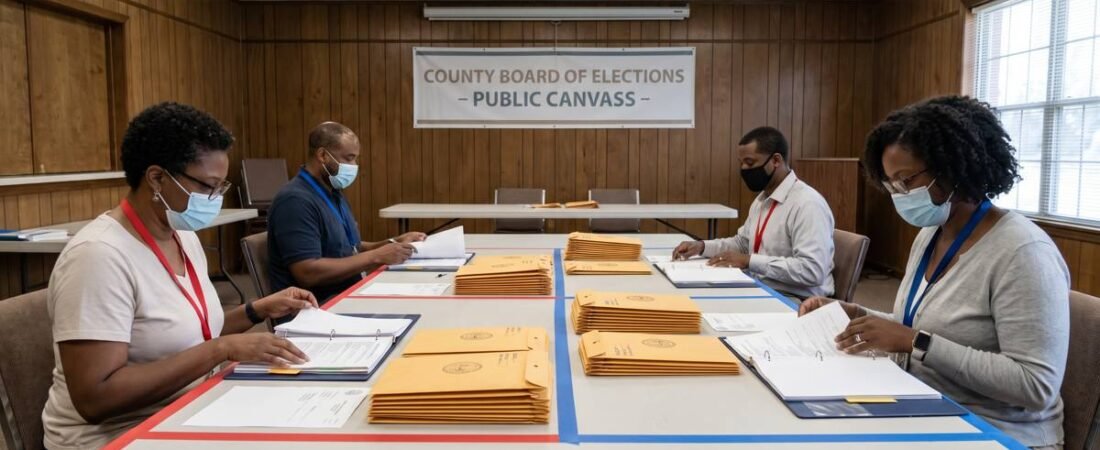
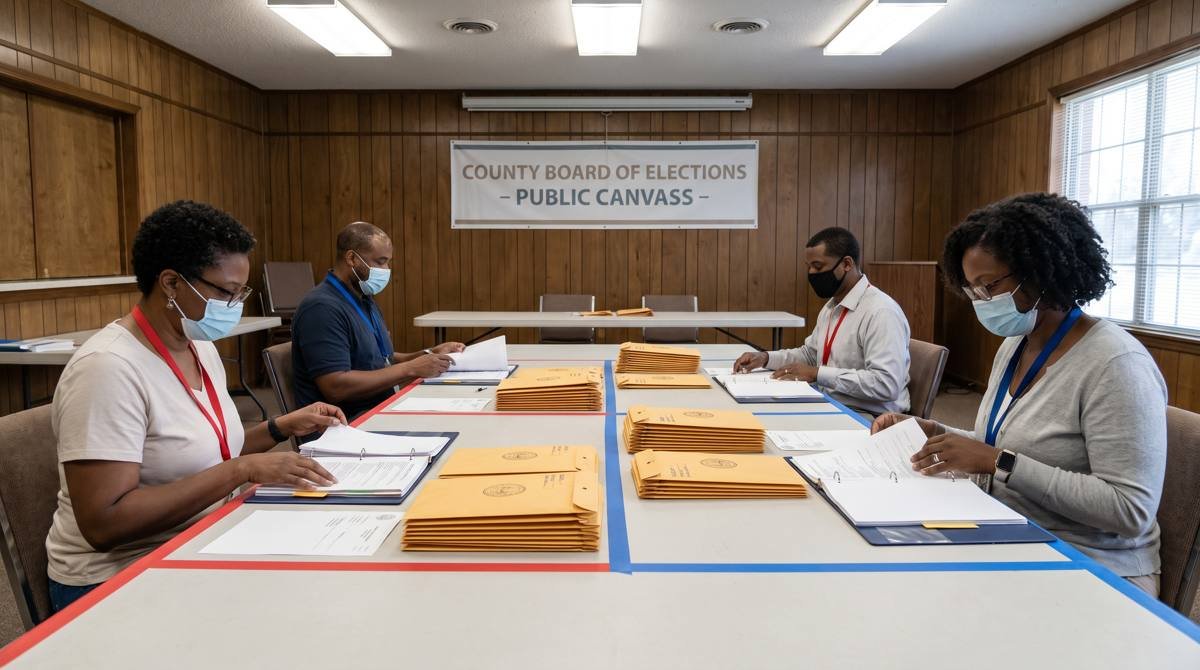
County boards will meet publicly Friday to review and certify their local results. Any remaining eligible military or overseas ballots, successful ballot challenges, or corrections could alter totals before or during canvass. If Smith remains ahead, the result can proceed toward state certification; if Murphy finishes within the statutory margin, he can seek a recount under North Carolina law.
For now, the responsible description is that Smith leads Murphy by 293 votes in an unofficial count after provisional ballots shifted the race. The certified result will come only after county boards complete the canvass and the state completes its subsequent review. Until then, North Carolina’s 3rd District is a live test of how provisional ballots, public audits, and recount rules work together after Election Day.
Sources
- North Carolina State Board of Elections: What’s Next for Finalizing the 2026 Midterm Elections
- North Carolina State Board of Elections: Provisional Ballots Cast in the 2026 General Election
- North Carolina State Board of Elections: Post-Election Procedures and Audits
- NC Newsline: Democratic Wave in NC Flips a Sixth Congressional Seat as Counting Wraps Up
- NC Newsline: Voting Rights Group Flags Thousands of NC Provisional Ballots for Review
- Associated Press: 2026 North Carolina Midterm Election Results