A partial recount of the 2026 Kansas U.S. Senate election is moving ahead in 60 precincts, but the recount itself is now tied to a separate campaign-finance question. Kansas Secretary of State Scott Schwab said the $47,548.12 payment came from the Show Me the Votes Foundation rather than the requesting candidate’s campaign account and would be referred to the Federal Election Commission and the U.S. Department of Justice for review.
The recount does not, by itself, establish that any law was violated. It also has not produced a new result.
As of November 21, 2026. The hand count is a pending election-administration process, while the funding issue remains an allegation for federal authorities to assess.
Facts: What the recount covers
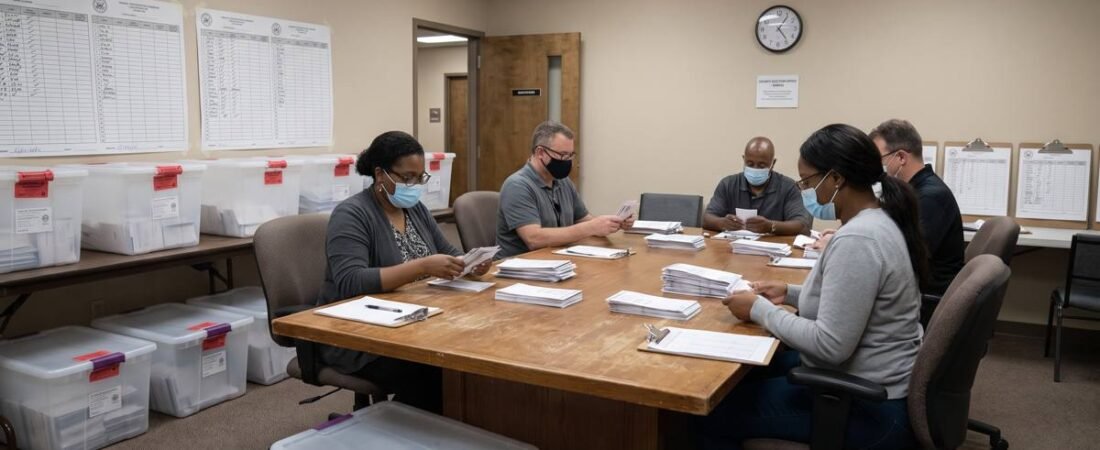
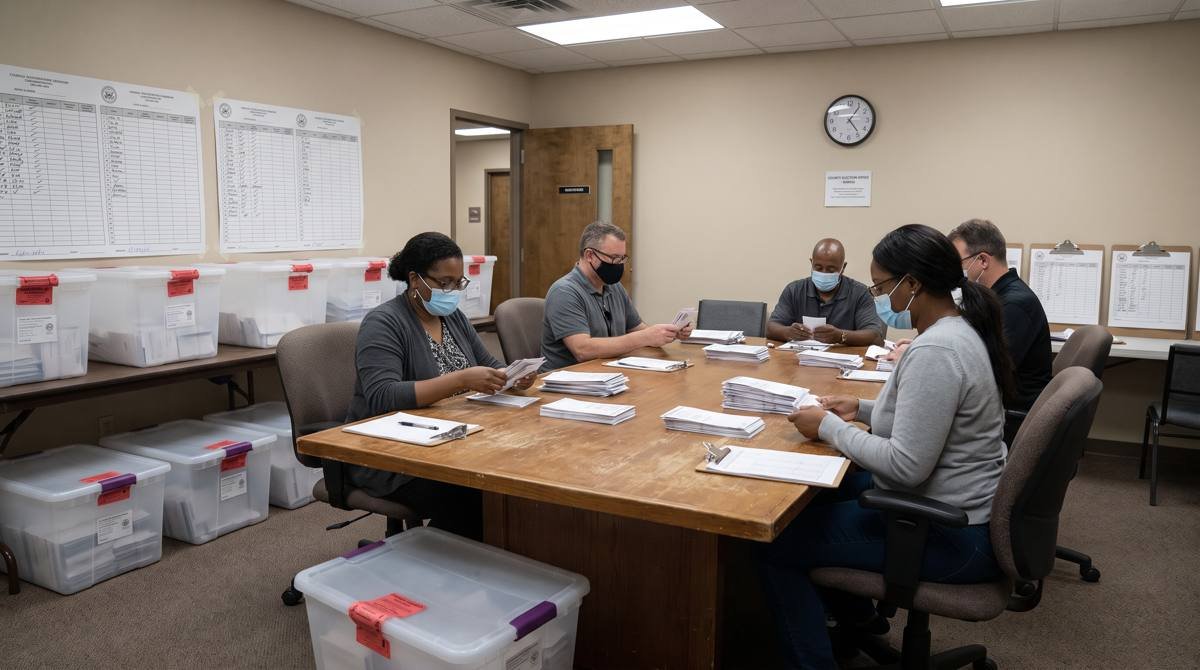
David Graham, the Libertarian candidate in the Senate race, filed a recount request on Nov. 17. The request covers 60 precincts: 23 in Johnson County, 21 in Shawnee County and 16 in Wyandotte County, according to reporting by Kansas Reflector and KMBC.
The request follows a decisive statewide result. Democrat Adam Hamilton won the Senate contest with about 51% of the vote, while Republican incumbent Roger Marshall received about 46% and Graham received about 3%, Kansas Reflector reported. The margin was wider than the threshold for a state-funded close-race recount, so the request required a bond to cover the expected costs.
Kansas law permits a candidate for a statewide office to request a recount in one or more counties or precincts. The request must be filed with the secretary of state by 5 p.m. on the day after the last county canvass meeting, and the requester must file a bond to pay recount costs. The secretary of state determines the bond amount. The statute says the recount must begin by the following day and be completed by 5 p.m. on the fifth day after the request, including weekends and holidays. See Kansas Statutes § 25-3107.
The Kansas Secretary of State’s office authorized the affected counties to begin after receiving a cashier’s check for $47,548.12 on Nov. 19. KMBC reported the estimated costs as $24,750 for Johnson County, $12,835 for Wyandotte County and $9,962.52 for Shawnee County. The recount is being conducted under county election officials’ supervision.
Facts: Why the payment drew scrutiny
Schwab said Graham expressly stated that he did not doubt the accuracy or outcome of the election. The stated purpose, according to the secretary of state’s account, was to assist Beth Clarkson with academic research. That differs from the usual public explanation for a recount, which is to test a close or disputed result, although Kansas law does not limit a candidate’s request to cases in which the candidate alleges an error.
The cashier’s check was drawn on an account belonging to the Show Me the Votes Foundation, not Graham’s campaign account or a campaign recount fund. Schwab said the source of the money provided to the foundation had not been disclosed. He described the arrangement as raising “serious concerns about potential violations of federal campaign finance restrictions,” including rules on prohibited sources and contribution limits, according to the Kansas Reflector report.
Clarkson told Kansas Reflector that she raised the money and paid the secretary of state for research purposes. She said she did not view the payment as a campaign contribution to Graham. Her explanation is a response to the secretary of state’s concern, not a legal determination about how federal law applies.
The secretary of state’s office said it lacks authority to enforce federal campaign-finance law and would refer the matter to the FEC and Justice Department. The FEC explains that possible violations can reach the agency through referrals, complaints, audits or self-submissions. It also says enforcement cases generally remain confidential until they are closed. That means a referral should not be read as proof that the FEC has opened a public case or concluded that a violation occurred. See the FEC’s enforcement process.
Analysis: Two separate questions are unfolding
The first question is administrative: what will the hand count show? Because only selected precincts are being recounted, the process is not a statewide recount of every Kansas Senate ballot. Its immediate purpose is to recount the specified areas under the state’s statutory procedure. Unless the recount changes the certified outcome under applicable rules, it is unlikely to alter the statewide result, but the final effect cannot be known before the count and certification process are complete.
The second question is legal and financial: whether the payment was permissible under federal campaign-finance rules. The key facts for that review would include who supplied the money to the foundation, whether the payment was treated as a contribution, whether Graham’s candidacy or campaign benefited, and whether any source or amount limits applied. Public reporting so far establishes the payment’s path and the officials’ concern, but not the underlying donor source or a federal conclusion.
The unusual stated purpose matters because recounts are part of election administration while campaign-finance law regulates money connected to federal candidates and elections. A private foundation may describe a payment as research spending, while regulators could examine whether the practical effect was to pay an expense associated with a candidate’s recount request. That question requires evidence and legal analysis that has not yet been publicly resolved.
The next developments are therefore procedural rather than electoral drama. County officials must finish the authorized recount on the statutory timetable and report the results through the Kansas election system. Federal authorities may review the referral, request records or take no public action. Under the FEC’s rules, the absence of an immediate public announcement would not establish that the matter was dismissed, because enforcement files can remain confidential.
As of November 21, 2026, the defensible conclusion is limited: Kansas is conducting a targeted Senate recount, the required bond was paid by a foundation rather than the candidate’s campaign, and the secretary of state has referred questions about that funding to federal authorities. Neither the recount’s final result nor any campaign-finance violation has been established.
Sources
- Kansas Statutes § 25-3107, recount procedure and payment of costs
- Kansas Secretary of State, Elections Division
- Federal Election Commission, Enforcing federal campaign finance law
- Kansas Reflector, “Kansas secretary of state says payment for partial U.S. Senate recount ‘raises serious concerns,’” Nov. 20, 2026
- KMBC, “Kansas secretary of state questions funding source of Senate race recount,” Nov. 20, 2026