
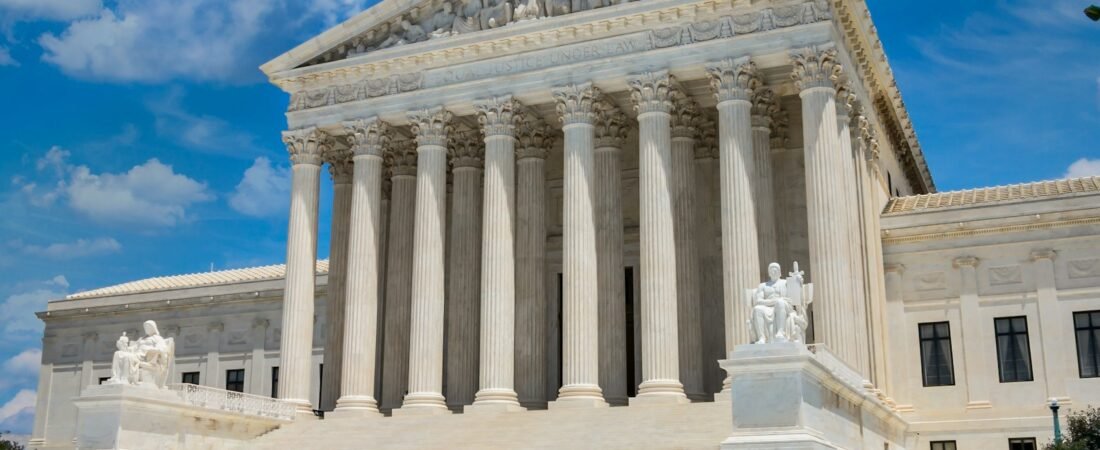
The U.S. Supreme Court is the highest court in the federal judiciary, but it does not function as a general appeals court for every disappointed litigant. Most cases reach the justices through a request asking the Court to review a lower-court decision. Understanding that process helps readers distinguish a case being filed, accepted for review, argued and decided.
Most cases begin with a petition for a writ of certiorari
A party that has lost in a qualifying lower-court proceeding may ask the Supreme Court to review the case by filing a petition for a writ of certiorari. The petition explains the legal question, the relevant facts and why the Court should take the case. The opposing party may file a response, and the justices may request additional briefing.
The Court receives thousands of requests in a typical term and grants review in only a small fraction. A petition’s filing does not mean the justices agree with the arguments or that the Court will hear the dispute.
What is the Rule of Four?
Under the Court’s longstanding practice known as the Rule of Four, at least four justices must vote to grant review. This allows a minority of the Court to place a case on the docket. The vote to grant certiorari is not a decision on who should win; it is a decision to review the legal questions presented.
Why might the Court accept a case?
The Court is more likely to consider cases that raise significant federal questions, resolve disagreements among federal appeals courts or state courts on federal law, or present issues of broad national importance. The justices also consider whether the case is a suitable vehicle for resolving the question. A case may be denied review for many reasons, and a denial does not ordinarily mean the Court endorses the lower court’s reasoning.
What happens after review is granted?
Briefing
The parties submit written briefs setting out their legal arguments and explaining how the Constitution, federal statutes or prior decisions apply. Outside groups and other interested participants may seek permission to file amicus curiae, or “friend of the court,” briefs. These filings can provide additional legal, practical or institutional perspectives.
Oral arguments
The Court schedules oral argument in many cases it accepts. Lawyers answer questions from the justices, who may test the consequences of each side’s position. Oral argument is one part of the record; it does not replace the written briefs or the governing law.
Conference and decision
After argument, the justices discuss the case in private conference and vote. If the Court reaches a decision, one or more opinions explain the result and the legal reasoning. A majority opinion states the Court’s holding; concurring opinions agree with the outcome but may give different reasons, while dissenting opinions explain disagreement.
What does a Supreme Court ruling actually do?
The effect depends on the question before the Court. A decision may interpret a federal statute, resolve a constitutional dispute, clarify the jurisdiction of a court or send a case back to a lower court for further proceedings. The precise holding matters: a ruling should not be described more broadly than the legal issue the Court decided.
Some decisions are unanimous; others split the justices. A narrow ruling may resolve a particular procedural question without settling the wider political debate surrounding the case. Readers should distinguish the judgment, the majority’s reasoning and statements that appear only in separate opinions.
How to follow a case accurately
- Start with the docket: Confirm the case name, docket number and current procedural status.
- Read the question presented: The petition identifies the legal issue the petitioner wants the Court to review.
- Check the order list: A grant of certiorari, a denial and a final decision are different actions.
- Use the opinion itself: Headlines and summaries can omit limits, exceptions or procedural details.
- Track remand orders: A Supreme Court decision may return a case to a lower court rather than end the underlying dispute.
Official sources for Supreme Court coverage
The Court publishes its docket, orders, opinions and oral-argument audio on its official website. Its Rules of the Supreme Court explain filing requirements and procedures.
The bottom line
The Supreme Court’s case-selection process is selective and procedural. A petition asks for review; a grant places a case on the Court’s docket; briefing and argument develop the legal issues; and an opinion explains the Court’s decision. Accurate coverage should identify the stage a case has reached and describe the holding without overstating its scope.
Image note: Featured image is an illustrative stock photograph of the U.S. Supreme Court building, not an image of a particular case or proceeding.
