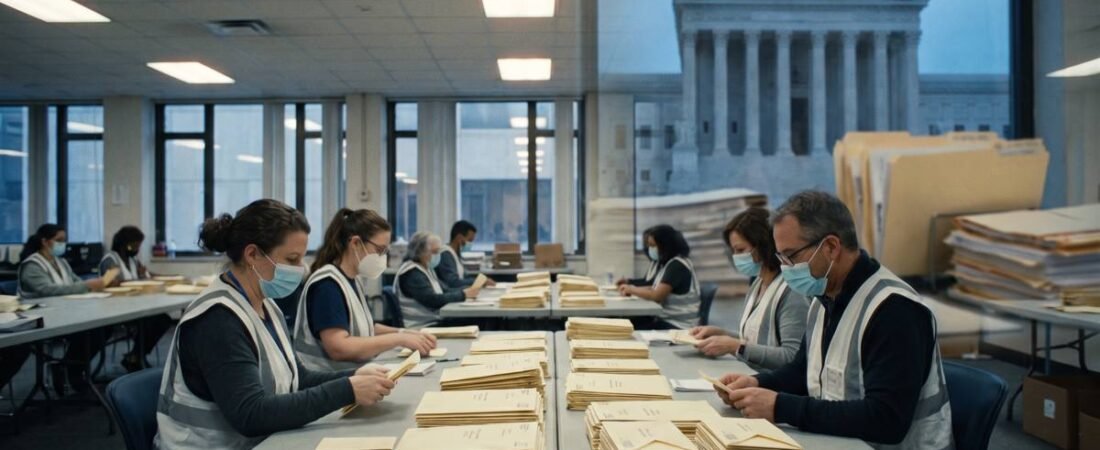
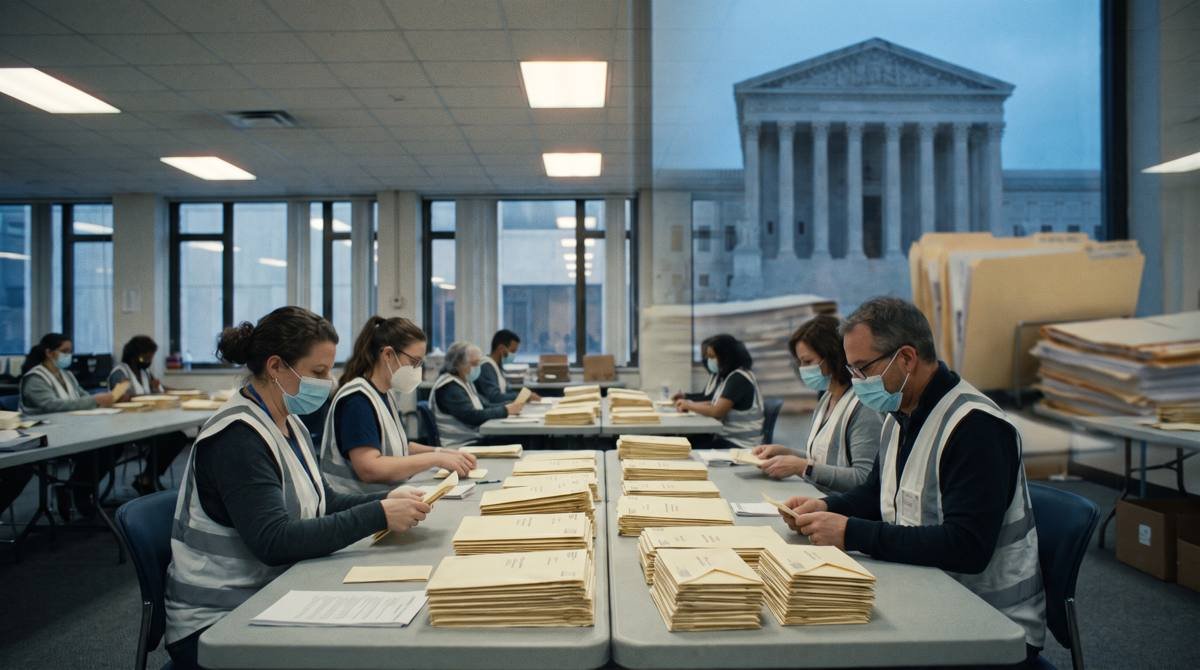
As of November 8, 2026, the most consequential immediate election-administration development is the Justice Department’s decision to abandon its federal case seeking to restrict the counting of roughly 20,000 California mail ballots. The move came after courts declined to provide the emergency relief the administration sought before the November 3 election. It leaves the allegations untested in this case, while adding to a broader post-election debate over federal efforts to influence state-run election procedures.
Facts: What the Justice Department sought
On October 15, the Justice Department filed a complaint against California after federal officials said they had identified more than 20,000 people they believed were likely noncitizens and who had been sent vote-by-mail ballots. The department said its review used voter-registration records and federal immigration data. It alleged that California had failed to review the list and asked a federal court to require the state to set aside the ballots and verify citizenship before counting them. (Justice Department complaint announcement)
The complaint described the list as a preliminary identification of people who were “likely aliens.” That wording matters: the filing stated an allegation and sought a court order; it did not establish that all, or any particular number, of the people on the list had voted unlawfully. Noncitizens are barred from voting in federal elections, but a registration match or immigration record is not by itself proof that a person cast a ballot, was ineligible under all applicable rules, or committed a crime.
The timing created an administrative problem. California had already mailed ballots to its registered voters, and election officials were processing ballots before Election Day. Once a mail ballot is accepted and processed, it is generally anonymized and cannot simply be identified later by voter. NBC News reported that California had processed about 9 million ballots by early November 6, with nearly 5 million still to be counted, according to state election officials. (NBC News)
Facts: Courts rejected emergency intervention
The Justice Department pursued fast relief because, in its view, waiting would make it impossible to separate the challenged ballots. On November 2, the Supreme Court rejected the administration’s emergency request to force California election officials to segregate and withhold the ballots at issue, according to Reuters and California Attorney General Rob Bonta’s office. The ruling did not decide the underlying accuracy of the federal list or whether any listed person voted unlawfully. (Reuters) (California attorney general’s office)
The court sequence also included decisions in related litigation over federal requests and warnings sent to election officials. In a November 2 order, the U.S. Court of Appeals for the Ninth Circuit described a district-court temporary restraining order that barred further ballot-sequestration demands and certain prosecution threats while the case proceeded. The appeals court granted the government’s request for a stay pending appeal in that separate matter, while noting that the underlying litigation was not resolved. (Ninth Circuit order, No. 26-7303)
The legal record therefore contains several distinct proceedings. The Supreme Court’s rejection of emergency relief in the California ballot case prevented the requested pre-counting intervention. The Ninth Circuit order addressed a related challenge to federal communications with state and local election officials. Neither action constituted a final judicial finding that the 20,000-person list was accurate or inaccurate.
Facts: DOJ dismisses the case after Election Day
On November 6, the Justice Department filed a notice of voluntary dismissal, ending its California case after the election. Reuters quoted the department’s position that “the relief the United States sought is no longer available” because the ballots had been tallied and could no longer be separated. (Reuters report on the dismissal)
California Attorney General Rob Bonta’s office said the dismissal came before a November 13 hearing that would have examined the reliability of the federal list. The state characterized the case as a failed effort to force election officials to set aside ballots from approximately 20,000 people the federal government believed were likely noncitizens. The attorney general’s description is an advocacy statement, not a neutral judicial finding, but it confirms the date and procedural status of the dismissal. (California Department of Justice statement)
Analysis: Why the case matters beyond California
The immediate practical result is that California was not ordered to create a new ballot-segregation process during the 2026 election. That avoided a late change to the handling of mail ballots, but it did not settle the larger dispute over how federal agencies may use voter-registration and immigration information to challenge state election administration.
The case also illustrates the difference between election claims and election proof. The federal government asserted that its data identified likely noncitizens. California officials and voting-rights plaintiffs disputed the reliability and timing of the list. Courts made procedural decisions about emergency relief and ballot handling, but the voluntary dismissal means this particular case ended without a merits ruling on the list’s accuracy.
The issue is not necessarily over. The Justice Department can continue other investigations or litigation involving alleged unlawful registration or voting, and separate cases concerning federal demands to state election officials remain relevant. California’s vote count and certification process also continued after Election Day under state rules. As of November 8, this article does not treat any projected or unofficial result as a certified statewide outcome.
For election administrators, the central lesson is operational: challenges raised after ballots are mailed can collide with anonymization, chain-of-custody rules, voter privacy, and statutory deadlines. For voters and campaigns, the central lesson is evidentiary: a government list, a court filing, an emergency ruling, and a certified election result are different things. The California ballot lawsuit ended before a court tested the government’s central factual allegation.
Sources
- U.S. Department of Justice: United States sues California over voter list
- Reuters: Trump administration ends California balloting lawsuit
- NBC News: DOJ drops bid to force California to set aside ballots
- California Attorney General: Administration drops lawsuit
- U.S. Court of Appeals for the Ninth Circuit, No. 26-7303