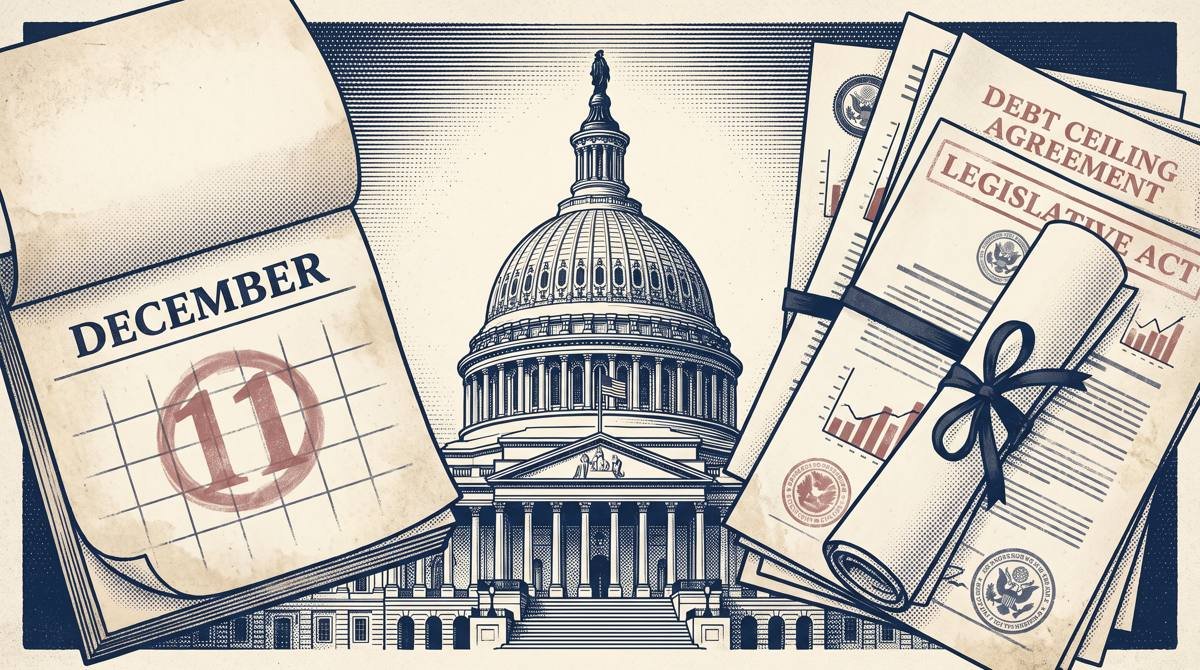
The most consequential post-election economic-policy story is not an immediate change in taxes, tariffs or interest rates. It is the shift in bargaining power over the federal budget. Democrats are set to control both chambers of Congress in January, but the outgoing Republican Congress still controls the next major funding deadline: December 11. That creates a short window in which lawmakers must decide whether to keep the government open, finish fiscal-year 2027 appropriations or carry the dispute into the new Congress.
The result is a more confrontational economic agenda rather than an instant policy reversal. President Donald Trump retains executive authority over much of trade policy and can veto legislation. Democrats will have the power of the purse, committee oversight and, later, leverage over the debt ceiling. Whether those tools produce lower prices or only another fiscal standoff remains unsettled.
The immediate test is the December 11 funding deadline
Facts. Congress enacted a short-term continuing resolution intended to fund the government through December 11. In September, House Appropriations Committee Chairman Tom Cole said the measure was designed to give lawmakers time to move past the election and resume full-year appropriations in November and December. His official floor remarks described it as a “clean, short-term continuing resolution” with no partisan riders. (House Appropriations Committee)
The timing matters because the lame-duck Congress—not the incoming Democratic majorities—will face that deadline. A failure to enact another funding measure could cause a partial government shutdown. That outcome is not predetermined: Congress can pass another continuing resolution, complete appropriations bills or reach a broader agreement. But the deadline compresses negotiations and gives both parties an incentive to attach demands to a must-pass bill.
Analysis. Reuters reported that Democrats’ control of the fiscal purse could let them seek concessions on tariffs, health-insurance subsidies and spending, while also raising the risk of a shutdown confrontation. The incoming majority cannot simply rewrite the administration’s economic program on January 3. It must first decide whether to bargain, investigate, legislate, or use funding restrictions to influence implementation. (Reuters, November 4)
Tariffs and health costs are the likely economic pressure points
Facts. Democrats have signaled that affordability will be central to their agenda. Investopedia reported that House Democratic Leader Hakeem Jeffries has said Democrats plan early votes to restore expired Affordable Care Act subsidies, reverse Medicaid cuts and challenge Trump’s tariffs. The same report noted that undoing tariffs may be difficult because the administration has relied on executive trade authorities that do not require a new act of Congress. (Investopedia)
Reuters reported that inflation remains above the Federal Reserve’s 2% target and that tariffs, the Iran war and tighter immigration restrictions have added to business costs, even as growth and employment remain relatively strong. (Reuters, November 4)
Analysis. Congress has more direct authority over taxes, spending and benefit programs than over tariffs. That makes health subsidies and appropriations more actionable bargaining targets than a blanket tariff repeal. Democrats could use hearings, bill language and funding conditions to raise the political cost of the administration’s trade policy. The White House could respond with a veto, and Senate rules can make major legislation difficult even with a majority.
The debt ceiling is a later, bigger source of leverage
Facts. The debt ceiling is separate from annual appropriations. It authorizes the Treasury to continue borrowing to meet obligations already approved by Congress. Reuters quoted market strategist Ed Al-Hussainy calling debt-ceiling negotiations beginning late next year a “natural point of pressure” for the new congressional majority. The report also stressed that Democrats will not have enough votes to override a Trump veto. (Reuters, November 4)
This is a forecast about timing and bargaining power, not a scheduled shutdown. The exact date of any debt-limit constraint can change with federal receipts, spending and Treasury cash management. The November 3 election did not itself raise or suspend the debt ceiling.
Analysis. Debt-limit negotiations can affect borrowing costs and financial confidence even before a missed payment. A prolonged standoff could make Treasury-market volatility, government contracting delays or a shutdown risk part of the economic outlook. But leverage can cut both ways: using the ceiling to demand concessions may produce a deal, or it may deepen uncertainty without changing the underlying deficit.
What the Federal Reserve and economic data can—and cannot—tell voters
The Fed’s policy path is not controlled by the election result. The Federal Reserve’s official calendar shows its regular 2026 meetings, including September 15–16, and lists the next scheduled meeting dates separately from political events. (Federal Reserve) Congress can influence the Fed through oversight and Senate confirmation of governors, but it cannot order a rate cut.
Data interpretation also requires caution. The Bureau of Labor Statistics’ official release calendar was updated November 3, while its public news-release page still displayed earlier releases, including April CPI and May employment figures. (BLS release calendar; BLS economic releases) That means some current claims about inflation, wages or jobs should be checked against the exact release date and reference month rather than repeated from campaign rhetoric.
What to watch next
The first hard signal will be whether the lame-duck Congress passes funding before December 11 and whether either party attaches conditions. The second will be the incoming committees’ opening agenda on tariffs, health subsidies, Medicaid and executive oversight. The third will be any formal Treasury estimate of when debt-ceiling authority becomes binding.
For now, the verified conclusion is narrower than many campaign claims: the election changed who will write and police fiscal policy, but it did not immediately change the tariff schedule, the federal funds rate or the price level. The economic stakes will turn on whether the new leverage produces negotiated policy or another round of brinkmanship.
Sources
- House Appropriations Committee, Cole floor remarks on H.R. 6500
- Reuters, “Trump is still in charge, but Democrats gain leverage in coming economic debate”
- Investopedia, “What’s Likely to Change for the U.S. Economy After Democrats Take Congress?”
- Federal Reserve, FOMC calendars
- Bureau of Labor Statistics, release calendar
- Bureau of Labor Statistics, economic news releases
Publication readiness: Ready for publication as of November 5, 2026, with the caveat that funding negotiations, official economic releases and congressional control can change quickly. The article distinguishes verified procedural facts from analysis and does not treat forecasts as settled outcomes.