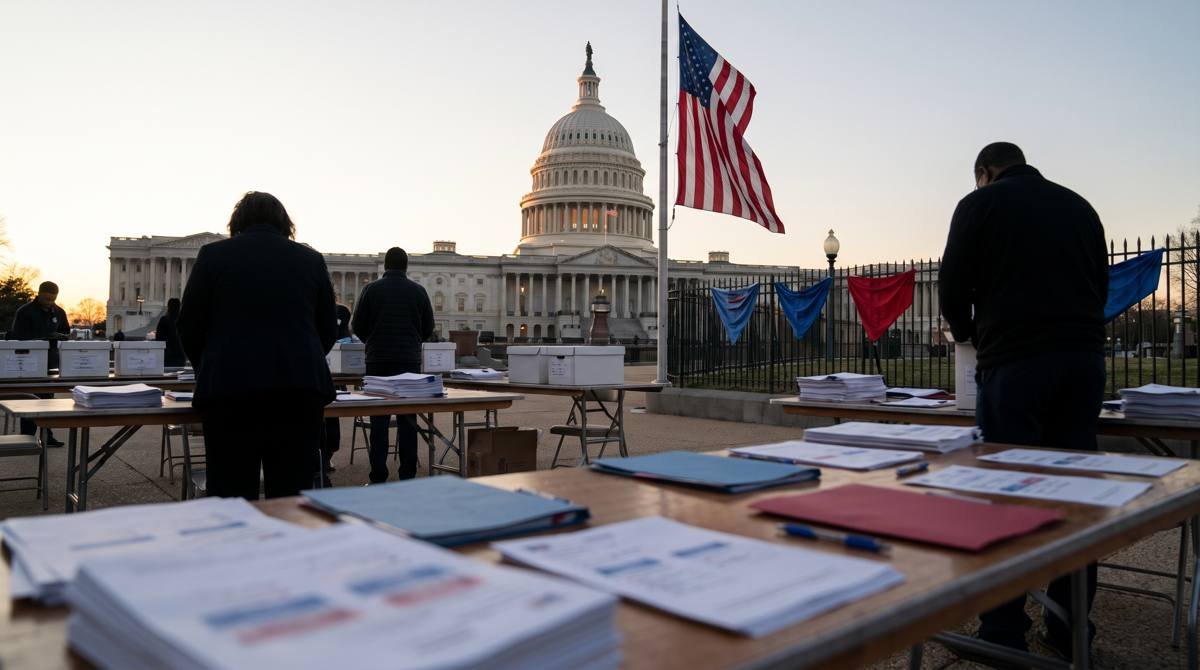
Democrats have secured at least 258 U.S. House seats in the 2026 midterm election, according to the latest race calls, giving the party a large majority when the new Congress convenes in January. The milestone was reached after Democrat Chuck Hubbard defeated Republican Rep. Virginia Foxx in North Carolina, according to reporting based on Associated Press race calls.
The result is politically decisive but not the same as a fully certified national tally. Four House races remain outstanding, including two Louisiana contests headed to a December 12 runoff. State and local election officials still must complete their own canvasses and certification procedures.
As of November 23, 2026: Democrats have been called the winners in at least 258 of the 435 House districts, while Republicans have at least 173 seats. The remaining contests could change the final margin, but not the basic conclusion that Democrats will control the House if the current calls hold through certification.
Facts: How Democrats reached 258 seats
The Associated Press report published November 22 said Democrats had gained 44 House seats and reached at least 258 after Hubbard defeated Foxx. Republicans had at least 173 seats. The 258-seat total is 40 more than the 218 seats needed for a majority in a fully filled 435-member House.
The result would be Democrats’ strongest House performance in a regular election since 1992, when the party won 258 seats. It also exceeds the 257-seat Democratic result from 2008. The comparison is based on the reported number of seats won, not on the number of votes nationwide.
The remaining races are one contest each in Minnesota and Tennessee and two Louisiana districts going to runoff elections, AP reported. The House Clerk’s 2026 election information explains that Louisiana uses an open primary system and schedules a December 12 runoff when no candidate receives the required majority or when there is a tie.
The AP’s 2026 House results project explains that its decision team calls a race when it determines that trailing candidates no longer have a path to victory. That is a projection based on vote counts and election analysis, not a replacement for state certification.
Facts: What control of Congress will look like
Democrats are also expected to control the Senate with 56 seats, according to current election reporting. That would put both chambers under Democratic control beginning in January while Republican Donald Trump remains president. The arrangement creates divided government, with Democrats able to pass legislation through Congress but facing a presidential veto unless they secure enough Republican support to override it.
The House majority will be substantially larger than the narrow Republican majority that governed the current Congress. AP reported that Republicans struggled to move legislation when a small number of members could block or delay votes. A 258-seat Democratic conference would have room to lose several members on ordinary legislation while still reaching the 218 votes needed for passage, although internal disagreements could remain significant.
Democratic leaders have emphasized affordability, healthcare and oversight. AP reported that the party is preparing a 100-day agenda focused partly on high living costs and plans to use investigative and subpoena powers to scrutinize the administration. Those are stated priorities, not enacted policy.
Analysis: A large majority creates power and pressure
The size of the projected majority changes the legislative math immediately. A party with 258 seats does not need perfect unity to pass a House bill. It can also set the committee agenda, control floor scheduling and decide which investigations receive institutional resources.
The margin does not eliminate political constraints. Senate legislation still faces the chamber’s rules and the need to assemble votes. A presidential veto remains available. Some major fiscal or tax measures may require negotiations over procedures, budget rules and the debt limit. A large majority also includes members from very different districts, so agreement inside the Democratic caucus cannot be assumed.
The election result may nevertheless give House Democrats leverage over economic policy. They campaigned on reducing household costs and restoring or expanding programs that affect healthcare and family budgets. Turning those promises into law will require choices about spending, taxes, regulation and the interaction between federal policy and the president’s priorities.
The result also raises a governance question. Oversight can expose failures or deter misconduct, but investigations consume time and can deepen partisan conflict. Democratic leaders must decide how to balance an accountability agenda with legislation on the cost-of-living issues that voters cited during the campaign, according to AP’s reporting.
What remains before the majority is final
The four unresolved races matter for the final seat count, even though they do not threaten Democratic control under the current calls. Louisiana’s December 12 runoffs are the clearest remaining election-day milestones. The Minnesota and Tennessee contests also require final results and certification before the official composition of the 120th Congress is known.
State election officials must finish canvassing ballots, resolve eligible provisional or absentee ballots under applicable state law, and certify returns. The House will ultimately judge the elections and qualifications of its members when the new Congress convenes, but that constitutional role does not make media race calls irrelevant; it means the institutional process continues after Election Day.
The careful conclusion is therefore two-part: Democrats have won enough reported House races to secure control based on current calls, and the final number of Democratic and Republican seats remains unsettled. As of November 23, the 258-seat figure is a powerful election result, not yet a final certified national tally.