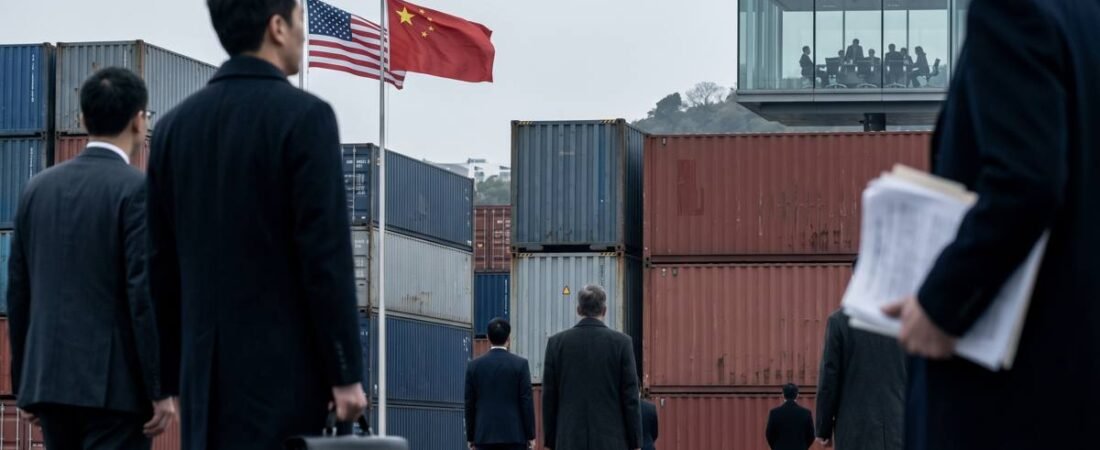
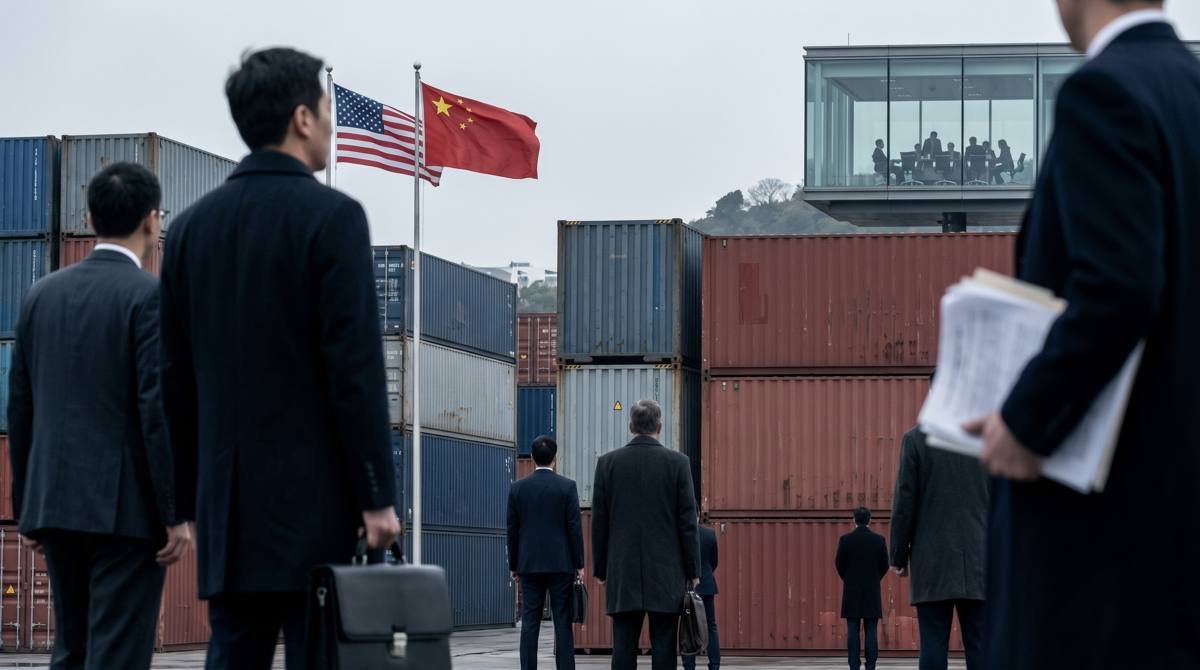
Treasury Secretary Scott Bessent used a November 10 speech released by the Treasury Department on November 11 to outline a developing U.S.-China economic framework built around reciprocal trade, targeted tariff treatment and Chinese purchases of American commodities. The remarks came before President Donald Trump’s expected meeting with Chinese President Xi Jinping in Shenzhen next week.
The announcement is significant because it gives the administration’s trade agenda a more concrete operating structure. But it is not a new tariff schedule, a ratified treaty or proof that every purchase commitment has been fulfilled. The details still depend on implementation by both governments, upcoming talks and compliance with earlier promises.
Facts: What Bessent announced
In remarks to the National Committee on U.S.-China Relations, Bessent said a new U.S.-China “Board of Trade” had reached consensus on identifying more favorable tariff treatment for $30 billion of non-sensitive goods in each direction. He also said the board had begun work on agricultural trade barriers. The Treasury remarks describe the arrangement as a consensus to identify treatment, not as a completed tariff reduction.
Bessent said China had previously agreed to buy at least 25 million metric tons of U.S. soybeans and 10 million metric tons of U.S. coal over the next two years. The speech did not provide a delivery timetable, shipment record or enforcement mechanism for those figures. They should therefore be treated as stated commitments, not completed sales.
The secretary also described a parallel “Board of Investment” as a forum for market-access questions affecting American companies in China and for greater predictability for Chinese companies. He characterized the broader objective as “de-risk, not to decouple,” meaning the administration is seeking less dependence on Chinese supply without ending bilateral commerce.
Reuters independently reported the same core elements, including the proposed mutual tariff treatment on $30 billion of non-sensitive goods and China’s pledged purchases of U.S. farm products. Reuters’ report also said Bessent is expected to travel to Shenzhen for talks on the sidelines of the November 18–19 Asia-Pacific Economic Cooperation leaders’ summit.
Facts: Why implementation is still unsettled
The administration’s own recent trade readout shows that earlier commitments remain an active issue. On a video call with Chinese Vice Premier He Lifeng, U.S. Trade Representative Jamieson Greer and Bessent stressed the need for China to take “concrete actions” on agricultural purchases, rare earths and other critical minerals. USTR’s readout said Washington would monitor compliance while seeking benefits for American farmers, manufacturers and workers.
That language matters procedurally. It indicates that the framework is being managed through continuing consultations rather than a single final document that settles every dispute. It also leaves open questions about which products would receive better tariff treatment, when any changes would take effect, and how either side would respond if commitments were missed.
The Associated Press reported that a fragile U.S.-China trade truce is set to expire in January and that trade is likely to feature prominently in the Trump-Xi meeting. AP’s account said Chinese officials have also raised concerns about Washington’s restrictive trade and economic measures. The competing pressures make the proposed boards important, but they do not remove the risk of renewed tariff or export-control disputes.
Analysis: What the framework could mean for prices and producers
If implemented, reciprocal tariff treatment on selected non-sensitive goods could lower trade costs for particular importers and exporters. The effect on overall U.S. inflation would probably be narrower than the headline dollar figure suggests. The arrangement covers a defined group of goods, and the Treasury speech did not identify the products, tariff rates or effective dates. Importers could also absorb some savings rather than pass them through to consumers.
The commodity commitments would matter more directly to U.S. producers if shipments occur at the stated scale. Soybean purchases could support farm demand and export prices, while coal purchases could benefit producers in regions that still serve international markets. Those effects would depend on actual volumes, contract terms, shipping capacity and whether purchases are sustained over the two-year period.
The framework also reflects a central tension in the administration’s trade policy. Washington wants American companies to gain market access and domestic producers to become less vulnerable to foreign supply disruptions. At the same time, a more confrontational tariff policy can raise costs for manufacturers that rely on imported inputs. A “de-risking” strategy attempts to manage that tension, but the outcome will depend on whether targeted restrictions remain limited and predictable.
Analysis: Why the Trump-Xi meeting is the next test
The Shenzhen meeting will provide the clearest test of whether the framework moves from speech to operating policy. The key indicators are an identified product list, published tariff instructions, evidence of agricultural and energy shipments, and a process for handling unresolved barriers. Without those details, the $30 billion figure is a negotiating objective rather than a measurable change in the cost of goods.
The politics are also consequential. The administration is presenting reciprocity as a way to place American workers and producers at the center of engagement with China. Supporters may view the boards and purchase commitments as evidence that tariffs are producing leverage. Critics are likely to ask whether the arrangements can be enforced and whether consumers, farmers and manufacturers receive benefits that outweigh the costs of uncertainty.
The immediate development is therefore not a finished trade deal. It is a more formal framework for managing the relationship, paired with specific but incompletely documented commitments. As of November 11, 2026, the framework’s economic impact remains contingent on negotiations, implementation and verified performance.
Sources
- U.S. Treasury: Remarks from Secretary Scott Bessent at the National Committee on U.S.-China Relations Gala
- Reuters: U.S. and China should stay clear-eyed on AI cooperation and competition, Bessent says
- Associated Press: Treasury Secretary Scott Bessent calls for more balanced U.S.-China trade ties
- U.S. Trade Representative: Readout of Ambassador Greer’s Call with China’s Vice Premier He Lifeng