Iran war damage to Republican midterm prospects is clearest where costs and margins meet
Dek: Eight months into the conflict, fuel prices, voter fatigue and antiwar conservative defections are complicating the GOP’s defense of a narrow Senate majority and dozens of House seats.
Meta description: Iran war damage to Republican midterm prospects is growing as fuel costs and antiwar defections reshape 2026 Senate and House races.
Primary keyword: Iran war damage to Republican midterm prospects
Secondary keywords: 2026 Republican midterms; gas prices and elections; Senate races 2026
Slug: iran-war-damage-republican-midterm-prospects
As of October 28, 2026, the Iran war is a direct political problem for Republicans: it is linked to a visible household cost, has lasted far longer than President Donald Trump initially predicted, and strains the “America First” promise that helped define his coalition. The evidence shows a liability, not a settled election result. The question is whether discontent changes enough votes to alter control of Congress.
Why the conflict is reaching the checkout line
The economic pressure is documented even though the war’s exact share of the increase is contested. The Bureau of Labor Statistics’ September CPI release reported that gasoline prices rose 9.1% in one month and 34.2% over the year. Overall consumer prices rose 3.7% over 12 months.
The Energy Information Administration’s October 14 price table put regular gasoline at $4.331 a gallon nationally for the week of October 12 and diesel at $6.179. Those are national averages, not what every voter pays. They help explain why fuel is salient for commuters, farmers, truckers and businesses that pass transportation costs into other prices.
The Congressional Research Service’s September conflict report describes the mechanism behind the broader risk: fighting and threats around the Strait of Hormuz disrupted shipping and exposed global oil and gas markets to further shocks. CRS says the April ceasefire and June memorandum collapsed, with the memorandum expiring in August. That history makes assurances that the conflict is nearly over harder for candidates to use as a stabilizing message.
A difficult message for Republican candidates
The Associated Press’ October 27 report says Republican strategists privately regard the war as damaging the party’s effort to retain Congress. AP also reported that some campaign officials saw House districts Trump won comfortably in 2024 becoming more competitive and that internal campaign polling, according to anonymous strategists, showed voters connecting the war with grocery and travel costs. Those are attributed campaign assessments, not public polling results.
Trump’s public answer has been to minimize the economic cost and argue that higher fuel prices are a temporary price worth paying to prevent Iran from acquiring a nuclear weapon. AP quoted him saying he expected gas prices could have doubled or tripled and that the actual increase was a small price to pay. AP also reported that he has alternated between saying the war’s end is near and warning that bombing could resume after the election. That combination gives Republican candidates little room to offer a simple timeline or economic defense.
The Senate map concentrates the risk
The AP 2026 Senate guide says Republicans enter the election with 53 seats to Democrats’ 47, while 22 Republican-held seats are up. Democrats need a net gain of four seats, assuming they hold their own vulnerable seats. AP identifies Iowa, Ohio and Texas among the best Democratic pickup opportunities; CBS News’ race overview also lists Iowa and Ohio as competitive and Texas as closely watched.
These states matter because the war may weaken Republican margins among persuadable voters, reduce turnout among conservatives who expected a noninterventionist presidency, or make a third-party protest vote more consequential.
Iowa illustrates the bind. AP reports that Republican nominee Ashley Hinson has a Trump endorsement and a statement saying Iowans should not have to pay at the pump or checkout line for the war. That acknowledges affordability without openly breaking with the president. In Texas, Trump campaigned October 27 for Republican nominee Ken Paxton against Democrat James Talarico, a race AP describes as tight. Ohio’s contest pits Republican Sen. Jon Husted against former Democratic Sen. Sherrod Brown, according to AP and CBS.
Antiwar defections and the House question
The risk from the right is real but difficult to measure. PBS NewsHour’s AP report says Libertarian candidates could draw protest votes in Texas, Ohio and Kansas. Republican officials expressed less concern about Iowa because Libertarians are not a regular presence there. The report attributes the concern to party strategists and quotes an Ohio Republican who said even a few percentage points could matter. It does not establish how many voters will defect.
AP’s live coverage of Trump’s Texas campaign also reported that some conservatives view the war and presidential expansion of executive power as violations of anti-establishment principles. One Trump supporter interviewed by AP said he was reconsidering his allegiance after attending CPAC. Individual interviews show the argument exists; they cannot measure its scale.
The House is harder to forecast. CBS identifies 42 House races likely to help decide the majority, while AP reports that some previously safe Republican districts have become more competitive in internal assessments. Neither source provides a public estimate attributing a specific number of House seats to Iran or fuel prices. The war adds a national burden where voters are already focused on affordability.
What remains uncertain
The war could end, fuel prices could fall, or a new security event could change voters’ priorities before November 3. October’s CPI release is scheduled for November 10, after Election Day, so September is the latest official monthly inflation reading available on October 28. The sources do not prove causation between the conflict and any candidate’s standing.
For now, the Iran war’s damage to Republican midterm prospects is best understood as a margin problem. It complicates Trump’s campaign message, gives Democrats a cost-of-living argument and offers antiwar conservatives a reason to withhold support. Whether that becomes a change in congressional control will depend on turnout, candidate-specific controversies and late developments the current record cannot settle.
Sources
- Associated Press, “How Trump’s ‘little detour’ to Iran became a roadblock in the midterm elections,” October 27, 2026. https://apnews.com/article/trump-midterm-elections-iran-war-gas-prices-b5d05074e4fb08f430e35820f173905e
- Associated Press, “Live updates: Trump campaigns in Texas as Iran war threatens GOP’s midterm hopes,” October 27, 2026. https://apnews.com/live/trump-midterm-elections-news-updates-10-27-2026
- U.S. Bureau of Labor Statistics, “Consumer Price Index, September 2026,” October 14, 2026. https://www.bls.gov/news.release/cpi.nr0.htm
- U.S. Energy Information Administration, “Gasoline and Diesel Fuel Update,” October 14, 2026. https://www.eia.gov/petroleum/gasdiesel/
- Congressional Research Service, “U.S. Conflict with Iran,” September 18, 2026. https://www.congress.gov/crs-product/R48887
- Associated Press, “Senate races to watch in the 2026 midterm elections,” October 8, 2026. https://apnews.com/projects/2026-us-elections-senate-key-races-to-watch/
- CBS News, “2026 midterm election races to watch,” October 6, 2026. https://www.cbsnews.com/news/2026-midterm-election-races/
- PBS NewsHour, “Libertarians could siphon Republican support in the fight for control of the U.S. Senate,” October 27, 2026. https://www.pbs.org/newshour/amp/politics/libertarians-could-siphon-republican-support-in-the-fight-for-control-of-the-u-s-senate
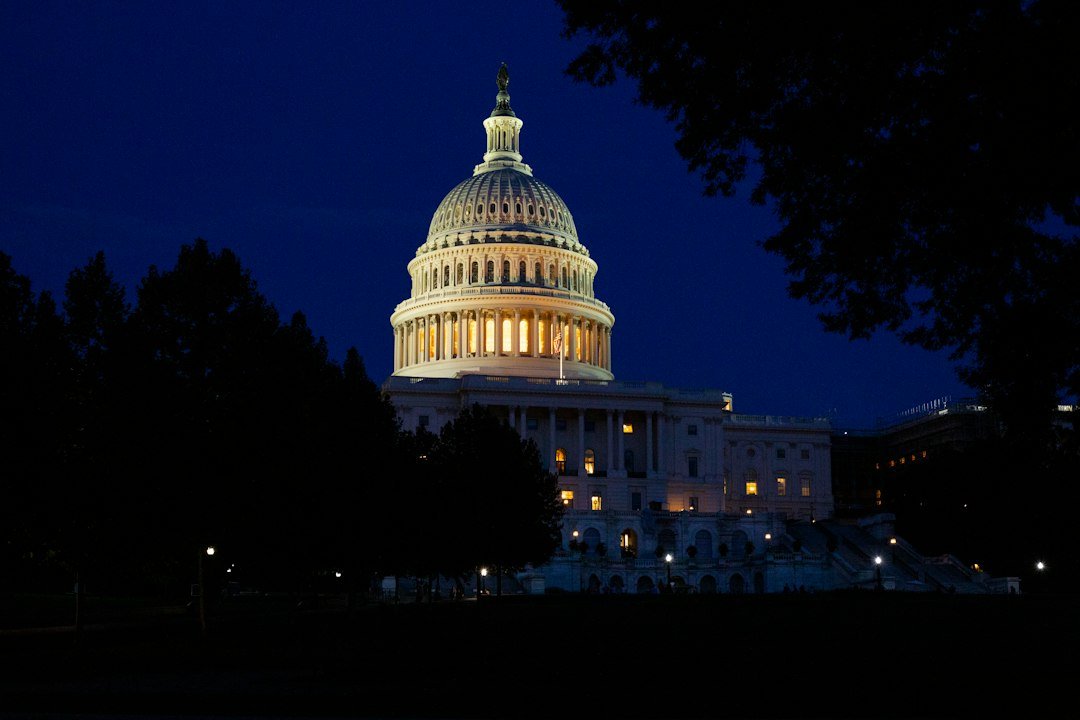
Editorial image prompt: Create a restrained editorial-news illustration, clearly labeled as an illustration rather than a photograph: a gas-pump price display showing $4.33 regular and $6.18 diesel beside a U.S. Capitol silhouette, a ballot envelope, and a distant abstract map outline of Iran with a narrow shipping-lane motif. Use documentary colors, natural shadows and newspaper-style composition. Do not depict Donald Trump or any real politician as if photographed, do not show a fabricated rally or battlefield, and include no campaign logos or invented text beyond the fuel-price numerals.
Alt text: Editorial illustration of high gasoline and diesel prices beside a ballot envelope and Capitol silhouette, symbolizing how the Iran war may affect Republican midterm races.