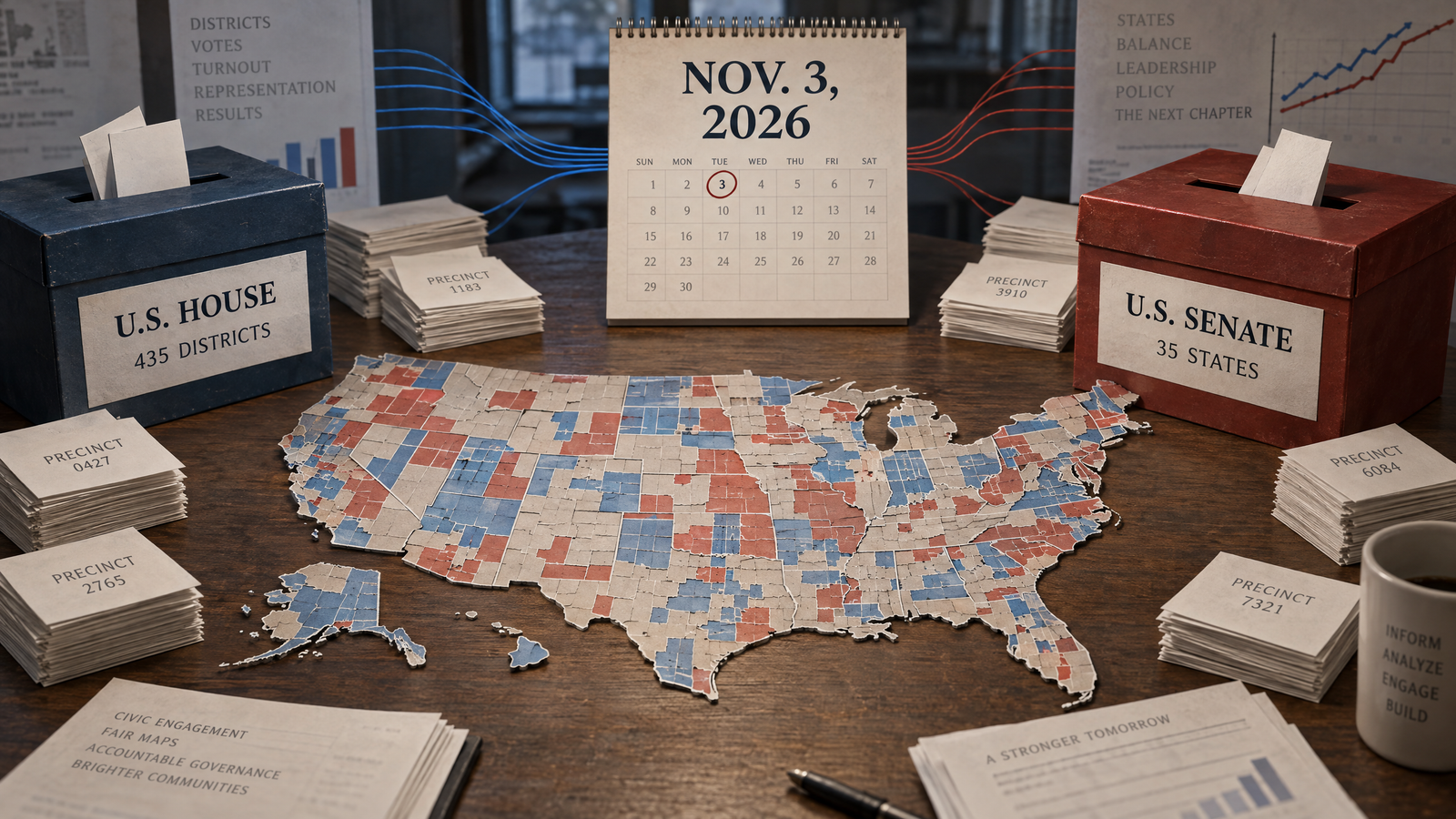
Election seasons create opportunities for scammers to exploit urgency and confusion. Before the 2026 midterms, voters may encounter messages about registration, polling-place changes, ballot delivery, campaign donations or alleged voting penalties. A message can look official and still be misleading. Verify the claim independently before clicking, paying or sharing personal information.
Warning sign 1: a link that imitates a government website
Check the full web address before entering personal information. A logo, flag graphic or government-sounding name does not prove that a page is official. Start from Vote.gov or your state election office and navigate to the service from there. Avoid shortened links in unexpected messages.
Warning sign 2: threats or guaranteed outcomes
Be skeptical of messages claiming you will be arrested, fined or removed from voter rolls unless you immediately pay a fee or provide sensitive details. Also question messages promising guaranteed ballot acceptance or a special shortcut. If a message creates pressure, pause and contact the election office using a number or address found independently.
Warning sign 3: a last-minute polling-place alert
False or outdated posts may claim that a polling place has moved, voting hours have changed, or a particular group is not allowed to vote. Confirm the location and hours using the official county or state lookup tool. If you see conflicting information, call the local election office before forwarding the claim.
Warning sign 4: political fundraising impersonation
Donation messages can imitate campaigns, parties, advocacy groups or election officials. Before donating, navigate directly to the organization’s known website and inspect the payment page. For federal candidate committees and political committees, the Federal Election Commission’s campaign-finance data can help you examine official filings, though a filing does not by itself prove that a solicitation is authentic.
Warning sign 5: manipulated video or audio
Deepfakes and edited clips can misrepresent a candidate, official or election procedure. Look for the original full-length recording, publication date and independent reporting. Reverse-image search or video verification may help, but no single detection tool is definitive. Our guide to verifying political videos during the 2026 midterms offers a step-by-step approach.
How to verify an election message
- Do not click the link or send money immediately.
- Identify the exact claim, state and election date.
- Open the official election website independently.
- Compare the message with the published rule or notice.
- Contact the election office through independently verified contact information.
- Save the message if you need to report suspected fraud; avoid reposting it as fact.
Where to report concerns
For voting-process questions, contact the relevant state or local election office. For suspected cybercrime or online fraud, use official reporting resources such as the FBI Internet Crime Complaint Center. Report threats or immediate danger to the appropriate local authorities. Do not assume every incorrect political post is a crime; describe what happened and let the relevant authority assess it.
Bottom line
Use official websites, verify surprising claims before sharing, and never pay a stranger to fix a supposed voting problem. Reliable election information should be traceable to the agency responsible for administering the election. This guide is general information, not a determination that a particular message is fraudulent.