
Published November 24, 2026.
Election night results are designed to inform the public quickly. Certification is the slower legal process that confirms which votes were counted, which disputes were resolved and which candidate receives the official result.
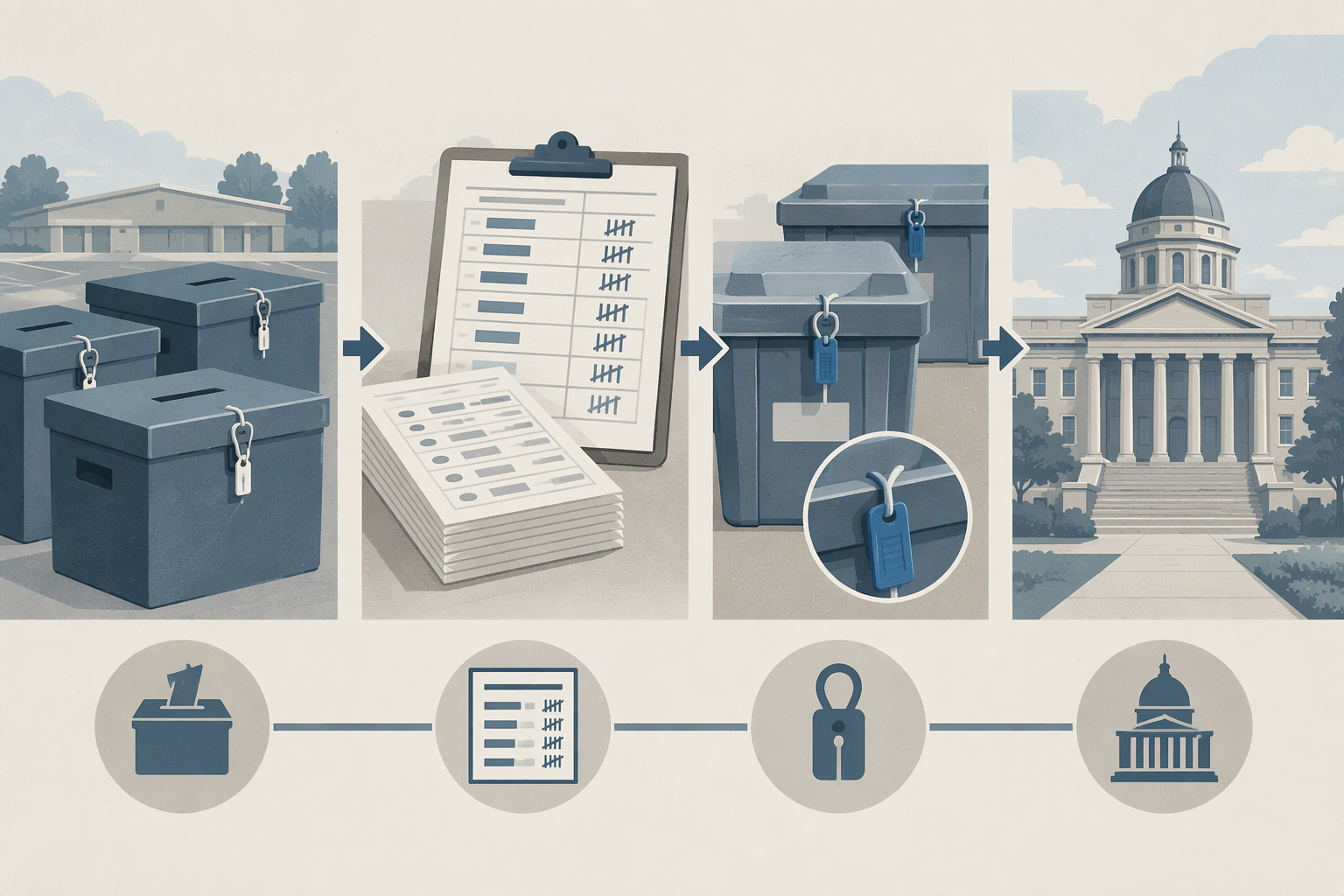
Step 1: Local officials count and reconcile ballots
Local election workers count ballots under state law, reconcile the number of ballots issued and received, and document provisional or challenged ballots. The exact sequence varies by state, but the basic purpose is the same: create a record that can be checked.
Step 2: Canvassing checks the record
A canvass compares reports from precincts and counties, corrects clerical discrepancies and confirms that required paperwork is complete. A news organization may call a race before this process ends; a call is not the same thing as certification.
Step 3: Audits and recounts may follow
Some states conduct risk-limiting or other post-election audits. A recount may be automatic when the margin is narrow or available under a state’s law when a candidate requests one. An audit checks the election process or a sample of ballots; a recount re-tallies ballots under the applicable rules.
Step 4: The state certifies the result
The responsible state board or official certifies the final result after statutory deadlines and required reviews. Certification is the legal act that allows the result to move into the next stage, including issuing a certificate of election or preparing for a new officeholder to take office.
Step 5: Challenges use legal procedures
A candidate or voter who alleges a specific legal violation must use the procedure provided by state law. Courts decide claims on evidence and legal standards, not on the size of a social-media audience or the number of posts repeating an allegation.
How to read election updates
- Reported: an official or reputable source has provided the information.
- Projected: a news organization has concluded that the trailing candidate cannot reasonably catch up, subject to its methodology.
- Certified: the legally authorized state process is complete.
- Contested: a formal recount, challenge or court case remains active.
The practical lesson is simple: a close race can be politically clear before it is legally final. Readers should look for the state authority’s certification notice and any court docket, not just a headline.
Sources
Sources used: the U.S. Election Assistance Commission, National Archives, state election-administration materials, and congressional references on the timing of a new Congress.