
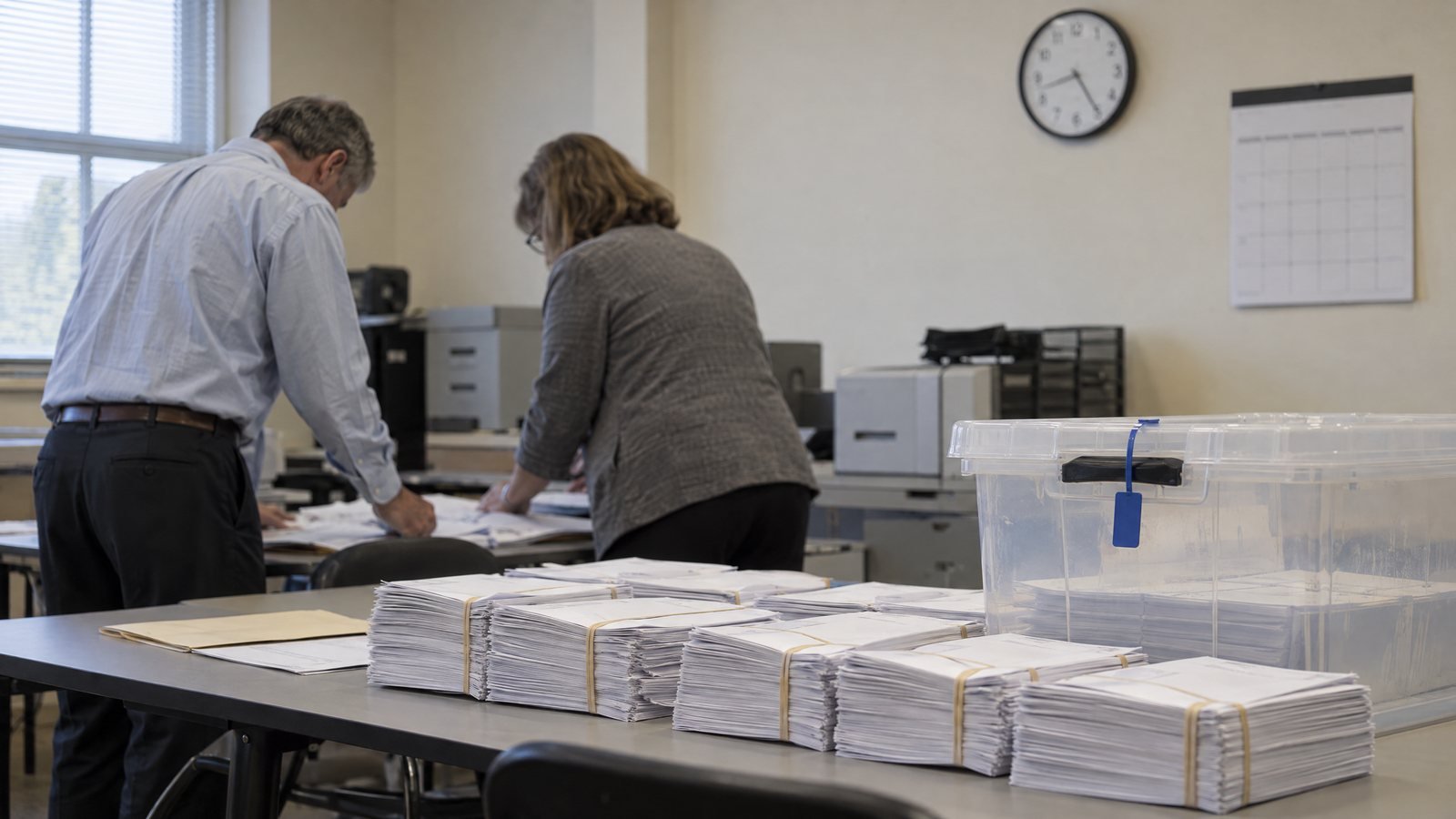
As of Nov. 12, 2026. Mississippi has a projected winner in its U.S. Senate race but not yet an official one. Counties must send certified returns to the secretary of state by 5 p.m. Friday, Nov. 13, and the state then has weeks, not days, to complete the canvass that turns The Associated Press projection for Democrat Scott Colom into a certified result. Because Mississippi has no recount statute, the mechanics of that final stretch matter more than they would in most states.
Facts: the call, the margin and the concession
The Associated Press declared Colom the winner just before 6 p.m. ET on Wednesday, after Jackson County reported an additional 2,173 votes. At the moment of the call, Colom led Republican Sen. Cindy Hyde-Smith by 4,669 votes out of 962,237 counted, a margin of about half a percentage point, according to the AP’s explanation of its decision.
Mississippi Today reported that Colom led 49.2% to 48.7% with 99% of precincts reporting, a 4,645-vote edge on Wednesday night. The AP called the race on uncertified returns. The AP also estimated that fewer than 12,000 ballots remained for county officials to review before Friday’s deadline, many of them affidavit ballots — the state’s term for provisional ballots — a share of which are typically rejected on review.
Hyde-Smith conceded Wednesday evening in a video statement. “While this is not the outcome we worked for or hoped for, I respect the decision of Mississippi voters,” she said, adding that she congratulated Colom, according to Mississippi Today.
The outcome is historically unusual. Mississippi Today reported that Colom will be the first Democrat elected to the Senate from Mississippi since John Stennis in 1982 and the first Black senator from the state since Reconstruction, when the Legislature chose Hiram Revels in 1870 and Blanche Bruce in 1875. Colom will also be the first Black person elected to a statewide office in Mississippi since Reconstruction, the outlet reported. Both earlier Black senators from the state were selected by the Legislature, not by voters.
Facts: what Friday’s deadline does, and what it does not do
Mississippi runs elections from the county up. The secretary of state’s 2026 elections calendar sets Nov. 13 as the deadline for county election commissions to transmit general election returns to the secretary of state, “including their certified recap sheets and the total number of votes cast in the county for each candidate,” citing Mississippi Code Sections 23-15-601 and 23-15-603.
Friday is a transmission deadline, not the moment the race becomes official statewide. Under Section 23-15-605, the secretary of state, “immediately after receiving the returns,” must sum the votes certified to the office, declare the candidates with the largest number of votes elected, and do so no later than 30 days after the election. The National Association of Secretaries of State summarizes the same structure: the secretary of state canvasses and declares results for state and federal offices within 30 days. The governor then commissions elected officials.
Counties are moving at different speeds. Secretary of State Michael Watson said Wednesday that 23 of the state’s 82 counties had uploaded certified results, The Hill reported. Hinds County, the Democratic stronghold that includes Jackson, finished its count Wednesday after rejecting 1,609 of the 2,426 affidavit ballots it reviewed, roughly 66%, and accepting 817, according to the Mississippi Free Press.
Facts: Mississippi has no recount law
Mississippi is the only state without a set procedure for triggering a recount. The National Association of Secretaries of State’s state-by-state canvassing and recount chart lists Mississippi’s canvass rules and then states plainly: “State has no specific recount laws.” The AP reported that Hyde-Smith would have needed a court to order a review of the election. The BBC described the same gap and quoted University of Mississippi law professor Ronald Rychlak saying the absence of a recount procedure “does not leave either campaign without a possible avenue to challenge the result,” pointing to ballot-box examination as a post-election mechanism that can lead to a recount.
State law does provide a formal election contest. Section 23-15-951 lets a person contest another person “returned as elected” by filing a petition in circuit court within 20 days after the election, with a judge from another district designated by the chief justice to hear it. The National Conference of State Legislatures lists Mississippi’s contest deadline the same way: within 20 days after the election, with no conclusion deadline specified. Because the statute measures the window from Election Day rather than from certification, 20 days after Nov. 3 falls on Nov. 23 this year.
No such petition has been filed. A concession is a political statement, not a legal step: it does not stop a count, alter a return or bar a later challenge.
Facts: the Senate can judge its own elections
The Constitution gives each chamber the power to be “the Judge of the Elections, Returns and Qualifications of its own Members” (Article I, Section 5). The Senate’s own history office notes that the full Rules and Administration Committee handles contested election cases, and that a senator-elect presenting valid credentials is typically seated “without prejudice,” meaning a later committee finding could lead to exclusion by a simple majority rather than expulsion. The Senate has generally preferred to let state courts and state law resolve disputes first.
Analysis: why the calendar, not the margin, is the story now
The margin is small enough to invite litigation and wide enough that a reversal would be extraordinary. The AP noted that of roughly 40 statewide recounts since 2000, only three changed a winner, all decided by hundreds of votes, and that there is no precedent this century for a recount reversing a margin as wide as Mississippi’s. That is a statement about history, not a forecast about this race, and it does not bind any court.
What remains is largely administrative. County commissions certify their returns; the secretary of state sums the certified numbers and declares the result; the governor commissions the winner. Each step is a records action, and each depends on the numbers counties actually transmit, which is why the 23-of-82 figure matters more this week than any candidate’s statement. The AP’s estimate of fewer than 12,000 uncounted ballots is an estimate, not a tally, and it will be replaced by county figures as they certify.
The unresolved questions are narrow and concrete: whether every county meets Friday’s 5 p.m. deadline or seeks an extension; whether the secretary of state’s declaration lands well before the 30-day limit; and whether any candidate files a circuit court contest before the 20-day window closes. Absent one of those events, the projection becomes a certified result on a schedule set by statute rather than by politics.
Analysis: what the seat changes
The AP reported that Colom’s victory gives Democrats 55 Senate seats in the new Congress, a net gain of eight and the party’s largest midterm gain in the chamber since 1986. Alaska’s Senate race remains uncalled, with a target certification date of Nov. 25, so the final size of the Democratic majority is not yet fixed. Colom would be seated when the 120th Congress convenes in January.
For Mississippi, the practical legacy of the count is a procedural one. Tens of thousands of voters cast affidavit ballots after the state marked them inactive during a voter-roll review, and rejection rates varied sharply by county, as Hinds County’s 66% rejection rate shows. The Brief Lens has covered how Mississippi’s affidavit review works and why provisional ballots are accepted or rejected. Certification does not revisit those individual decisions; it records the totals counties have already settled.
What to watch
- Friday, Nov. 13, 5 p.m. County election commissions transmit certified returns and recap sheets to the secretary of state.
- By early December. The secretary of state completes the state canvass and declares the result, within the 30-day limit set by Section 23-15-605.
- By about Nov. 23. The 20-day window for an election contest petition in circuit court, measured from Election Day, closes.
- January. The winner is sworn in with the 120th Congress; Alaska’s Senate result is expected to be certified Nov. 25.
For background on the steps between unofficial returns and official results, see our guides to how election certification works and how U.S. election results are counted and certified. For the wider stakes, see our coverage of Democratic control of Congress.
Sources and documents
- Associated Press: Why AP called the Mississippi Senate race for Scott Colom
- Mississippi Secretary of State: 2026 Elections Calendar
- Mississippi Code Sections 23-15-601, 23-15-603 and 23-15-605 (canvass and declaration); Section 23-15-951 (election contests)
- National Association of Secretaries of State: State Election Canvassing Timeframes and Recount Thresholds
- National Conference of State Legislatures: Contested Election Deadlines
- U.S. Senate: Senate Procedures in Contested Elections
- Mississippi Today: Colom wins Mississippi Senate race
- The Hill: Colom builds on slim lead in Mississippi
- Mississippi Free Press: Hinds County accepts 817 affidavit ballots, rejects 1,609
- BBC: Razor-tight Mississippi Senate race sparks ballot battle