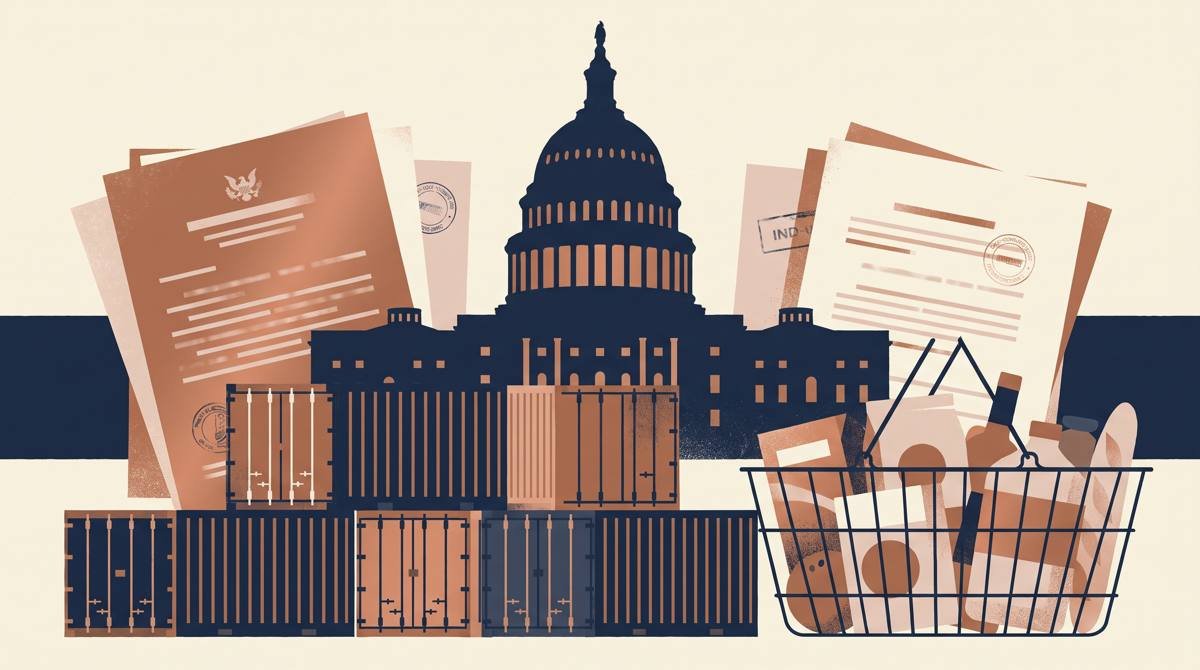
As of November 8, 2026: The incoming Democratic-controlled Congress is preparing to make tariffs and consumer costs an early test of its governing agenda. Democratic leaders have promised votes to reverse some of President Donald Trump’s import duties, while House and Senate control gives them new power to hold hearings, shape legislation and force members to take positions. But the election did not itself remove any tariff. The immediate economic effect is more likely to be political pressure and uncertainty than lower prices.
Democrats put tariffs at the center of an affordability agenda
Facts
Democrats won control of both chambers in the November 3 midterm elections, according to the Associated Press election report. The new Congress will be sworn in on January 3. In an AP report published November 7, Democratic leaders said early House votes are expected to cover healthcare costs and some of Trump’s trade tariffs. House Democratic Leader Hakeem Jeffries said the party would “get out of the gate fast.”
The tariff push is part of a broader response to voter concern about affordability. The AP reported that Democratic working groups are also developing proposals involving housing, energy, groceries and caregiving. Those are proposals, not enacted policy.
Analysis
The election gives Democrats a stronger platform to connect trade policy with the cost of living. Controlling the committees means they can investigate how tariff exemptions were granted, question administration officials and hear from businesses that say duties increased their costs. They can also put repeal or limits on the agenda when enactment is difficult.
That distinction is central. The next Congress can create political consequences for the White House without necessarily changing the tariff schedule. NPR’s post-election analysis described the majority’s ability to bring popular proposals to the floor as a meaningful power in divided government. It also reported that Democratic leaders plan to reassert Congress’s role over tariffs while facing a presidential veto and Senate procedural obstacles.
Existing law leaves the president substantial room to act
Facts
The Congressional Research Service’s March 2026 report explains that the Constitution gives Congress authority over foreign commerce, tariffs and revenue, but that Congress has delegated several tariff authorities to the president. The report identifies authorities under Sections 232, 201 and 301, among others, with different findings, procedures and limits. Congress may repeal, amend or restrict those authorities, but the president and executive agencies retain significant discretion under current law.
That structure means a change in congressional control does not automatically unwind existing duties. Reuters reported November 4 that much of the administration’s tariff program was pursued through executive authorities that do not require new congressional approval. Trade and legal experts told Reuters that Congress could attempt to roll back tariffs, but that legislation would face major hurdles and could be vetoed.
Congress.gov records one example of the type of legislation Democrats may advance. H.R. 10175, the Banning Antiquated Duties and Delivering Equitable American Levies Act of 2026, was introduced by Rep. Bradley Schneider on August 27 and referred to the House Ways and Means Committee. Congress.gov lists its status as “Introduced”; it has not passed either chamber and has not become law.
Analysis
The legal pathway is more complicated than a simple majority vote. A bill to repeal or limit tariff authorities would generally need to clear the Senate’s 60-vote threshold if it faces a filibuster. Reuters reported that Democrats were projected to have at least 54 Senate seats, with as many as two more races unresolved in its November 5 analysis. Even a bill that passes both chambers would need the president’s signature or enough votes to override a veto—two-thirds of the House and Senate.
Those hurdles make a complete tariff rollback improbable in the near term unless the White House agrees to a narrower compromise or enough Republicans join Democrats. A more attainable outcome could be hearings, disclosure requirements, targeted exemptions or votes on selected duties designed to pressure the administration and individual senators.
What businesses and consumers should expect next
Facts
Reuters reported that companies continued to face higher energy and raw-material costs after the election and that executives did not expect the result to produce immediate relief from tariff uncertainty. The Federal Reserve’s October 28 statement separately said inflation remained elevated and held the federal funds target range at 3.75% to 4%. The Fed’s decision was not caused by the election and does not predict what Congress or the administration will do on tariffs.
Analysis
For consumers, the practical message is that the election may change the debate before it changes prices. Tariff-related costs could remain in place through the transition, and businesses may delay investment or pricing decisions while they wait to see whether hearings produce negotiations, Congress passes targeted measures or the president vetoes them.
For the incoming majority, the political stakes are equally clear. Democrats campaigned on lowering household costs and can use tariff votes to show what they would do with unified control of Washington. But if the president blocks the measures, voters may see either obstruction or promises that exceeded the majority’s legal power. The outcome will depend on committee action, Senate coalition-building and negotiations with the White House.
Bottom line
The most consequential immediate economic-policy story after the November 3 election is not an overnight tariff reversal. It is the opening of a congressional challenge to Trump’s trade agenda. Democrats now have tools to investigate, schedule votes and shape the affordability debate. They do not yet have a clear path to enact a broad tariff rollback over a presidential veto and Senate procedural barriers. Until that changes, the near-term effect will be political leverage and continued uncertainty—not guaranteed relief at the checkout counter.
Sources
- Associated Press: Democrats win the US House and Senate as voters deliver a rebuke to Trump
- Associated Press: House Democrats will start their majority focused on boosting healthcare and ending the Iran war
- Reuters: Democrats gain influence over trade agenda, but tariff repeals hit Trump veto wall
- Reuters: US Democratic win unlikely to ease firms’ cost, tariff woes near term
- NPR: The economy propelled Democrats to victory. What can they actually do about it?
- Congressional Research Service: Congressional and Presidential Authority to Impose Import Tariffs
- Congress.gov: H.R. 10175, BAD DEAL Act of 2026