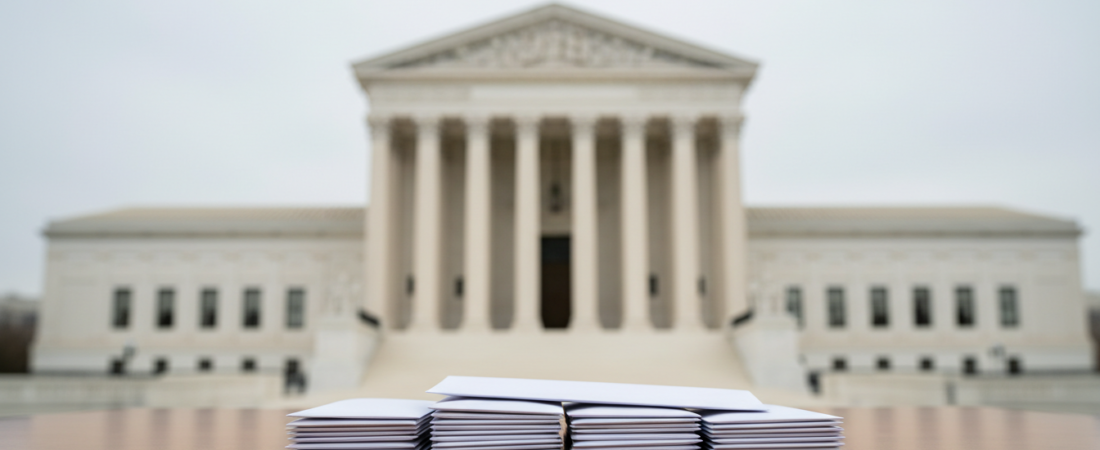
The U.S. Supreme Court on Nov. 2 denied the Trump administration’s emergency request to make California separate and hold mail ballots linked to about 20,000 people on a federal list. California officials face no Supreme Court order to set those ballots aside, but the denial did not decide the underlying allegations or the broader litigation.
Confirmed facts: what the Supreme Court did
The Court’s official docket in United States v. California, No. 26A624, records that an application for an injunction pending appeal was referred to the Court and denied on Nov. 2. The entry contains no written explanation of the denial. Read the docket entry.
In an Oct. 15 announcement, the U.S. Department of Justice said federal agencies had identified more than 20,000 people it considered likely noncitizens and claimed California had sent them vote-by-mail ballots. DOJ asked courts to stop tabulation of ballots associated with its list until citizenship could be verified. These are DOJ’s assertions, not a court finding about any individual. Read DOJ’s announcement.
California’s attorney general said the emergency request sought to force election officials to segregate and not count ballots returned by people on the list. State officials disputed the list’s reliability and raised the risk of excluding eligible voters. That is California’s position in the case, as described in its Nov. 2 release. Read California’s statement.
What the ruling changes for ballot processing
The Supreme Court did not issue an injunction directing California to hold or separate these ballots. The immediate effect is that no Supreme Court order requires officials to alter California’s ordinary ballot-counting procedures for this group. Reuters reported that the requested federal remedy would have withheld ballots until citizenship was determined, and that California opposed the intervention. Read Reuters’ report.
On Oct. 31, The Brief Lens covered the Ninth Circuit’s rejection of an earlier emergency request in the same California ballot dispute. This article covers the Supreme Court’s separate Nov. 2 denial; see our Oct. 31 court-rulings roundup and Oct. 26 mail-ballot explainer for prior context.
Analysis: the Court did not resolve the merits
An emergency application asks a court for immediate relief while a broader appeal proceeds. The Nov. 2 docket entry records only that the injunction request was denied. It does not determine whether the federal list is accurate, whether any listed person returned a ballot, or whether anyone voted unlawfully. Nor does it settle the underlying lawsuit. California’s attorney general said the broader fight was not over.
The timing matters because the request came on the eve of the Nov. 3 midterm election. A separation order would have changed how local officials handled a set of ballots at a sensitive point in the process. California officials raised concerns about possible errors in the federal list; that concern should not be confused with proof that the list contains errors in any particular case. The parties disagree on that question.
What to watch next
Further court filings or orders may clarify the underlying claims and the evidence each side offers. Until then, the documented result is narrow: the Supreme Court denied emergency relief and made no merits ruling about the list or individual voters.
For broader context, read The Brief Lens’ guide to what 2026 midterm polls can and cannot show and browse our U.S. politics coverage.