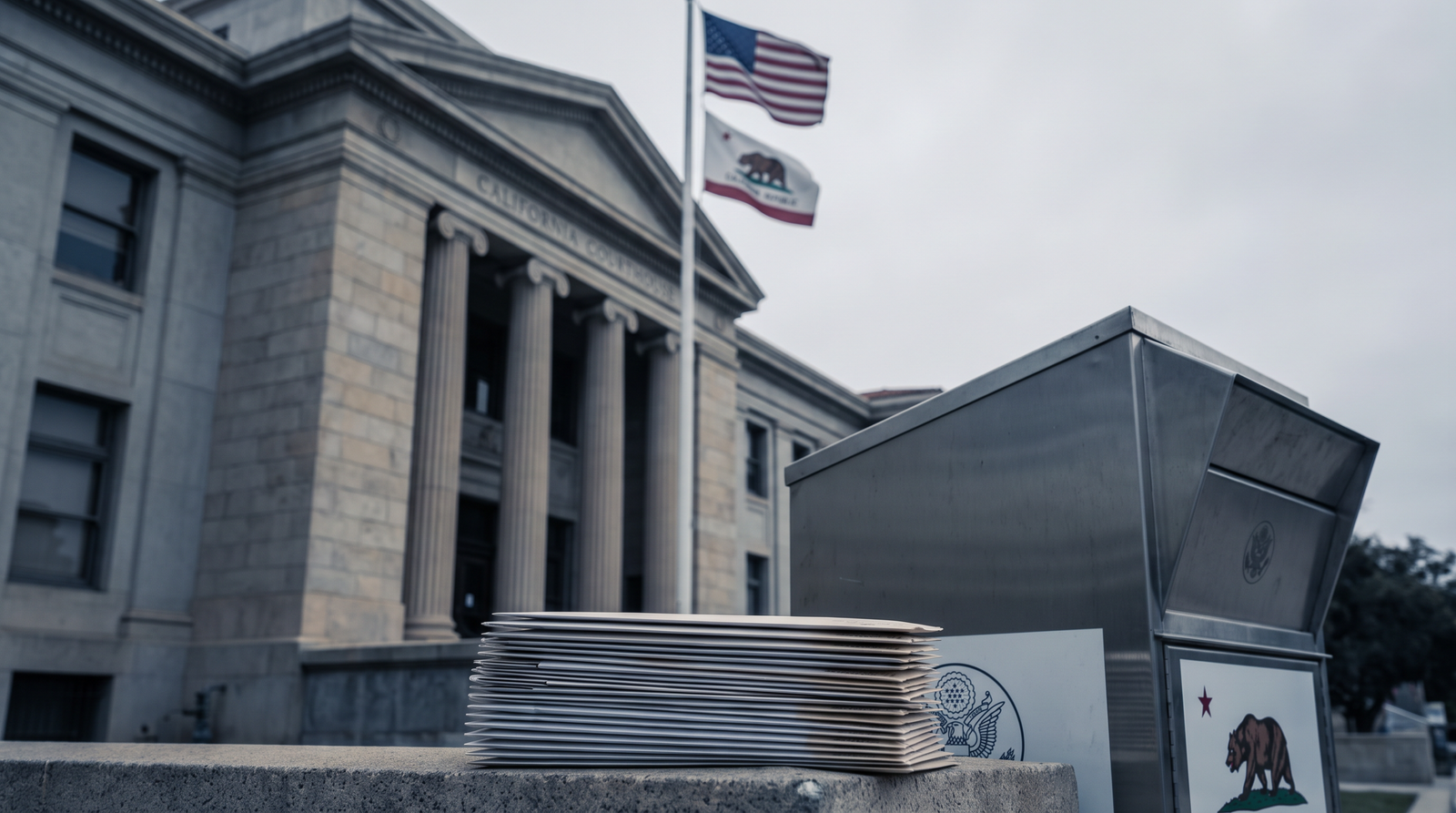
A legal fight over roughly 20,000 California vote-by-mail ballots has become the most consequential election-administration story heading into the November 3, 2026, midterms. Federal officials say the voters were identified as likely noncitizens and asked California to set their ballots aside until citizenship could be checked. California officials refused, and two federal courts have declined to impose the requested election-day remedy.
The dispute matters beyond the ballots named in the case. It tests how far the federal government can go in directing state election officials during an active election, and whether a federal list of possible ineligible voters can override state procedures designed to challenge individual ballots. The litigation also creates a potential pathway for post-election disputes if any close contest turns on allegations about the list.
Facts: What the federal government requested
The Justice Department said on October 15 that it had sued California after an analysis by the Department of Homeland Security and federal partners identified more than 20,000 people who were “likely aliens” and appeared to be registered to vote. The department said California mails a ballot to every registered voter and alleged that the state had refused to remove suspected noncitizens from its rolls or sequester their returned ballots. Justice Department announcement
The federal government’s legal theory relied on 18 U.S.C. § 611, which makes it unlawful for a noncitizen to vote in a federal election, subject to a limited exception when state or local law permits voting solely on another issue and the ballot separates that vote from federal contests. The Justice Department argued that California could not knowingly send or count ballots from people it had identified as likely noncitizens.
California challenged the reliability of the list and said the federal demand risked disenfranchising eligible voters. The federal government has not publicly established how many people on the list actually cast ballots, and the list itself has not been made public, according to Reuters. The department has acknowledged that its process identifies possible noncitizens, not adjudicated cases of illegal voting. Reuters explainer
Facts: The Ninth Circuit rejects emergency ballot segregation
On October 30, the U.S. Court of Appeals for the Ninth Circuit denied the Justice Department’s emergency motion to require California and Los Angeles County to segregate the ballots and verify the citizenship of listed voters before counting them. The order followed a district court’s October 28 denial of a temporary restraining order.
The appellate panel said the government sought a “mandatory injunction” that would force election officials to take an extraordinary step during an ongoing election. Under the standard applied to that request, the government had to show that the law and facts clearly favored its position, not merely that it might eventually win. Ninth Circuit order
The court said the Elections Clause gives states broad responsibility for the mechanics of congressional elections, including registration, voter protection, fraud prevention and vote counting, unless Congress has clearly displaced state rules. It concluded that Section 611 criminalizes noncitizen voting but does not prescribe a process for handling citizenship challenges to vote-by-mail ballots or authorize the Justice Department to take control of an ongoing state election.
The panel emphasized the limited scope of its decision. It did not hold that Section 611 can never preempt state action. It held that, on the record and under the facts presented, the government had not shown that the statute required California to abandon its ballot-challenge procedures and segregate ballots based on the federal list.
The ruling leaves the underlying lawsuit unresolved. The district court appointed a special master to examine the data and algorithms behind the list and indicated that a fuller hearing could occur after Election Day. That means the courts could still address whether particular voters were ineligible or whether federal law was violated, even though the requested pre-election ballot-segregation remedy was denied.
Facts: A separate order bars threats against election workers
A second federal proceeding intensified the stakes. On October 30, U.S. District Judge Trina Thompson issued a temporary restraining order barring the administration from threatening state and local election officials with criminal prosecution over the same demands. Reuters reported that the order prohibits the federal government from demanding that officials remove voters from statewide rolls, refuse ballots to specified voters or segregate midterm ballots based on the administration’s list.
Thompson wrote that election officials have a paramount public interest in carrying out their duties under election law and procedure, especially with Election Day only days away. The case was brought by election-worker unions and other groups. Reuters report on the restraining order
The order does not decide whether noncitizens voted illegally. It addresses the government’s conduct toward election administrators and prevents the threatened prosecutions and ballot-handling demands while the case proceeds. The Justice Department can continue litigating its claims, subject to the court’s restrictions and any later appellate action.
Analysis: Why the case could shape election disputes after November 3
The immediate effect is operational: California election officials are not required by these rulings to create a separate category for the approximately 20,000 ballots identified by federal officials. They will continue applying California’s ordinary procedures, including voter-registration attestations, signature review and state processes for challenging eligibility.
The broader issue is institutional. The Ninth Circuit’s order treats ballot administration as a state-controlled process unless Congress has clearly supplied a different rule. That reasoning could limit attempts to use a federal criminal statute as a shortcut for changing how states process ballots in the days before an election. It also gives states a legal basis to resist demands that are based on unverified or probabilistic lists rather than individualized findings.
At the same time, the ruling does not make the federal list irrelevant. Federal prosecutors can investigate specific allegations of unlawful voting, and the government may continue appealing. Reuters reported that officials sent similar notices to Washington, New Jersey, Pennsylvania and Nevada. The lists could also be cited in post-election challenges, although those would face substantial legal hurdles and state-specific rules about who may contest a result and what evidence is required. Reuters analysis
The central uncertainty is not whether noncitizen voting is lawful—it is not in federal elections—but whether the government’s method reliably identifies noncitizens and can lawfully change ballot procedures before counting. The courts have so far found that the administration has not met the demanding emergency standard. They have not issued a final ruling on every underlying claim.
For voters and election observers, the verified takeaway before November 3 is narrow but important: California’s ballots will not be segregated under the federal government’s requested process based solely on the current list, and election officials are protected from the specific criminal threats addressed by the restraining order. Further litigation, including possible appeals and post-election challenges, remains possible.
Sources
- Justice Department: Justice Department Sues State of California Over Voter List
- Ninth Circuit: United States v. State of California, No. 26-7231, October 30, 2026
- Reuters: How Trump’s noncitizen voter lists could affect the midterms
- Reuters: Judge orders Trump administration to cease threats to prosecute election officials
- BBC: Judge orders Trump administration to stop threatening US election officials
Publication readiness: Ready for publication as of November 2, 2026, with the caveat that the underlying litigation and any Supreme Court appeal may change after publication.