
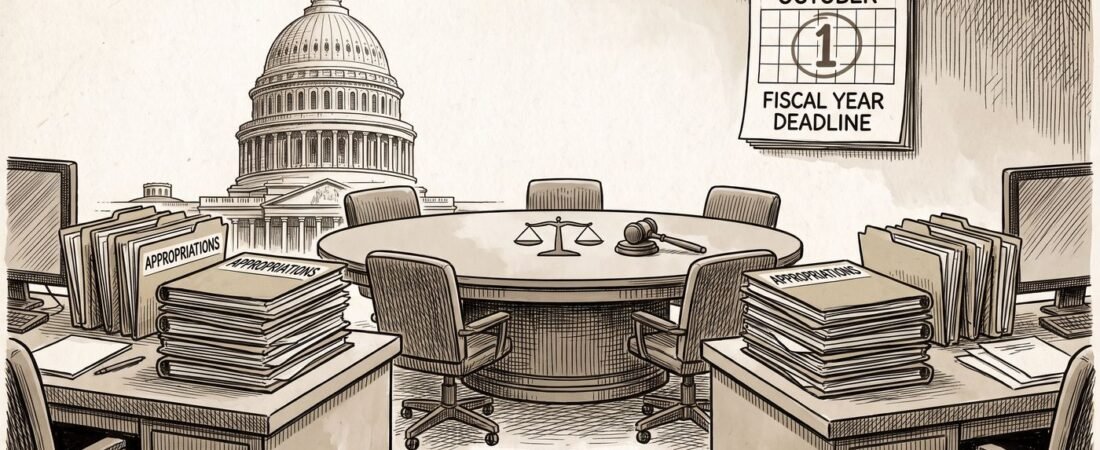
US budget and shutdown risk: Congress faces a December 11 funding cliff
Dek: The government is open under a temporary FY2027 funding law, but Congress has roughly five weeks after the midterm election to finish appropriations—or extend the stopgap and risk another shutdown fight.
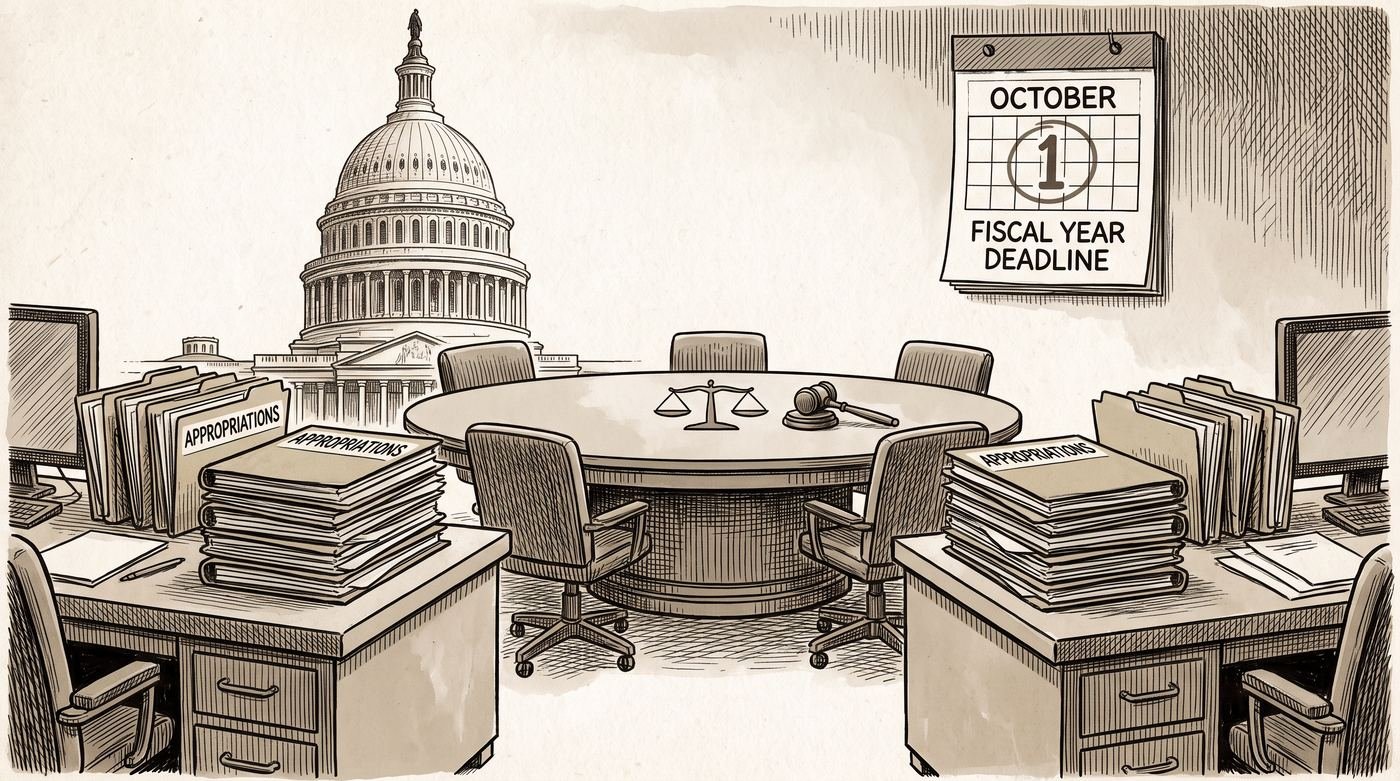
Meta description: Congress faces a Dec. 11, 2026 funding deadline, unfinished FY2027 appropriations, agency risks and a separate 2027 debt-limit test.
Primary keyword: 2026 government shutdown risk
Secondary keywords: December 11 funding deadline; FY2027 appropriations; US debt ceiling 2027
As of October 29, 2026, the federal government is not in a shutdown. Congress avoided the October 1 funding cliff by enacting H.R. 6500, the Continuing Appropriations and Extensions Act, 2027, on September 2. The law keeps most federal agencies operating through the earlier of December 11 or enactment of their regular appropriations bills. 1
That stopgap solved the immediate crisis without settling the larger budget dispute. The next deadline is now the central test: Congress must pass full-year FY2027 appropriations, approve another continuing resolution (CR), or allow funding to lapse for affected agencies on December 12. The election calendar makes the choice harder: lawmakers are away for the midterms and return to a compressed lame-duck session.
What Congress has—and has not—funded
Fact: H.R. 6500 is not a complete federal budget. It is a temporary funding measure that generally holds discretionary programs near FY2026 levels, with targeted exceptions and extensions. Congress.gov says the law provides funding through December 11 and includes special treatment for programs including WIC, Small Business Administration lending, the Disaster Relief Fund, Indian Health Service, Justice Department activities and wildfire suppression. 1
The normal process requires 12 annual appropriations bills. Current reporting says only three had passed the House by early October, and none had passed both chambers before Congress left Washington for the election. 2
The December deadline is therefore either a large package of negotiated bills or another stopgap that postpones the conflict. A CR can keep agencies open, but it also limits lawmakers’ ability to set new priorities, launch programs or rewrite funding levels.
The December 11 deadline and the lame-duck squeeze
The timing is the main operational problem. A recent appropriations analysis said lawmakers will have roughly five legislative weeks after Election Day before the CR expires. Senate appropriators still need to move bills or otherwise prepare them for negotiations, while House and Senate leaders must settle overall spending levels and policy provisions. 3
Congress could pass full-year appropriations, extend the CR for a short period or much of FY2027, or combine completed bills with a broader stopgap, sometimes called a “CRomnibus.” A full-year package requires faster compromise; another CR increases uncertainty and sets up a later confrontation.
Analysis: The election raises the political cost of every option. A party that controls Congress after the election will want to use the funding deadline to demonstrate control and attach priorities. Yet the current Congress still has to legislate before the new one takes office in January. That creates incentives for a last-minute deal, but also for lawmakers to defer the hardest choices to the next Congress.
How a lapse would affect agencies and workers
Fact: Under the Office of Personnel Management’s guidance, a shutdown furlough occurs when an annual appropriation or CR expires without replacement. Agencies must stop activities funded by annual appropriations that are not legally excepted. Functions with alternative funding sources may continue, while excepted work—such as activities tied to safety, protection of property or constitutional duties—can continue even when employees’ pay is delayed. 4
The effects would be uneven across government. Some employees would be furloughed. Others would continue working without immediate pay. Programs that depend on annual discretionary funding could pause, and agencies would have little lead time once a lapse begins.
Transportation illustrates the risk. CRS says air-traffic controllers, systems technicians and Transportation Security Administration screeners are generally excepted because aviation safety and security must continue. But those workers can still face deferred pay, financial strain, absenteeism and resignations during a prolonged lapse. CRS also distinguishes between a government-wide shutdown and a partial shutdown affecting only agencies whose appropriations expire. 5
The CR’s targeted exceptions may reduce disruption for selected programs, but not for agencies whose full-year funding remains unresolved or for disputes written into appropriations language.
Spending control is becoming part of the fight
The funding negotiations are also a contest over who controls federal spending after Congress appropriates it. A September analysis from Akin Gump described a dispute over proposed Office of Management and Budget changes to grant administration and a separate White House request to cancel $810 million in previously approved funds through 11 rescissions. It reported that Senate Appropriations Chair Susan Collins objected to withholding or reshaping congressionally approved funds without congressional agreement. [6]
Those issues could return in December negotiations. Appropriators may seek language limiting executive-branch impoundment or political review of grants. The administration, meanwhile, has an incentive to preserve flexibility over spending and regulatory priorities. Analysis: That conflict makes a simple extension less politically neutral than it might appear; the terms of a CR could determine how much discretion the executive branch has while lawmakers continue bargaining.
The separate debt-ceiling risk
A shutdown and a debt-limit breach are different events. A shutdown follows a lapse in appropriations. A debt-limit crisis would arise if the Treasury could no longer borrow or use available cash and extraordinary measures to meet all legally required payments.
Fitch Ratings said the debt limit could become binding as early as the first quarter of 2027. It reported that debt subject to the limit totaled $40.9331 trillion on October 26, or $773 billion below the current ceiling, and said the government’s cash and extraordinary measures could provide several months before a potential “X-date.” Fitch also projected a nearly $2 trillion federal deficit, equal to 6.1% of GDP, in fiscal 2026. 7
Analysis: If Congress postpones the debt-limit decision until the next session, the new House or Senate majority could inherit two linked negotiating tests: funding the government and authorizing additional borrowing. Fitch said a change in congressional control could increase brinkmanship over both appropriations and the debt ceiling. 7
What to watch next
- Whether House and Senate appropriators release or advance more FY2027 bills before lawmakers return after the election.
- Whether leaders choose full-year appropriations, a short CR, or a longer CR before December 11.
- Whether funding language addresses OMB grant-review authority, rescissions and congressional control of enacted spending.
- Which agencies publish or update lapse plans, especially those relying on annual appropriations.
- Whether lawmakers attach defense, immigration, health, disaster, farm or other must-pass provisions to the year-end package.
- Whether Congress addresses the debt ceiling before January or leaves the issue for the new Congress and a possible early-2027 confrontation.
The conclusion is limited but clear: the October shutdown deadline was deferred, not eliminated. December 11 is the next funding cliff, and the compressed post-election calendar will determine whether Congress reaches a durable FY2027 agreement or carries the budget fight—and potentially the debt-limit fight—into 2027.