As of November 28, 2026. A certified 40-vote margin has sent Ohio’s 44th House District race into an automatic recount, leaving the result unresolved after the state’s November 24 certification deadline. Republican Ed Schimmel leads Democrat Dave Fournier in the certified count, but Ohio election officials must review the ballots before a final certificate can be issued for the contest.
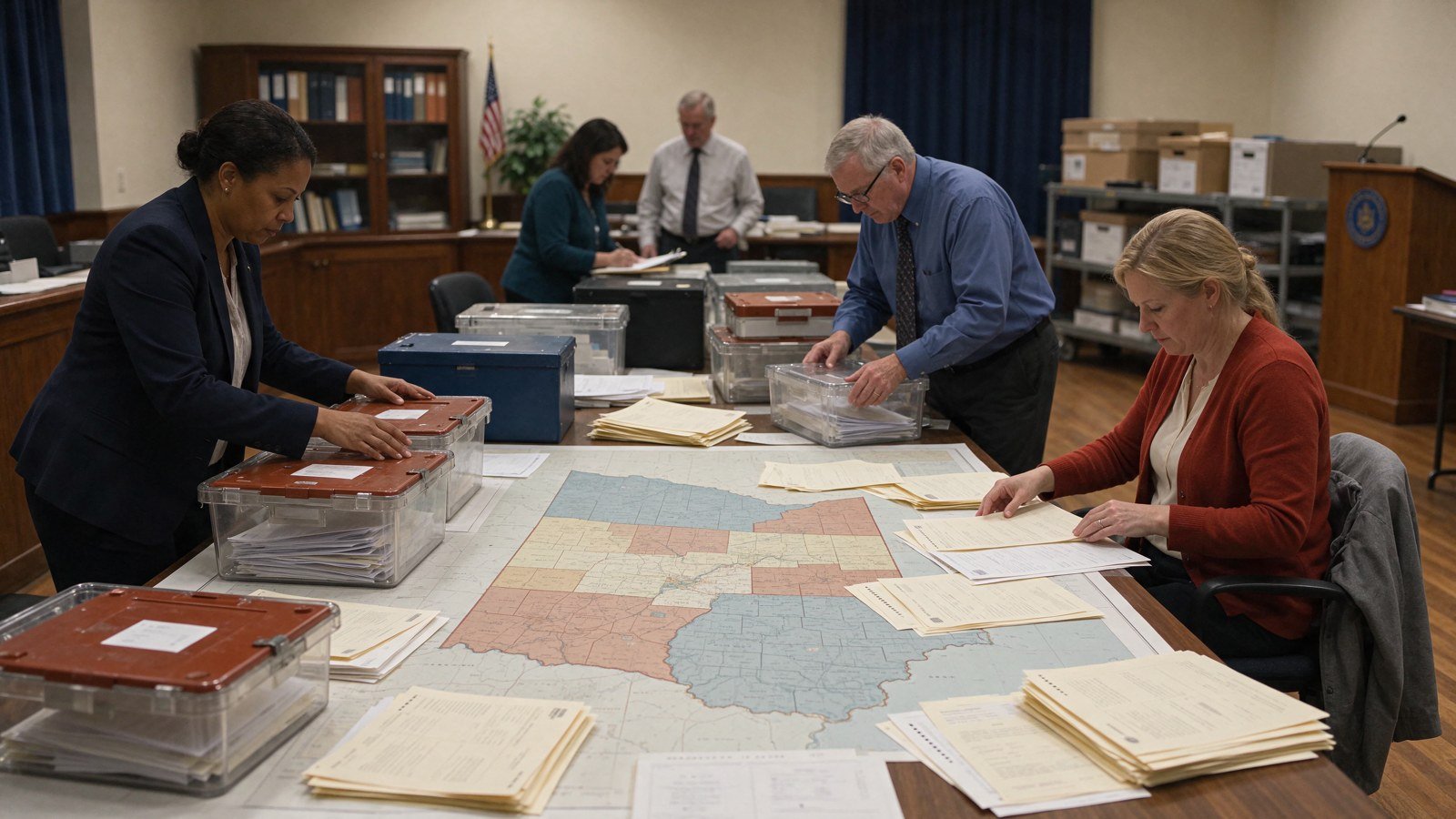
The race is a small but consequential example of how election administration works after Election Day. The recount will take place across parts of Lucas, Wood and Ottawa counties. Its purpose is to verify the certified totals under Ohio’s rules, not to assume that the original count was wrong.
Facts: Schimmel leads Fournier by 40 certified votes
The Fremont News-Messenger reported that the certified totals gave Republican Ed Schimmel 26,895 votes and Democrat Dave Fournier 26,855. Independent candidate Lyndsey Stough received 2,313 votes.
That left Schimmel with a 40-vote lead in the contest for the seat being vacated by Republican Josh Williams. The district includes western Lucas County, northern Wood County and a western section of Ottawa County.
The numbers are certified for the purposes of ordering the recount, but they do not establish a final winner. Ohio’s process treats an automatic recount as a further review of the contest. The candidate who leads the certified count can retain that lead, see it reduced or lose it after the recount is completed.
Facts: Ohio ordered an automatic recount after certification
The local report said the state ordered the automatic recount after counties completed certification on November 24. Wood County planned to begin its recount on December 1. Lucas and Ottawa counties had not yet announced their recount dates as of the report’s November 25 publication.
The Ohio Secretary of State’s Directive 2026-48 explains the statewide timetable. County boards had to complete official certification no later than November 24. It also says an automatic or requested recount must take place no later than 10 days after the recount is declared or an application is filed.
Because the district crosses county lines, officials must coordinate the work. The Ohio directive says multicounty recounts are not ordered until all counties in the district have certified their official results. If the recount changes vote totals, the boards must submit amended certifications.
Facts: Several ballot categories were part of the close count
The local reporting identified 4,649 provisional ballots, 170 overseas ballots and 46 challenge forms among the ballots connected to the post-election process. After the curing process, Lucas County counted 194 provisional votes for Fournier, 191 for Schimmel and nine for Stough.
The report also described hospital ballots and overseas ballots cast under the Uniformed and Overseas Citizens Absentee Voting Act. These categories are part of ordinary election administration. Their presence does not mean the ballots are improper or that the recount is evidence of misconduct.
The Ohio Supreme Court also dismissed a lawsuit brought by Schimmel against the Lucas County Board of Elections. According to the local report, the court found that it lacked subject-matter jurisdiction and denied related motions as moot. That ruling did not decide which candidate should win the House seat.
Analysis: Why the recount matters beyond one state House seat
A 40-vote margin is small enough that a recount can determine whether the certified leader remains ahead. It is also narrow enough that the process may attract attention from campaigns, local officials and voters who want to understand how provisional, overseas and other ballots were handled.
The three-county structure is important. The recount is not a single count conducted in one room. Each county must work from its own ballots and records while following Ohio’s statewide requirements. That arrangement can make the timetable uneven, but it also leaves a documented trail of county-level work and amended results if totals change.
The key distinction is between a close result and an irregular result. A close result activates the rules that lawmakers created for recounts. It does not, by itself, show that election officials made an error or that either campaign did anything improper.
What happens next
Voters should watch for the official recount schedules from Lucas, Ottawa and Wood counties and for any amended certification released through Ohio election authorities. The first public milestone is Wood County’s planned December 1 start, but the complete district result depends on all participating counties.
Ohio’s directive also says a certificate should not be issued in a contest for which a recount has been requested or conducted automatically until the recount is complete. Until that process ends, Schimmel is the certified leader and Fournier is the trailing candidate in a race whose final outcome remains pending.