
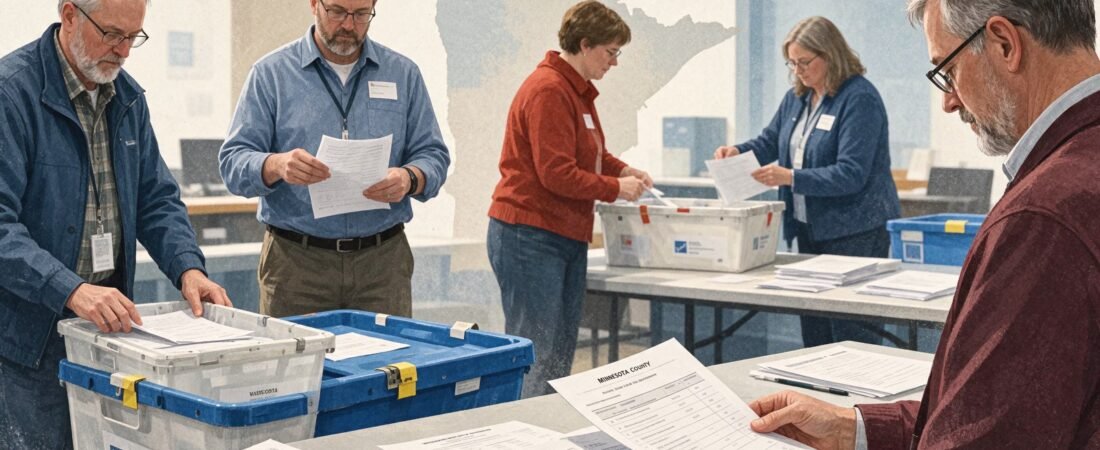
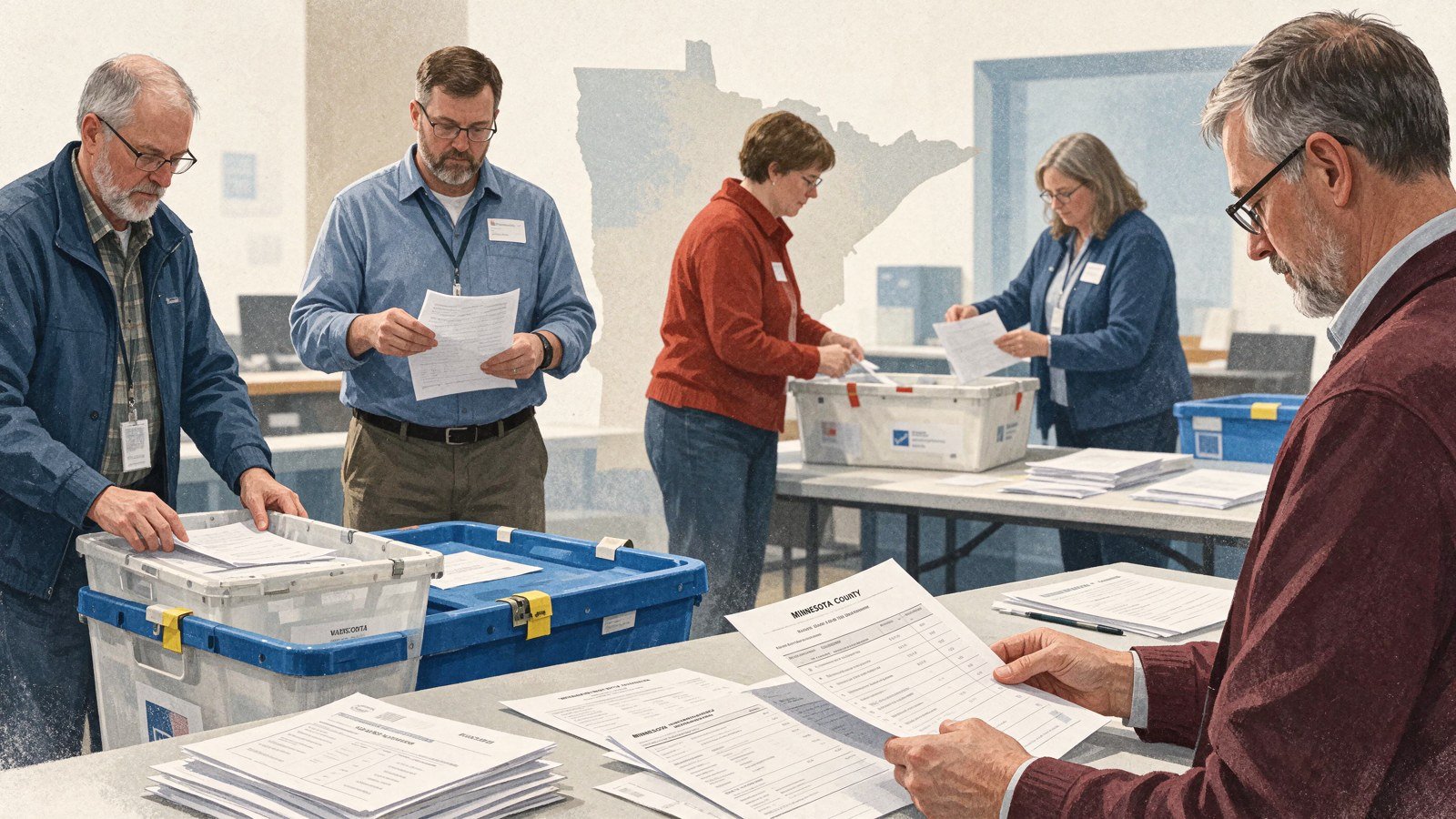
As of November 27, 2026. Minnesota’s 1st Congressional District is entering a state-funded recount after the State Canvassing Board certified Democrat Jake Johnson’s 324-vote victory over Republican Rep. Brad Finstad. The margin is only 0.1% of votes cast, so Minnesota law provides a public recount across the district’s 21 counties before the state reviews the result again in December.
The certified result makes Johnson the official winner at this stage, but it does not end the election process. The recount could confirm the margin or change it. Until the recount is completed and reviewed, the final outcome should be described as certified but subject to recount procedures.
Facts: Minnesota certified the election on November 19
The Minnesota Secretary of State said the State Canvassing Board certified the 2026 general election on November 19. The board certified the results for Minnesota’s congressional, statewide, legislative and judicial contests.
For Congressional District 1, the official result showed Johnson, the DFL candidate, ahead of Finstad by 324 votes. The state described the margin as 0.1% of votes cast. Because the difference was below 0.25%, the contest qualified for a publicly funded recount under Minnesota’s rules.
Finstad requested the recount. MPR News reported that the seat has been held by Republicans since 2019 and that Johnson’s result would flip it if it survives the recount process.
The certified result is an administrative finding based on the canvassed returns. A recount is a further review of ballots under state procedures. It is not proof that the original count was defective, and a candidate’s request does not establish that the result will change.
Facts: The recount begins November 30 across 21 counties
The district covers 21 counties in southern Minnesota. The state’s official 2026 recount page lists Congressional District 1 among the state-funded recounts and provides links to county locations and times beginning November 30.
The State Canvassing Board’s certification notice says recounts will be conducted in each county beginning November 30. The county schedules may differ, with some recount activity extending into December 3. The state will oversee the process through its elections office, with the state elections director serving as the state recount official.
The board is scheduled to reconvene on December 8 at 2 p.m. to review recount results if necessary. That date creates a clear next checkpoint, but it is not a prediction about whether the margin will change or whether a different candidate will ultimately be certified.
Analysis: Why a 324-vote margin matters
A 324-vote difference is small enough that ordinary administrative review can become politically consequential. Even a modest change in how ballots are interpreted or recorded across multiple counties can affect the margin, although the recount process is designed to apply the same rules to both candidates rather than to search for a preferred result.
The geography also matters. This is not a recount at one central location. Officials in 21 counties will handle their local ballots, document their work and report the results through the state process. That structure allows local election offices to use their existing records and procedures, while the statewide framework creates a common timetable and review point.
The recount should therefore be covered in two separate ways. The certified canvass establishes what the state initially determined. The recount tests whether a full review produces a materially different total. Treating the first result as unquestionably final would ignore Minnesota’s law; treating the recount as evidence of misconduct would go beyond the evidence.
Facts: Minnesota reported record midterm turnout
The Secretary of State reported that 2,851,615 Minnesotans cast ballots in the 2026 general election, representing 64.74% of the eligible voter population. The state said that was its highest turnout in a non-presidential election, above the previous 2018 record.
That statewide figure provides context for the congressional contest but does not determine its recount. The District 1 result depends on the ballots cast in that district and on the county-by-county recount process.
What to watch next
The next major event is the opening of recount work on November 30. Voters, campaigns and observers should look for county-level schedules, public recount proceedings and updated totals released through the Minnesota Secretary of State.
The December 8 State Canvassing Board meeting is the next statewide checkpoint. Until that review is complete, Johnson remains the certified winner, Finstad remains the candidate who requested the recount, and the final result remains subject to the process Minnesota law provides for unusually close contests.