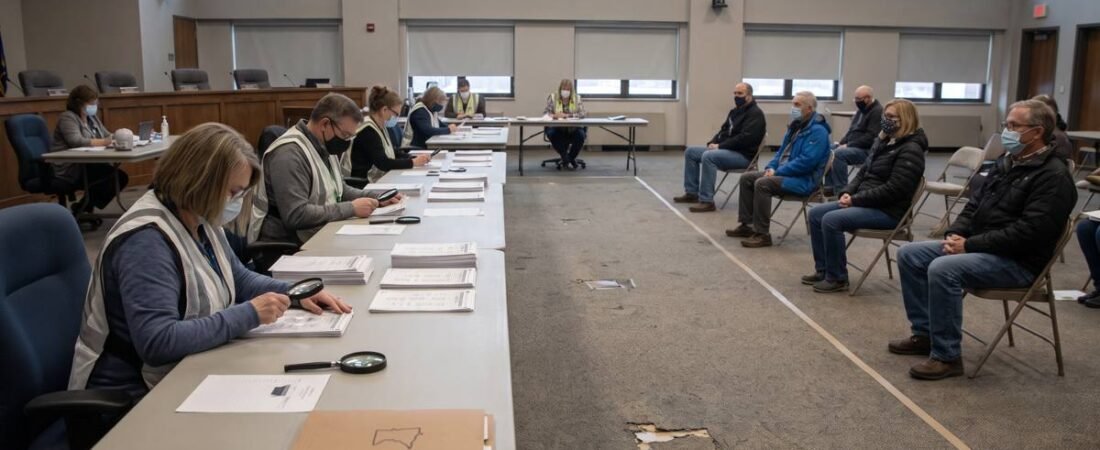
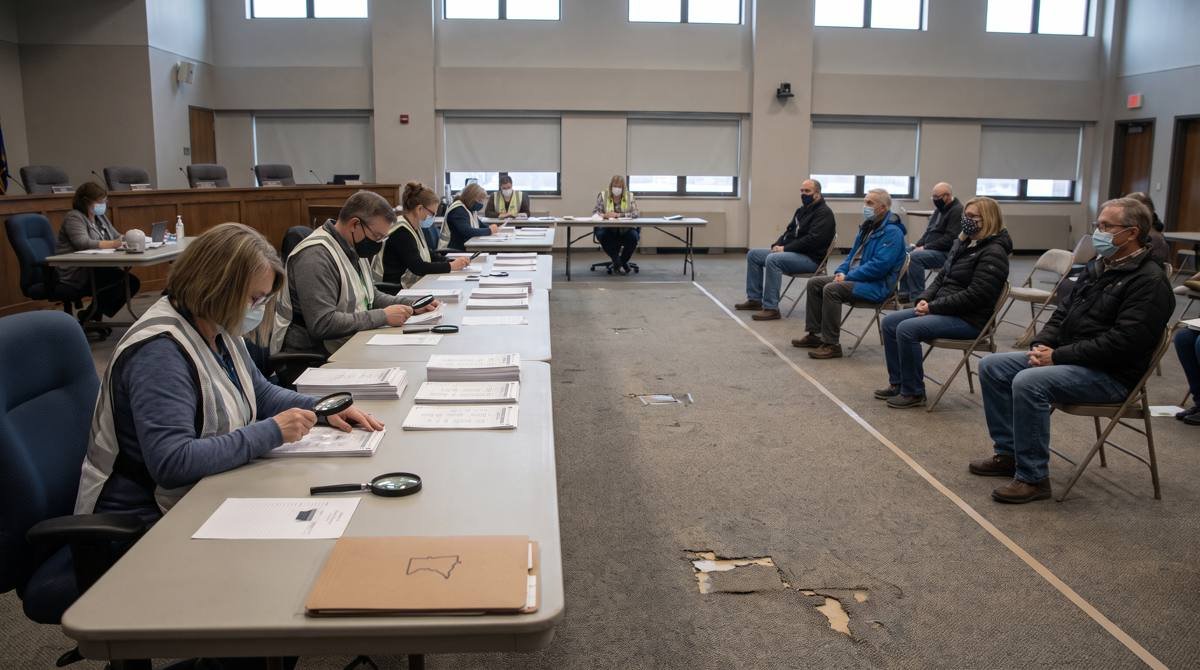
Minnesota election officials began a publicly funded recount on November 17 in a state Senate race decided by 42 votes. Democrat Nat Smith requested the recount after Republican Sen. Karin Housley won Senate District 33, a contest that the state says was certified by the Washington County Canvassing Board on November 9. The count is open to the public, and the county board is scheduled to certify the recount results on November 18. Minnesota Secretary of State
The recount is a new procedural stage, not a declaration that the original result was invalid. It will determine whether the certified vote total changes enough to affect the winner. The state’s official election-results page still cautions that state and federal results remain unofficial until the State Canvassing Board meets on November 19, while county results become official through county canvassing. Minnesota official election results
Facts: What the certified county result shows
The Minnesota Secretary of State’s recount notice lists Housley with 23,977 votes and Smith with 23,935. The 42-vote difference equals 0.08% of the votes cast in the race, below Minnesota’s 0.5% threshold for a publicly funded recount of a state legislative contest. Smith, the apparent losing candidate, filed the request after the county canvass. Official recount update
The district includes Stillwater, Hugo, Marine on St. Croix and Mahtomedi in Washington County, according to the Pioneer Press. The recount is being conducted at the Washington County Government Center in Stillwater. Officials planned to begin at 9 a.m. on November 17 and expected to review nearly 48,000 ballots. A second day was reserved if the work was not complete. Pioneer Press reporting
Minnesota law says that, in a general election, the canvassing board must manually recount a state legislative race when the margin is less than one-half of one percent and the losing candidate submits a written request within the statutory period. The recount cannot delay other parts of the canvass. Its results must be certified as soon as possible. Minnesota Statutes, section 204C.35
The state’s recount guidance describes a ballot-by-ballot process. Election officials assemble eligible ballots, work precinct by precinct and sort ballots according to voter intent. Candidate representatives may observe and challenge decisions, but they may not handle the ballots. Challenged ballots go to the appropriate canvassing board for review. Minnesota Secretary of State recount guidance
The law also limits the scope of the recount. Officials may consider ballots cast in the election and the summary statements certified by election judges, but the recount is limited to determining the number of valid votes for the office being recounted. It is not a general investigation into every aspect of the election. Minnesota Statutes, section 204C.35
Analysis: Why the recount matters
A 42-vote margin is small enough that a modest number of ballot-interpretation decisions, damaged ballots or counting discrepancies could change the reported order. That possibility is the reason Minnesota law provides public funding below the 0.5% threshold. It does not, by itself, indicate that officials expect the result to change. The state’s own guidance says optical-scan machines are highly accurate, while a hand review can resolve ballots that machines cannot read cleanly, such as ballots with unusual marks. Minnesota recount guidance
The practical question is therefore narrower than whether the election was “stolen” or broadly defective. Officials must determine how many valid votes each candidate received under the state’s rules and whether any challenged ballots should be credited to one candidate, the other, or neither. The process is designed to create a public record for that decision.
Minnesota’s system also gives campaigns a defined role without putting them in charge of the count. Representatives can watch officials sort ballots and raise challenges when they believe voter intent has been misread. The recount official and canvassing board, rather than the campaigns, decide how those challenges are resolved. That division is important because a close margin can produce disagreement over individual marks without turning every disagreement into evidence of misconduct.
The result can move in either direction, stay unchanged, or alter the margin without changing the winner. A recount is therefore best understood as a correction and confirmation mechanism. It does not reopen the election to new voters, add ballots that were not legally cast, or decide questions outside the office being recounted. Those limits are set out in the state statute and recount guidance.
The timing also separates this race from two other possible Minnesota recounts. The Secretary of State says State Senate District 4 and the state’s 1st Congressional District fall within the margins for publicly funded recounts, but those contests span multiple counties. They cannot begin until the State Canvassing Board certifies statewide results on November 19. If candidates request those recounts, the expected schedules would extend into late November or early December. Minnesota Secretary of State
The Senate District 33 recount is not expected to alter the overall partisan balance in the Minnesota Legislature. The Pioneer Press reported that current results would leave Democrats with 39 Senate seats and Republicans with 28. That does not make the individual seat unimportant: a changed result would determine who represents the district and would be another test of how Minnesota handles very close post-election counts. Pioneer Press reporting
The next decisive event is the Washington County Canvassing Board’s scheduled certification at 3 p.m. on November 18. Until that certification, the original 42-vote result remains the starting point, not necessarily the final number. The state’s broader canvassing schedule is also still pending, so readers should distinguish the county recount result from final statewide certification.
As of November 17, 2026, the recount was under way, the winner had not been changed, and no revised vote total had been certified in the sources reviewed for this article.