North Carolina’s post-election canvass on November 13 is the next procedural checkpoint for 10 close congressional and legislative contests that remain within the state’s recount range. The races are not automatically being recounted, and the unofficial margins can still change. But candidates who finish within the legal threshold will have a short window to request a recount before the State Board’s November 24 certification meeting.
As of November 13, 2026.
Facts: Ten contests remain within the recount threshold
According to unofficial results reported after provisional ballots were added, four of North Carolina’s 14 U.S. House races and six state legislative races were within 1 percentage point, Carolina Journal reported. The figures remain unofficial until the required canvass and certification steps are complete.
The congressional contests include two in which Democratic challengers were ahead and two in which Republican incumbents led. In the 5th District, Democrat Chuck Hubbard led Republican Rep. Virginia Foxx by 335 votes, or 0.12%, in the reported unofficial count. In the 7th District, Republican Rep. David Rouzer led Democrat Kimberly Hardy by 2,270 votes, or 0.70%. In the 10th District, Republican Rep. Pat Harrigan led Democrat Ashley Bell by 2,485 votes, or 0.84%.
The closest legislative races are also spread across the state. Republican state Sen. Danny Britt led Democrat Catina Hamm by 228 votes, or 0.41%, in Senate District 24. In the state House, Democrat Tim Merrick led Republican Dane Scalise by 81 votes, or 0.18%, in District 20. Other races within the range included House Districts 9, 62, 63 and 93, according to the same unofficial-results review.
If the reported results hold, the close contests could affect the size of the state’s congressional delegation and the balance of power in Raleigh. Those are projections based on unofficial totals, not certified outcomes.
Facts: The canvass comes before any recount request
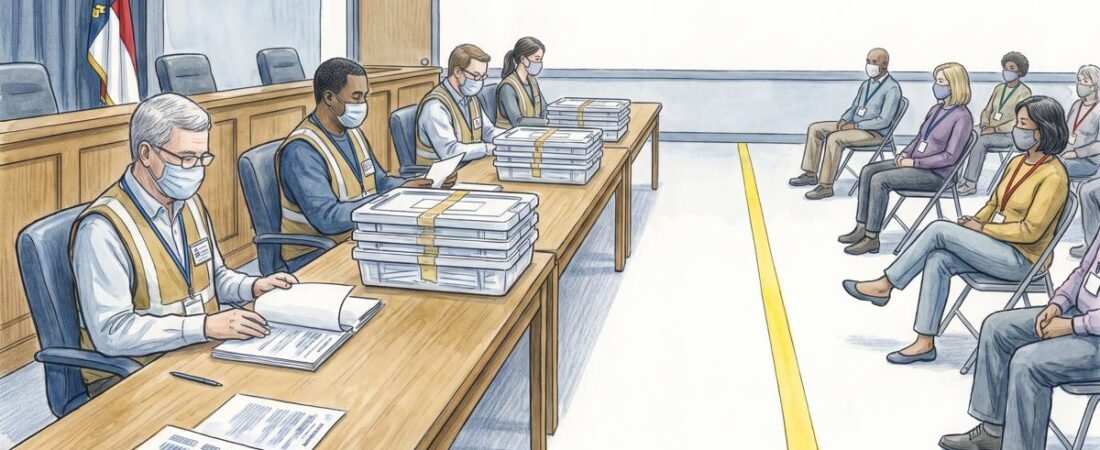
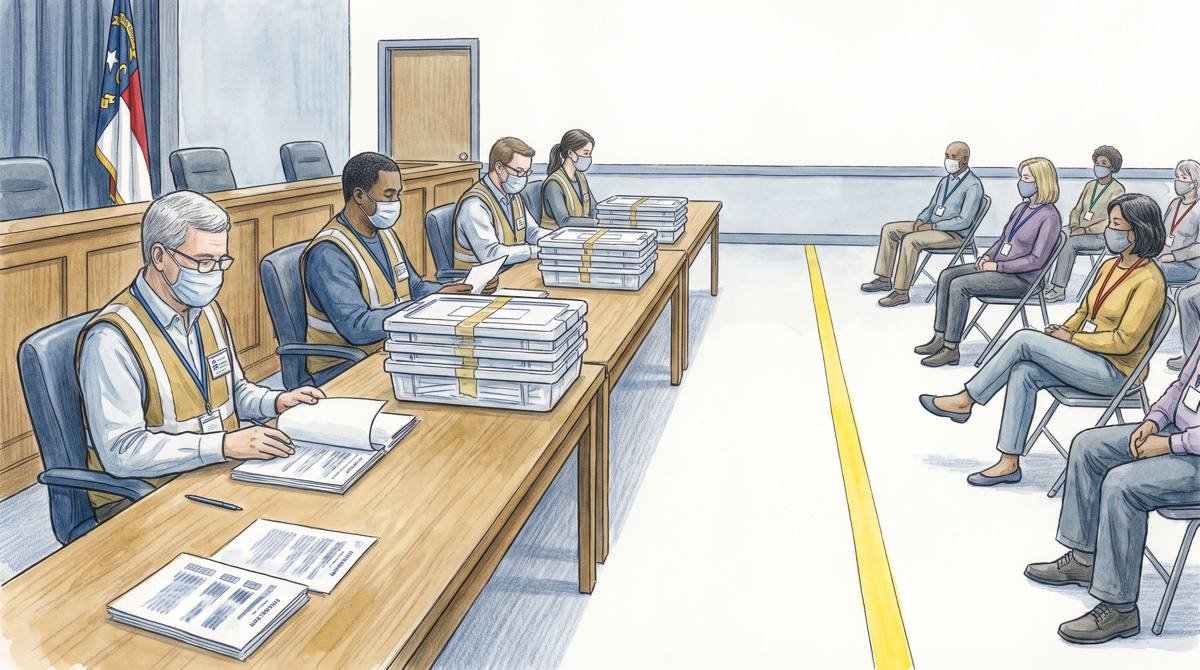
The North Carolina State Board of Elections says all 100 county boards must hold public canvass meetings at 11 a.m. on November 13. County boards will certify contests entirely inside their boundaries and authenticate results in contests that cross county lines. The State Board is scheduled to certify statewide and multi-county contests at 11 a.m. on November 24, according to the board’s official post-election guidance.
The count can still change at canvass. The State Board said military and overseas absentee ballots mailed by Election Day and received by 5 p.m. on November 12 would be counted if they meet legal requirements. Boards also review election records, provisional ballots and challenges before certifying results. The agency says the meetings are open to the public.
That timing matters because North Carolina’s canvass is more than a ceremonial sign-off. County boards compare reports, account for ballots and equipment, and resolve the categories of ballots that could not be included in the first election-night totals. The State Board has described the period as a normal part of completing an election, not as an indication that the initial count was necessarily unreliable. Observers can attend the public meetings and review the boards’ actions under the state’s open-meeting procedures.
North Carolina law does not make a recount automatic merely because a race is close. Under G.S. 163-182.7, a losing candidate may demand a recount in a nonstatewide contest when the difference is no more than 1% of the votes cast. The request must be in writing.
For contests under county-board jurisdiction, the request is due by 5 p.m. on the first business day after the county canvass. For contests under State Board jurisdiction, including congressional races and multi-county legislative districts, the deadline is noon on the second business day after the canvass. The State Board’s guidance identifies November 16 at 5 p.m. for county contests and November 17 at noon for State Board contests.
Facts: What a recount would involve
The State Board issued a November 11 memo on recount conduct. It says a machine recount should normally be completed within five business days after it begins. County boards must provide public notice at least 48 hours before a recount, and recounts must be conducted in public with bipartisan oversight.
Observers may attend, but only election officials and authorized bipartisan teams may handle or view individual ballots. The memo calls for ballots to be secured during breaks and for boards to maintain control of recount materials. It also explains how officials should handle voter-intent questions in a hand-to-eye recount.
The recount process generally starts with a machine recount of the ballots in the contest. A sample hand-to-eye review may follow, and a full hand-to-eye recount can be required if the sample identifies material differences. The machine count remains the operative result unless the later hand review meets the conditions set by state rules.
Analysis: The legal window is narrow, but the political stakes are wider
The immediate significance of November 13 is procedural, not predictive. A candidate’s eligibility to request a recount will depend on the certified margin after county boards review late-arriving eligible ballots and other records. A lead shown in an unofficial results file is not a final result, and a recount request is not evidence that officials found wrongdoing.
Certification also does not end every possible avenue for challenge. A recount addresses the tabulation of votes under the statutory process. It is separate from an election protest or court action, which can raise different legal questions and follow different deadlines. The state’s public guidance does not say that every close contest will be recounted; it explains when a candidate may demand one and how the boards must conduct it.
The numbers nevertheless show why the deadlines matter. A margin of 0.12% or 0.18% can be affected by a relatively small number of ballots, while a 0.84% margin remains inside the statutory threshold even though it is larger in raw votes. The relevant test is the percentage of total votes cast, not a fixed number of ballots.
The process also separates election administration from campaign strategy. Candidates may request a recount because the law gives them that right, but the recount itself is controlled by county and state election boards under public procedures. The State Board’s new guidance is meant to standardize those steps across jurisdictions rather than decide which candidate should prevail.
The next firm milestones are the county canvass on November 13, the request deadlines on November 16 and 17, and State Board certification on November 24. Until those steps are complete, the reported margins and the projected legislative balance should be treated as preliminary.
Sources
- North Carolina State Board of Elections: What’s next for finalizing the 2026 midterm elections
- North Carolina State Board of Elections: Numbered Memo 2026-01, Conduct of Recounts
- North Carolina General Statutes § 163-182.7: Ordering recounts
- Carolina Journal: 4 NC congressional, 6 legislative races in recount territory
- PBS NewsHour/AP: More than a dozen key races remain too early to call