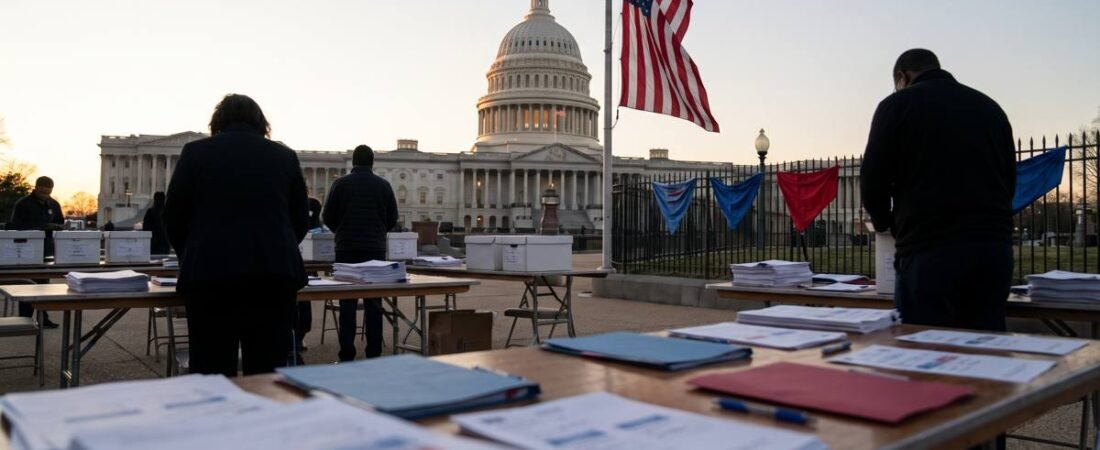
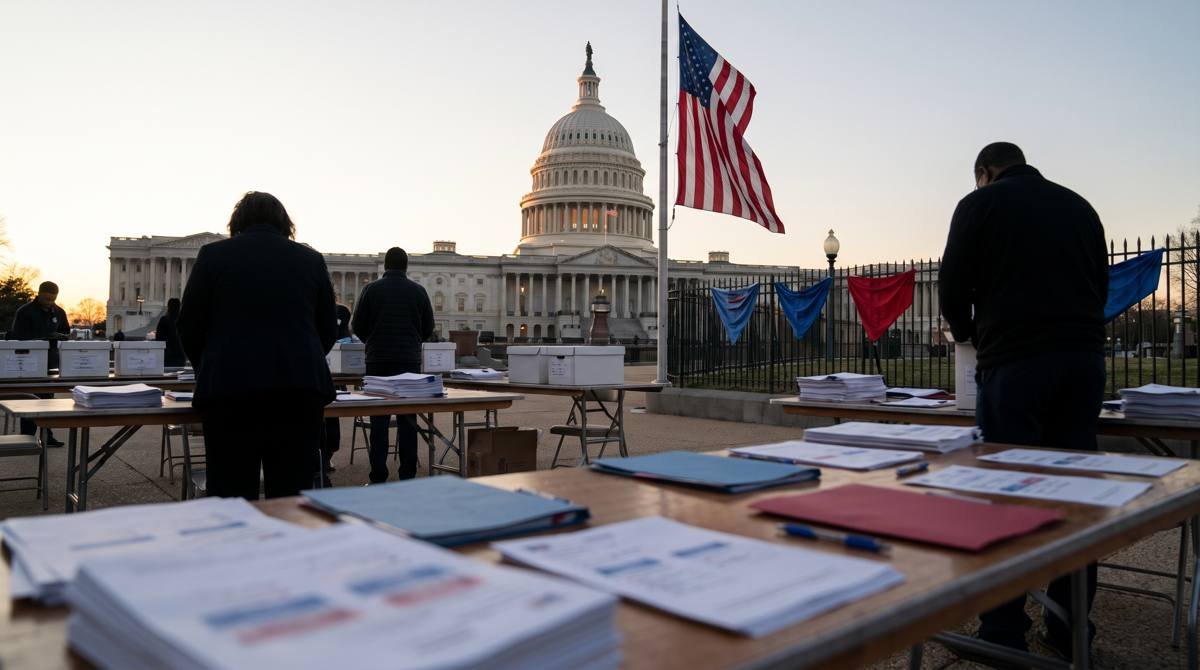
As of November 7, 2026, Democrats have won control of both chambers of Congress in the 2026 midterm elections, according to race calls reported by The Associated Press and analyzed by NPR. The result is the most consequential election-administration and power shift from the November 3 vote: President Donald Trump will face a Democratic House and Senate for the remaining two years of his term. The exact size of the majorities is not final, however. Two Senate races and more than two dozen House contests were still awaiting calls, and states had not completed their certification processes.
Facts: What the race calls show
The Associated Press reported that Democrats won the House and Senate, while NPR described the result as the party’s first return to full congressional control since 2023. Reuters reported that Democrats had secured at least 54 Senate seats to 44 for Republicans and had gained at least 28 House seats. The AP’s live Senate results page likewise listed 54 Democrats and 44 Republicans, with two Senate races still to be called. AP Senate results Reuters election live coverage NPR analysis
The Democratic Senate gains came in a group of states that had been difficult terrain for the party. NPR identified Republican-held seats flipped by Democrats in North Carolina, South Carolina, Ohio, Texas, Kansas, Iowa and Maine. The AP highlighted James Talarico’s Texas victory, Annie Andrews’ South Carolina upset and Adam Hamilton’s win in Kansas, where Democrats had not won a Senate seat since 1932. Reuters also reported Sherrod Brown’s victory in Ohio and described the Texas and South Carolina results as major breaks with recent statewide patterns. AP election account Reuters takeaways
In the House, Democratic candidates won a series of Republican-held districts, including seats in Florida, Iowa, Texas, Pennsylvania, Kentucky, Missouri, Nebraska, Ohio and Utah, according to AP. NPR reported that Democrats also flipped at least three Florida districts after the state’s Republican legislature redrew districts in a plan intended to improve Republican prospects. The final House margin is not yet known because race calls, canvass reviews and any recount procedures were still continuing in some districts.
The Senate picture is also incomplete. AP listed Alaska and Mississippi as the two uncalled Senate contests. A race call is a media determination that the trailing candidate no longer has a realistic path to victory; it is not the same as a state’s official canvass or certification. AP says its Decision Desk makes calls after reviewing results from local election officials and assessing whether the remaining vote can change the outcome. AP race-call methodology
Analysis: Why control of both chambers matters
The change gives Democrats control over the congressional agenda, committee gavels and oversight of the executive branch. NPR reported that Democratic leaders have signaled investigations into the Trump administration, federal agencies and the president’s business interests. A Democratic Senate would also end the Republican majority’s ability to move Trump’s judicial and executive-branch nominees without Democratic support.
Control of Congress does not give Democrats unilateral power to enact their program. Trump remains president and retains the veto. NPR reported that Trump had said he would block Democratic legislation, while Reuters quoted House Democratic Leader Hakeem Jeffries saying the incoming majority would focus on affordability and accountability. The practical result is likely to be a more adversarial form of divided government: Democrats can investigate, subpoena and set the legislative agenda, but major bills will generally require either presidential agreement or enough bipartisan support to overcome a veto.
The election also changes the immediate incentives around must-pass legislation. NPR noted that Congress will still need to negotiate annual appropriations and other measures that cannot simply be abandoned. With two chambers under different party control from the White House, funding deadlines and nominations could become recurring points of conflict. Those are political consequences of the result, not evidence that any particular bill or investigation has already been approved.
Facts: The result is decisive, but not yet certified
The November 3 election produced clear control of Congress through race calls, but the legal process is not complete. States must canvass local returns, resolve eligible provisional and absentee ballots, conduct any required recounts, and certify official results under their own laws. Kansas’ secretary of state, for example, lists December 1 as the last day for the State Board of Canvassers to certify the 2026 general-election results. Kansas Secretary of State election calendar
Texas identifies its secretary of state as the state’s chief election officer and says its Elections Division provides election calendars, ballot certification and guidance to local officials. That state-level process matters because the Texas Senate result was one of the major flips underpinning the national shift. Texas Secretary of State elections portal
Accordingly, the most defensible description on November 7 is that Democrats have won control of both chambers based on credible race calls, while the final seat-by-seat margins remain unsettled. Any account that presents the current 54–44 Senate tally or the reported House gain as a certified final total would overstate the evidence available at this date.
What to watch next
The next milestones are the remaining Senate calls, outstanding House decisions and state certification deadlines. Once the results are certified, the parties will organize the 120th Congress, which is scheduled to begin in January 2027. Leadership elections and committee assignments will determine how aggressively Democrats use their new majority for investigations, oversight and legislation.
For now, the central election story is clear: voters transferred control of both chambers from Republicans to Democrats, creating divided government for the final two years of Trump’s presidency. The direction of congressional oversight is settled; the precise margins and the legal completion of the count are not.
Sources
- Associated Press, “Democrats win the US House and Senate as voters deliver a strong rebuke to Trump and Republicans”
- Associated Press, 2026 U.S. Senate election results and race-call methodology
- Reuters, “Democrats secure resounding US midterms victory as voters deliver verdict on Trump and Congress”
- Reuters, “Top takeaways from the US midterm elections”
- NPR, “Democrats win full control of Congress, ushering in a new era of divided government”
- Kansas Secretary of State, 2026 general-election dates
- Texas Secretary of State, Elections