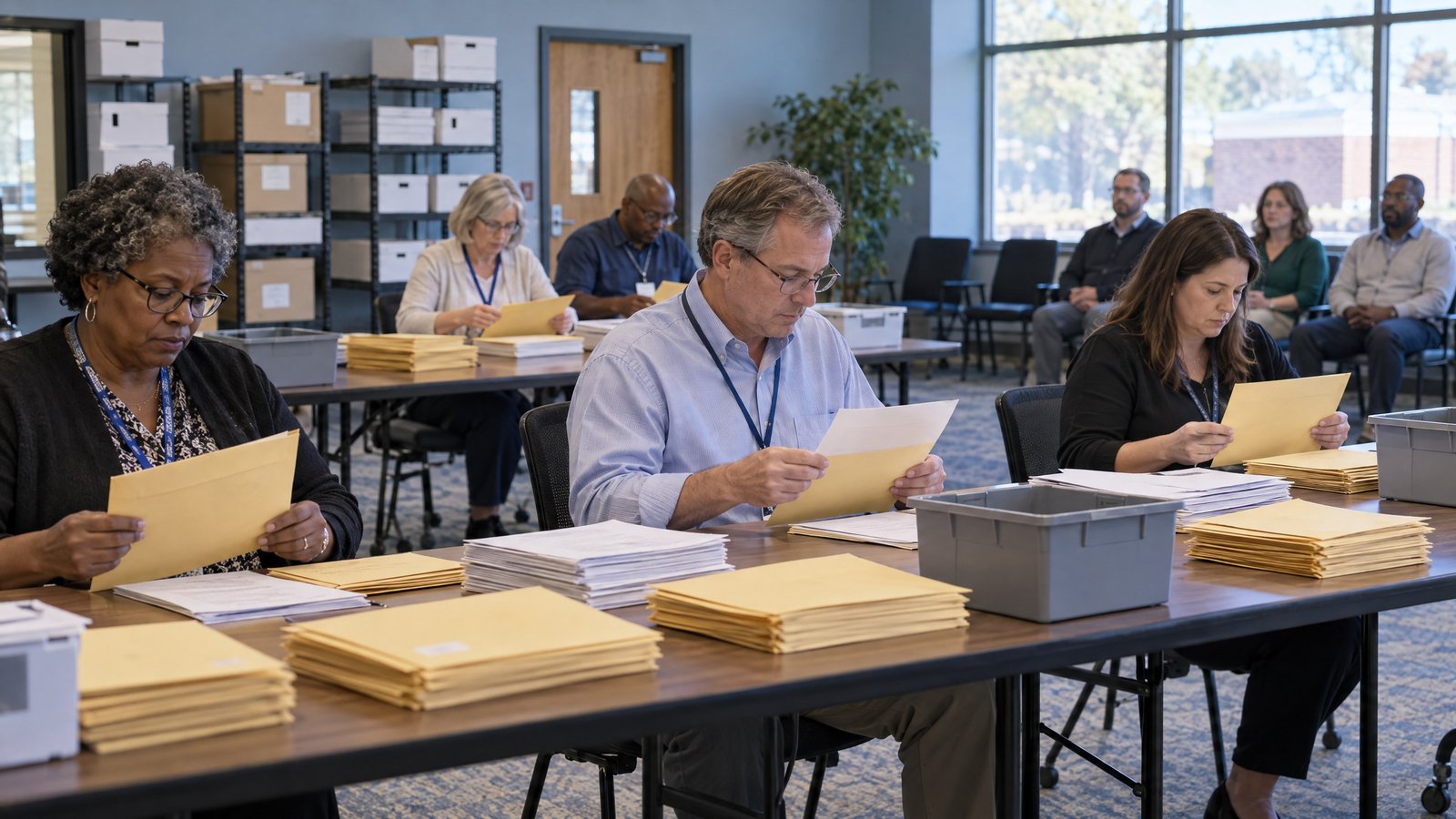
As of Nov. 7, 2026, the Mississippi Senate count remained unofficial as county election commissions continued reviewing affidavit and absentee ballots. The state says local officials—not one centralized state counting office—handle the review, and certified county returns are due Nov. 13. The work has drawn added attention after representatives for the two leading Senate candidates sent opposing requests about how affidavit ballots should be preserved and handled. Those letters are competing legal arguments, not a ruling that ballots were mishandled or a change to election law.
Facts: Mississippi counties run the ballot review
Mississippi Secretary of State Michael Watson’s post-election update describes the state’s system as “bottom-up”: circuit clerks and election commissioners conduct election work at the county level. In the update, the office said 70 of the state’s 82 counties had uploaded unofficial results to the Statewide Election Management System, although counties are not required to upload those early figures. County election commissions must send certified returns to the Secretary of State by Nov. 13. Until then, the office said, county officials are the best source for current local information. The Secretary of State’s update does not declare a winner in the Senate race.
The county-by-county structure matters because unofficial updates can arrive at different times. Mississippi Today reported that county commissions were following different work schedules as they reviewed ballots, with representatives and observers from both campaigns watching at some offices. The state’s deadline is shared, but the local processing timetable is not a single statewide meeting or one consolidated public count.
Facts: affidavit ballots and mailed ballots have different rules
An affidavit ballot—called a provisional ballot in many states—is held for additional eligibility review before it is counted. Mississippi’s 2026 County Election Handbook says county election commissioners examine records during the canvass and decide whether a general-election affidavit ballot is legally eligible to be counted. The handbook lists reasons a ballot may be rejected, including registration or signature problems and voting in a precinct where the person is not entitled to vote. That review is a routine part of the canvass; the presence of an affidavit ballot does not, by itself, show that a vote is invalid.
The voter-ID cure rule applies only to a subset of affidavit voters. A voter who used an affidavit ballot because they lacked acceptable photo identification must present an acceptable ID or a religious-objection affidavit to the circuit clerk by 5 p.m. on Nov. 10, five business days after Election Day. Other voters who cast affidavit ballots for different reasons do not have to return solely to complete that ID step, according to the official handbook and the Secretary of State’s public explanation.
Mailed absentee ballots are a separate category. Mississippi’s 2026 election calendar says a ballot mailed back must be postmarked by Election Day, Nov. 3, and received by the circuit clerk by 5 p.m. Nov. 10. The Secretary of State’s update estimated that about 3,600 such ballots remained outstanding when it was issued. This figure is not a count of affidavit ballots.
Facts: the candidates’ representatives made opposing requests
Reuters reported that on Nov. 5, representatives for Republican Sen. Cindy Hyde-Smith asked all 82 county election commissioners to preserve affidavit ballots and keep them separate from regular and absentee ballots. Scott Colom’s representatives sent a response arguing that the requested approach could lead to different treatment from county to county and conflict with state law. These are the parties’ positions as reported by Reuters; they are not findings by a court or an instruction from the Secretary of State.
Mississippi Today also reported that campaign representatives and other observers went to county offices while workers reviewed ballots. The official state update continues to place election administration with county officials and describes the remaining affidavit-ballot total as unknown. No source reviewed for this article reported a court order halting the count or a statewide directive replacing the ordinary county canvass process.
What the Mississippi Senate count shows—and what remains unknown
The official update gave a separate estimate of roughly 3,600 outstanding mailed absentee ballots but did not give an exact number of affidavit ballots still awaiting review. Reuters and WLBT attributed a 12,000-to-20,000 estimate for remaining affidavit ballots to Watson in earlier reporting. NPR’s Nov. 6 account said the precise number was still unknown and reported that more than 9,000 had been processed by Friday. The figures refer to different reporting snapshots and should not be combined into a definitive statewide inventory. The official count will depend on county reviews and certified returns.
The reported Senate totals are also preliminary. As of publication, the reviewed reporting still described the race as uncalled. The article does not treat a candidate’s lead, an estimate of outstanding ballots, or an observer’s presence as a certified result or evidence of wrongdoing.
Analysis: a request to preserve ballots is not a vote-count finding
The dispute illustrates why the stages of a close count should be kept separate. A request to preserve or segregate ballot materials is not the same thing as deciding whether a particular voter was eligible, counting a ballot, or certifying a county’s results. Under the state handbook, county election commissioners review affidavit-ballot records during canvassing. The next reliable signals are the counties’ documented decisions, any official statewide notices, and the certified returns—not campaign predictions or an estimate that has not been reconciled across counties.
The decentralized system also makes the information gap visible. The Secretary of State says the exact affidavit-ballot count is unknown and points readers to counties for current local information. That is a reason to date each number and identify who supplied it, not a basis to assume ballots are being improperly included or excluded. The count remains a process in progress until officials complete the review and certification.
What happens next
Two dates are central. By 5 p.m. Nov. 10, circuit clerks must receive timely mailed absentee ballots, and voters with an affidavit ballot specifically tied to a voter-ID issue must complete the applicable cure step. By Nov. 13, county election commissions must transmit certified returns and certified recap sheets to the Secretary of State. Until those steps are complete, the Senate result remains unofficial.
Mississippi’s county process differs from Alaska’s ranked-choice count and ballot deadlines, which The Brief Lens covered in its Alaska Senate count explainer. For a broader overview of how canvassing and certification work after Election Day, see our guide to counting and certifying U.S. election results.
Bottom line
Mississippi counties are still reviewing affidavit and mailed absentee ballots in the Senate contest, with certified returns due Nov. 13. The official office has not published a final affidavit-ballot total, and reported estimates are snapshots rather than a reconciled count. The opposing campaign requests over preservation deserve accurate attribution, but they do not establish that a ballot was improperly handled. The next clear checkpoint is the county certification deadline.
Sources and documents
- Mississippi Secretary of State: Official Statement — Election Update
- Mississippi Secretary of State: 2026 Elections Calendar
- Mississippi Secretary of State: County Election Handbook
- Reuters: Mississippi U.S. Senate candidates battle over ballots as winner remains unclear
- NPR: No one knows how many ballots are outstanding in Mississippi’s Senate race
- Mississippi Today: Lawyers, advocates hover as officials count final votes
- WLBT: Colom meets Jackson voters as Senate ballot count continues