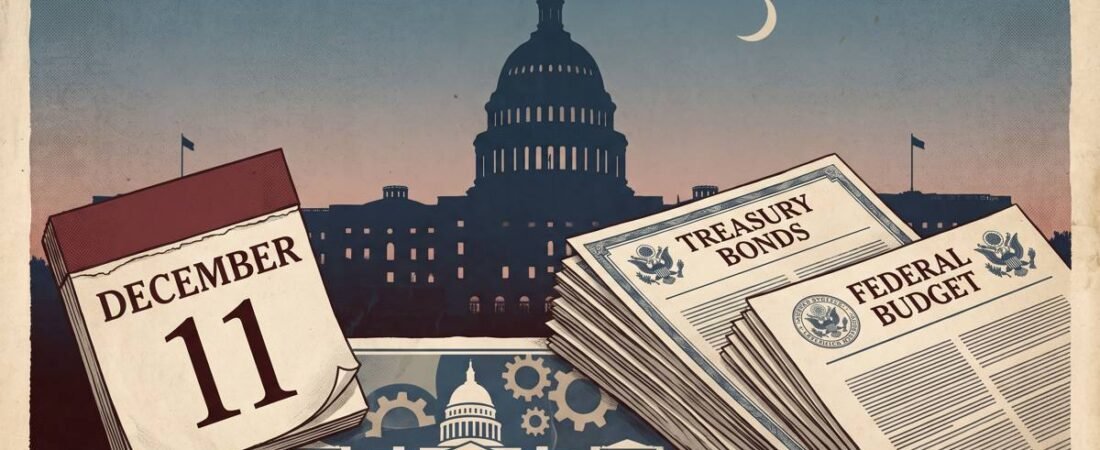
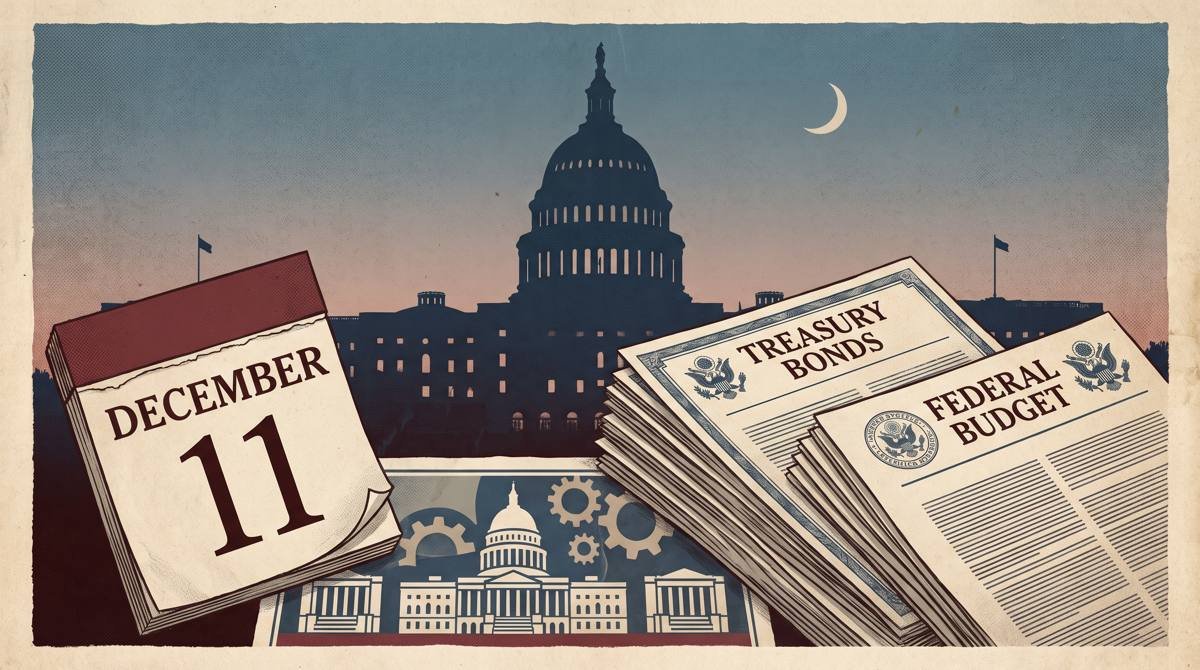
The most consequential economic-policy question after the Nov. 3 midterm election is no longer what voters said about prices. It is whether a newly divided Washington can keep the government funded and manage a growing federal borrowing need before the next deadline. A Democratic takeover of the House, projected by CNBC’s Election Desk, would put Republicans and the White House on the defensive over spending, oversight and the terms of the next budget deal. Senate control was still unsettled in the latest available election reporting.
That makes the 2026 government shutdown risk the clearest near-term economic story tied to the election. The issue is not an immediate shutdown: Congress already enacted a stopgap law. The pressure point is what happens before that law expires on Dec. 11, when lawmakers must pass full-year appropriations or another extension.
Facts: A stopgap law expires on Dec. 11
Congress.gov records that H.R. 6500, the Continuing Appropriations and Extensions Act, 2027, became Public Law 119-103 on Sept. 2. Its continuing resolution funds most federal agencies through the earlier of Dec. 11, 2026, or enactment of the relevant full-year appropriations bills. The measure generally holds programs near fiscal-year 2026 levels, with exceptions including WIC, Small Business Administration lending, disaster relief and wildfire suppression. Congress.gov
The deadline is therefore a real procedural test, not a campaign slogan. The House Appropriations Committee’s official statement after passage said the government-funding deadline had been pushed to Dec. 11 and that all 12 full-year bills still needed to be completed. That statement came from the committee’s ranking Democrat, so it is a partisan source for the political assessment, but its description of the deadline is consistent with the nonpartisan Congress.gov summary. House Appropriations Democrats
A shutdown would not automatically stop every federal function, but many operations could be delayed and employees could face furloughs or delayed pay. The economic effect would depend on the length and scope of any lapse, with a prolonged closure posing greater risks to public services, contractors and near-term activity.
Facts: The election changes the bargaining map
CNBC projected that Democrats would win at least 225 House seats, above the 218 needed for a majority. Its coverage said the result would define President Donald Trump’s final two years in office and could bring intensified congressional oversight. CNBC election coverage
That projection does not by itself settle who controls the Senate or guarantee that a House Democratic majority can enact its preferred budget. A divided government still leaves the president with veto power, and Senate rules can require broader support for many measures. Reuters’ election analysis before voting described a Democratic House as the likely outcome and said a House Democratic win with a Republican Senate would raise the risk of shutdown and debt-limit brinkmanship. Reuters
The immediate consequence is a narrower path to agreement. Democrats could use control of the House to demand concessions on agency funding, health programs and executive-branch oversight. Republicans could argue that a new majority should not use must-pass funding legislation to reverse policies enacted under the current administration. Neither side can assume that the election result itself resolves the underlying fiscal dispute.
Analysis: Why the deadline matters beyond Washington
The funding fight arrives as Treasury is borrowing heavily. The Treasury Department’s latest estimate projects $628 billion in privately held net marketable borrowing for the October–December 2026 quarter, assuming an $850 billion end-of-December cash balance. The figure excludes rollovers of securities held by the Federal Reserve’s portfolio but captures new marketable borrowing from private investors. U.S. Treasury
The estimate is not a shutdown forecast or a measure of total national debt. It shows why budget negotiations matter to markets, where investors are also watching deficits, defense spending, health programs, tax policy and interest costs. Reuters reported concern about fiscal deterioration, the debt ceiling and repeated brinkmanship under divided government. Reuters market analysis
A shutdown and a debt-limit confrontation are different risks. A shutdown follows a lapse in appropriations. A debt-limit crisis would involve the government’s legal authority to borrow to meet obligations already approved. The next debt-limit deadline is not expected to be the immediate December issue, and Reuters reported that it was unlikely to arrive until late 2027. But the same partisan incentives can affect both negotiations, particularly if lawmakers use a funding bill to signal broader positions on spending or executive power. Reuters fiscal analysis
The economic backdrop raises the political stakes. Reuters reported that September unemployment was 4.2%, while consumer prices and average hourly earnings had each risen about 5.5% since January 2025. CNBC reported September consumer-price inflation of 3.7% and average hourly earnings growth of 3%, implying that prices were rising faster than pay at that point. Those figures help explain why voters remain sensitive to federal policy even though the immediate story is fiscal procedure rather than a new inflation release. Reuters on the economy CNBC election coverage
What to watch next
The key indicators are procedural. First, election officials must finalize enough results to establish the House margin and Senate balance. Second, congressional leaders must decide whether to finish full-year appropriations in the lame-duck session or carry the fight into the new Congress. Third, negotiators will reveal whether the Dec. 11 bill is a clean extension or a vehicle for changes to agency policy, health spending, defense funding or executive-branch controls.
Analysis: A House flip makes oversight more likely and major new legislation less likely under divided government. It could also make must-pass fiscal bills more contentious. That does not make a shutdown inevitable. It does mean the first test of the post-election economic agenda will be whether lawmakers can turn a temporary funding patch into a durable agreement before Dec. 11. Until the Senate result and final House count are settled, the safest conclusion is conditional: the election has increased the political friction around federal funding, while the economic costs will depend on whether that friction produces negotiation or delay.
Sources
- Congress.gov: H.R. 6500, Continuing Appropriations and Extensions Act, 2027
- House Appropriations Democrats: Dec. 11 funding deadline statement
- U.S. Treasury: Marketable borrowing estimates
- CNBC: 2026 midterm election live coverage
- Reuters: Investors assess Congress, spending and debt after the midterms
- Reuters: Voters’ economic mood before the midterms
- Reuters: Fiscal deterioration and midterm risks
Publication readiness: Ready for publication, with a clear caveat that the House result is a projection and Senate control/final counts remain unresolved as of Nov. 4, 2026.